What Is Corzetti?
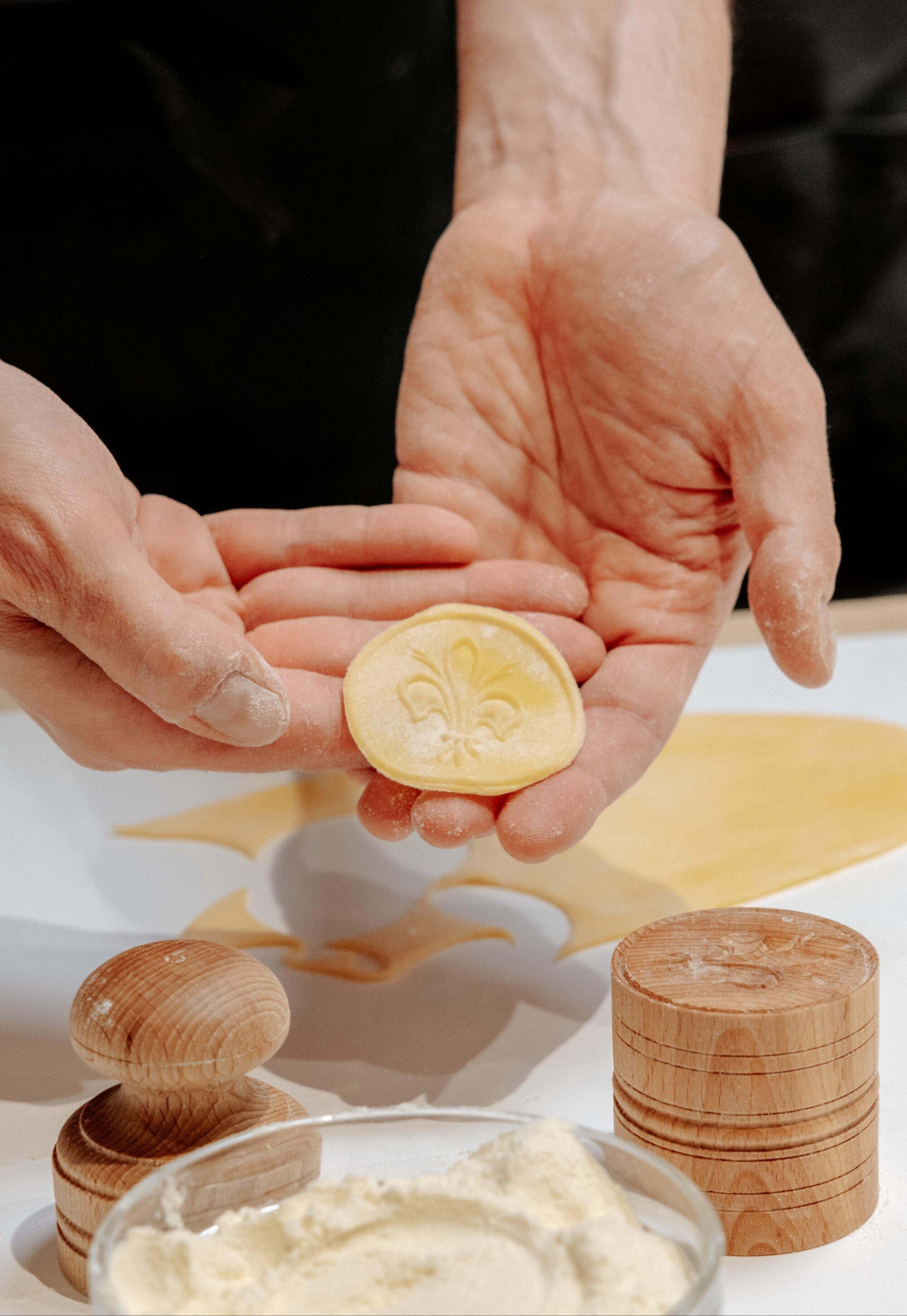
Corzetti are traditional Ligurian pasta coins embossed with a carved wooden stamp. Also known as Corzetti stampati or croxetti, this handmade Italian pasta has regional and family variations. At Mama Florence Cooking School, we share both the traditional egg-yolk-and-white-wine dough below and our modern semola, spelt, and water preparation. The carved pattern is more than decoration: it gives pesto alla Genovese and other delicate Ligurian sauces somewhere to cling.
A Classic Italian Pasta
Corzetti are traditional Ligurian pasta coins: little discs of dough rolled thin and pressed with a carved wooden stamp until they become an elegant sheet of golden, edible coins. At Mama Florence Cooking School, we share both a traditional egg-yolk-and-white-wine dough and our modern semola, spelt, and water preparation.
Corzetti - or croxetti, depending where you are - were born in Liguria and are closely tied to the region's medieval merchant history. Their stamped shape is often linked to the corzetto, a Genoese coin marked with a cross - or so the story my Mama tells me goes.
Back then, the noble families would have a woodcarver cut their crest into a hardwood stamp and press it into the dough to show off at their banquets. Edible propaganda, if you like.
But that's not the clever part. A Corzetti pasta stamp doesn't only make the pasta beautiful: every carved impression creates texture for delicate sauces to cling to. That's exactly why Corzetti al pesto works so well. Fresh pesto alla Genovese settles into the stamped surface, carrying basil, pine nuts, cheese, garlic, and olive oil into every bite.
At Mama Florence Cooking School, our modern Corzetti dough uses semola, spelt, and water, paired with a proper Genoese basil pesto - simple, and the way we Italians like it. Fresh, aromatic, and wonderfully satisfying, this Corzetti al Pesto recipe celebrates a traditional Ligurian pasta pairing that turns a handful of simple ingredients into something memorable.
How to Make Corzetti Pasta
Traditional Corzetti Recipe - Egg Yolk & White Wine Dough
Pasta Dough Ingredients:
• Durum wheat flour (or all-purpose flour) 600 grams • 5 Eggs • White wine 1 cup
Mama's Secret: At Mama Florence Cooking School, we keep it simple with handmade corzetti and pesto, but traditional Corzetti were often boiled with cubed potatoes and green beans alongside the pasta, before everything was drained together and tossed in pesto for a rich, hearty variation.
1. Mix and Rest the Corzetti Dough:
- In a medium-sized bowl, combine high-quality durum wheat flour, fresh egg yolks, and a splash of dry white wine.
- Stir the ingredients together until they form a smooth, elastic dough that holds its shape and feels slightly firm to the touch.
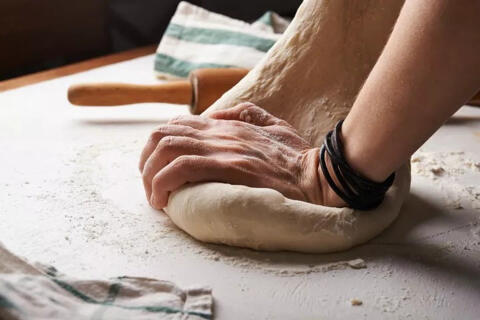
- If the dough feels overly soft or sticky, gradually work in a bit more flour until the consistency is just right. Knead for several minutes until silky, then return the dough to the bowl. Cover tightly with plastic wrap, allowing it to rest at room temperature for at least 30 minutes. This resting period is essential for developing the dough’s texture and elasticity.
2. Roll and Stamp Your Corzetti Coins:
- Lightly flour your work surface, then take a wooden rolling pin and roll out the rested dough. For best results, aim for a round shape—this will help minimize dough scraps when cutting your coins.
- Continue rolling until the dough is about 2-3 millimeters thick. Using the cutting side of your Corzetti stamp, cut out as many rounds as possible, placing them close together to reduce waste. Gather any scraps, re-roll, and cut more coins as needed.
- With each pasta round, use the decorative side of the Corzetti stamp to emboss your chosen design onto the surface. Place the finished coins on a tray dusted with semolina or flour, sprinkling extra flour on top to prevent sticking. This step not only shapes the pasta but also creates the intricate patterns that make Corzetti so distinctive.
Modern Corzetti Recipe - Semola, Spelt & Water Dough
Pasta Dough Ingredients:
• 300 g semola flour • 100 g spelt flour (or barley flour) • 200 g room-temperature water • Also needed: a two-piece Corzetti pasta stamp, extra semola for dusting
1. How to Make Corzetti Dough:
- In a medium bowl, blend the semola with the spelt (or barley) flour, then add the room-temperature water. Combine by hand until well blended.
- Turn onto a well-floured counter and knead with your palms until it comes together. If it's too sticky, add more semola. You want it soft, elastic, and compact.
- Wrap in plastic to keep the elasticity, and rest at room temperature for 30 minutes.
2. How to Stamp Corzetti:
- Unwrap and knead briefly again. Roll the dough - by machine, or by hand with a rolling pin from the center outward - dusting with semola so it doesn't stick, until it's about 2–3 mm thick.
- Cut each coin with the corzetti cutter. Lay a coin on the emblem and press the stamp down firmly to print the design.
- Dust each coin lightly with semola and continue until the dough is used up.
Shop Mama Florence's Pantry
Rolling Out Perfect Corzetti Pasta Dough:
- Marcato Pasta Machine: In Mama's kitchen, my go-to pasta machine is, of course, Marcato, one of the classic Italian pasta-making brands. They've been producing pasta machines in Italy since 1930, in the Veneto region. What makes them special is precision - a good pasta machine isn't just about flattening dough, it's about creating a perfectly even pasta sheet, which makes a huge difference in the final result.
- Romagnoli Rolling Pin: Filippo Romagnoli's traditional Italian mattarelli are handcrafted in Tuscany for rolling fresh pasta by hand. His sfoglina rolling pins are made from locally sourced hardwoods, including beech, and are designed to give pasta makers the length and control needed to roll an even, delicate sheet of dough.
Traditional Handcrafted Corzetti Stamps
- Florentine Touch Corzetti Stamp: This stamp was none other than a creative project of Filippo Romagnoli, a Florentine fourth-generation artisan and designer, known for reinterpreting Tuscan and Italian culinary traditions through handcrafted objects that are both functional and deeply rooted in local culture. His work celebrates the idea that everyday kitchen tools can also carry history, symbolism, and artistry.
Handcrafted Pesto Mortar
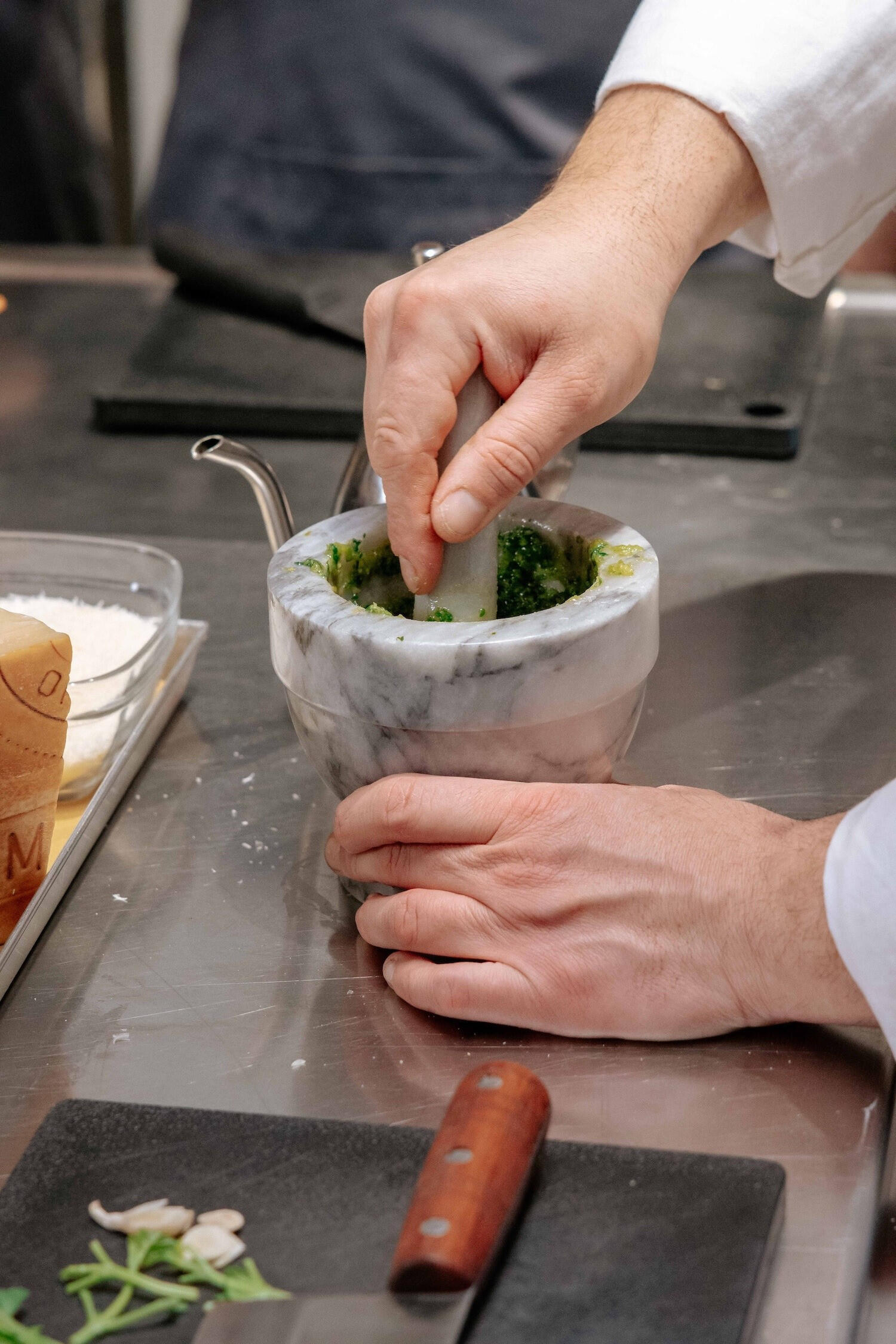
- Mortar and pestle: My Mama taught me that to use one of these is to embrace l'arte dell'attesa - the art of waiting. It is a rejection of modern haste in favor of flavor, connection, and heritage. The passing down of the mortar and pestle is a sacred rite, ensuring that the true taste of the Italian heart remains unchanged by time. When you crush these ingredients by hand, you are not just making a sauce; you are participating in a living culinary ritual, weaving love, history, and culture into every single bite.
How to Make Genoese Basil Pesto
Basil Pesto Recipe
• 125 g fresh basil leaves • 25 g whole almonds • 25 g pine nuts • 200 ml extra-virgin olive oil • 50 g Parmigiano, freshly grated • 50 g Pecorino • 2 garlic cloves • salt & pepper (to taste)
1. How to Make Pesto
- Gently wash and dry the basil, removing the largest stems and stalks. Set aside.
- Add your ingredients to a blender and blend well. Your pesto should have a creamy consistency.
- Pour into a small bowl and add extra olive oil to avoid oxidation, and let rest 15–20 minutes.
Shop Mama's Pantry:
- Extra Virgin Olive Oil (EVOO) is one of those ingredients you’ll always find close at hand in an Italian kitchen. Rich, fragrant, and wonderfully versatile, we use it for everything from finishing fresh pasta to dressing vegetables and, of course, making pesto. Made from cold-pressed olives without added heat or chemicals, a good EVOO keeps the natural flavor, aroma, and character of the olives intact — which is exactly why, when a recipe is this simple, quality really matters.
How to Cook Corzetti al Pesto
- Fill a large pot with water, salt it, and bring to a boil. Add the corzetti and cook 3–4 minutes.
- Drain well and tip into a large bowl. Add the pesto and mix until every coin is coated.
How to Serve Corzetti al Pesto
- Plate carefully, dust with freshly grated Parmigiano, and serve immediately.
The Perfect Bite
Semola gives the cooked Corzetti a satisfying, textured chew, while fresh pesto alla Genovese settles into every carved impression. The basil stays bright, the Parmigiano and Pecorino bring richness, and the garlic builds gently with each bite. Fresh, aromatic, and made for sauce, this is exactly why stamped pasta and pesto belong together.
Florentine Woodcarving and the Traditional Corzetti Stamp
A Corzetti pasta stamp is a two-piece hardwood tool - one side cuts the coin, while the other embosses the design. The one we use is by Filippo Romagnoli of Florentine Touch. Read his full story in our history of Corzetti. The engraved surface isn't only beautiful: its grooves help sauce cling to the pasta. Looking for one? Search Corzetti stamps for pasta and you'll find everything from traditional patterns to custom monograms - but choose a sturdy wooden stamp that can press a clean, defined design.
Learn How to Make Corzetti at Mama Florence Cooking School
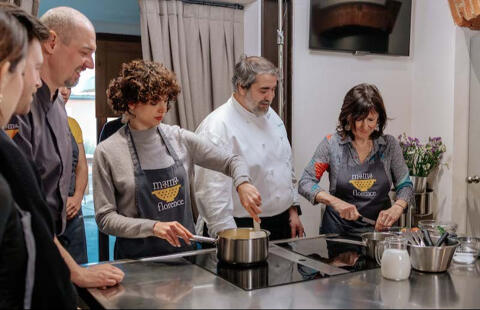
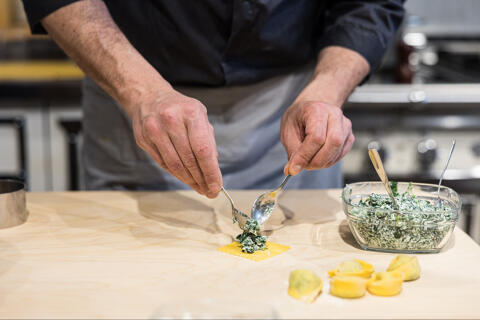
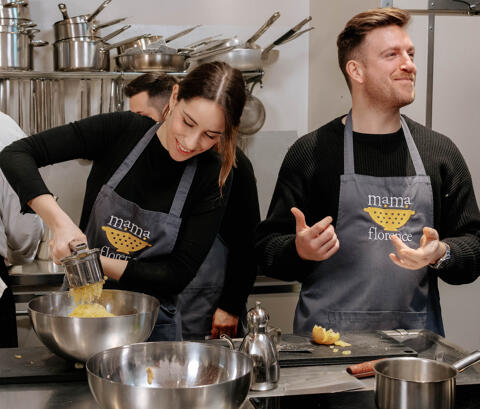
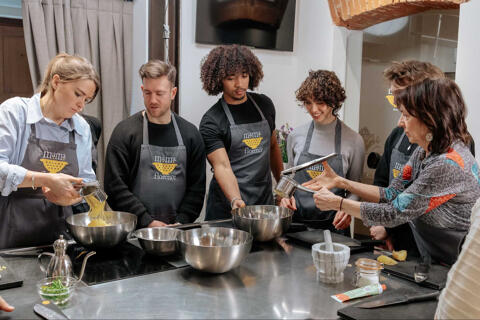
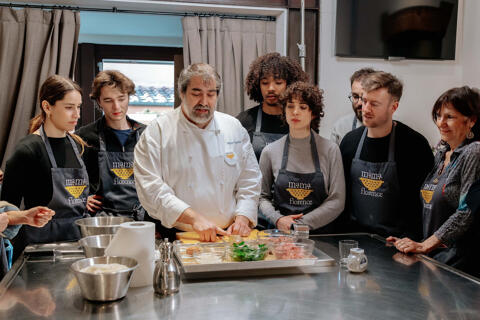
Want to learn how to make Corzetti pasta yourself? Join us in our Florence kitchen for an intimate, hands-on masterclass. You'll roll fresh pasta dough, learn how to use a traditional Corzetti stamp, and sit down to celebrate your creation the Italian way - with great food, warm company, and local wine.
Corzetti FAQ
Q: What is Corzetti? A: Corzetti are traditional Ligurian pasta coins embossed with a carved wooden stamp. Also called croxetti or Corzetti stampati, the patterned surface helps delicate sauces such as pesto alla Genovese cling to the pasta.
Q: What is the original Corzetti recipe? A: The original Corzetti recipe varies across Liguria and from family to family, but the tradition begins with thin pasta coins pressed with a carved wooden stamp and served with simple regional sauces. At Mama Florence Cooking School, we share both a traditional egg-yolk-and-white-wine dough and our modern semola, spelt, and water version, then pair the freshly stamped pasta with pesto alla Genovese.
Q: What is a Corzetti stamp? A: A Corzetti pasta stamp is a two-piece wooden tool: one side cuts the pasta coin and the other embosses the design. Traditional wooden stamps create a deeper, cleaner impression than flimsy plastic versions.
Q: Where can I find a Corzetti stamp? A: Look for a traditional Corzetti stamp handcrafted from hardwood by an Italian artisan. The best stamps are carved deeply enough to leave a crisp, beautiful impression in the dough - just as they have been for generations. At Mama Florence, we use a handcrafted wooden stamp by Florentine artisan Filippo Romagnoli, whose work keeps this wonderful Italian tradition alive.
Q: Corzetti vs croxetti, is there a difference? A: They refer to the same traditional Ligurian pasta. The spelling varies regionally, but both names describe the characteristic stamped pasta coins.
Q: Should I make the fresh basil pesto, or is a jar all right? A: Fresh, if you can. Homemade pesto alla Genovese is especially good with Corzetti because the basil, cheese, nuts, garlic, and olive oil settle into the pasta's carved impressions. A good jar will do when you're short on time, but in a dish this simple, you'll taste the difference.
Disclaimer
Please note that our chefs may adapt recipes according to seasonal ingredient availability and participants’ dietary or allergy requirements. As a result, the ingredients, preparation, or presentation shown in this recipe may vary from what you prepared during your Mama Florence class. In some cases, elements of a dish may also appear as separate recipes — for example, the fresh pasta you prepared may be paired here with a different sauce, while the sauce from your class may appear in another recipe. Please reach out to our team if any confusion arises. Thank you — the Mama Florence Family.