Paccheri Pasta with Pistachios, Pancetta & Piave Cheese | Mama Florence Cooking School
Course: First Course / Pasta - Cuisine: Italian; Serves: 4. Prep: approx. 10 min. Cook: according to pasta package, plus 2 min. Total: approx. 25–30 min.
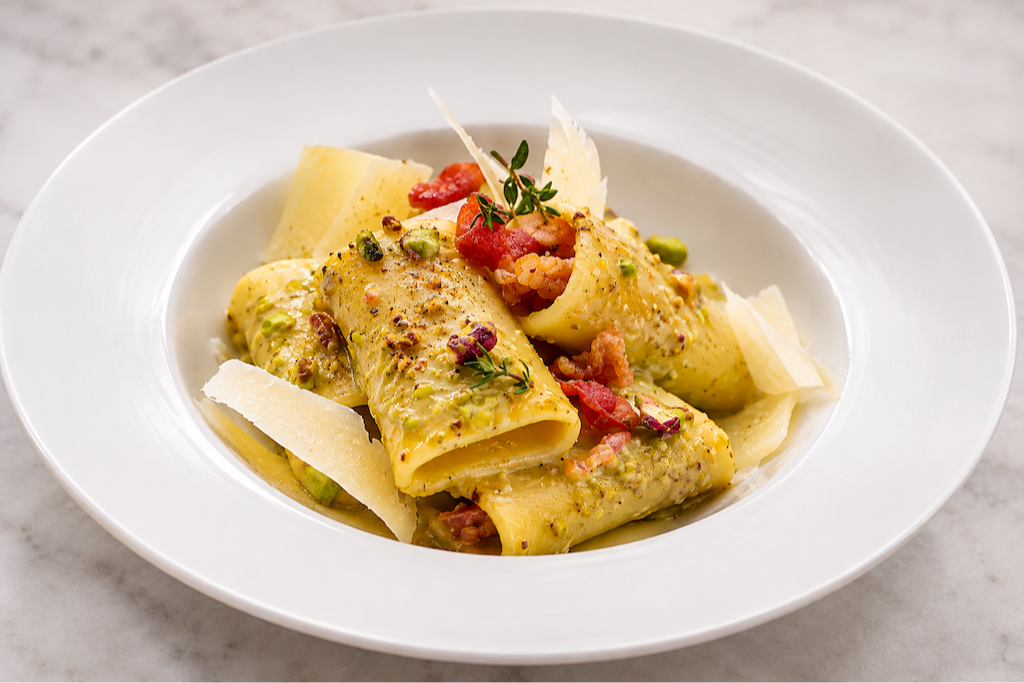
Creamy Paccheri with Pistachios, Pancetta and Piave
This is a pasta built around richness, crunch, and texture. Paccheri are broad, hollow tubes that can stand up to a substantial sauce, making them a natural match for crisp pancetta, coarsely chopped pistachios, cream, and aged Piave cheese. At Mama Florence Cooking School, our sauce starts with onion softened in extra virgin olive oil before the pancetta is quickly browned. Heavy cream, pistachios, and Piave DOP Vecchio are then added and cooked gently until the sauce thickens. The paccheri are deliberately cooked 1 minute less than the package instructions, then finished directly in the skillet for another couple of minutes so the pasta and sauce come together. For another pasta where the finishing stage matters just as much as the sauce itself, our Bucatini all’Amatriciana is tossed directly with its tomato, pancetta, and Pecorino sauce before serving.
How to Make Paccheri with Pistachios and Pancetta
Begin by chopping the pancetta into small pieces and coarsely crushing the pistachios. Finely chop the onion. Cook the onion gently in extra virgin olive oil until softened, then add the pancetta and brown it briefly. Pour in the heavy cream, add the pistachios, and shave in some Piave DOP Vecchio. Cook over low heat until the sauce thickens slightly. Meanwhile, boil the paccheri in salted water for 1 minute less than the package instructions. Reserve some pasta cooking water before draining. Transfer the paccheri to the skillet and cook them in the sauce for another 2 minutes. If the sauce becomes too thick, loosen it with a little reserved pasta water. Finish with additional shaved Piave and serve immediately.
Mama’s Secret: Undercook the paccheri slightly in the water and finish them in the skillet. Those final minutes allow the pasta to absorb some of the sauce while keeping the texture al dente.
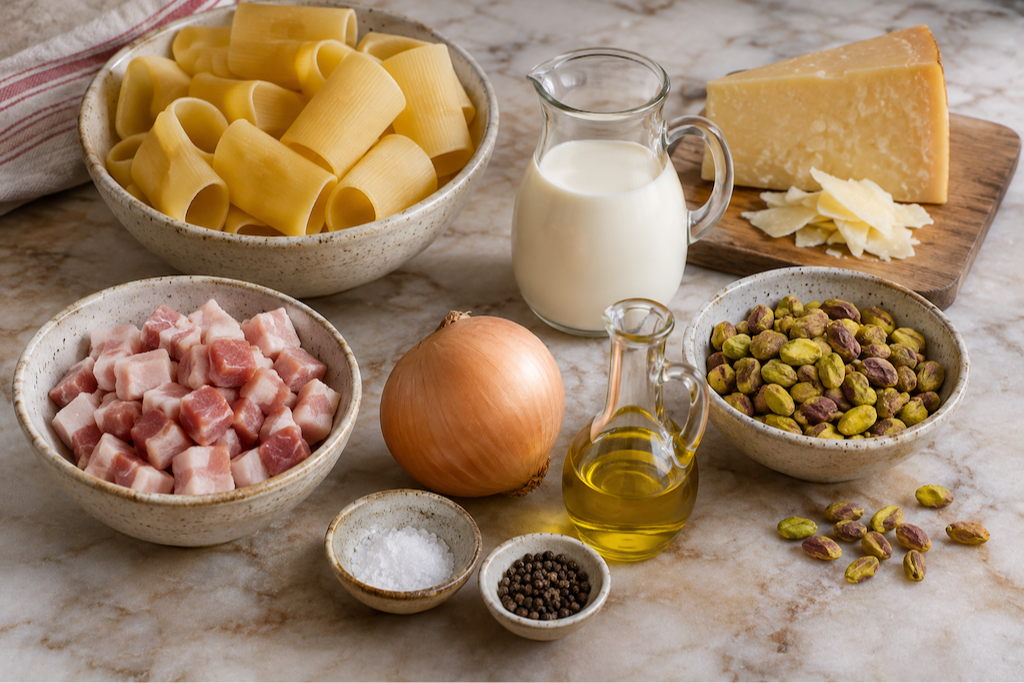
Paccheri Pasta Ingredients:
• 14 oz paccheri pasta • 10½ oz pancetta • 10½ oz pistachios • 1 onion • 2 cups + 2 tablespoons heavy cream • Piave DOP Vecchio cheese, as needed • Extra virgin olive oil, as needed
To Finish:
• Reserved pasta cooking water, as needed • Piave DOP Vecchio cheese, shaved, as needed
1. Prepare the Ingredients
Cut the 10½ oz pancetta into small pieces.
Coarsely chop or crush the 10½ oz pistachios with a knife.
Finely chop the onion.
Have the Piave DOP Vecchio ready for shaving.
2. Cook the Onion
Drizzle extra virgin olive oil into a saucepan or large skillet.
Heat gently.
Add the chopped onion and cook until softened and wilted.
3. Brown the Pancetta
Once the onion has softened, add the diced pancetta.
Brown quickly for a few seconds, stirring so the pieces cook evenly.
4. Add the Cream and Pistachios
Pour in the 2 cups + 2 tablespoons heavy cream.
Add the coarsely chopped pistachios.
Shave a couple of pieces of Piave DOP Vecchio directly into the pan.
5. Thicken the Sauce
Lower the heat.
Cook gently until the cream sauce thickens slightly.
Do not reduce it so far that it becomes too dense to coat the paccheri.
6. Cook the Paccheri
Bring a large pot of salted water to the boil.
Add the 14 oz paccheri.
Check the cooking time on the package and cook the pasta for 1 minute less than indicated.
7. Reserve the Pasta Water
Before draining, reserve approximately ½ cup pasta cooking water.
Drain the paccheri.
8. Finish the Paccheri in the Sauce
Transfer the drained pasta directly into the skillet with the sauce.
Cook together over low heat for approximately 2 minutes.
Toss gently so the sauce moves into and around the large pasta tubes.
9. Adjust the Consistency
If the sauce becomes too thick, add a small amount of reserved pasta cooking water.
Stir until the sauce becomes creamy and coats the paccheri evenly.
Turn off the heat.
10. Finish with Piave
Divide the pasta among individual plates.
Shave additional Piave DOP Vecchio over each serving.
Serve immediately.
Why Paccheri Work with a Creamy Sauce
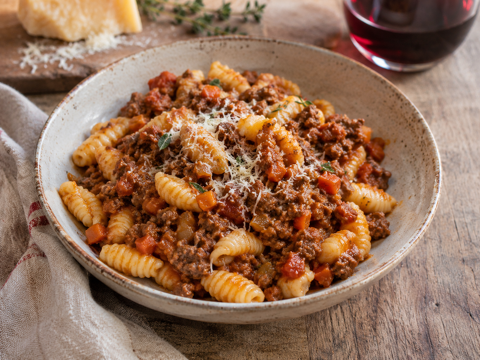
Paccheri are substantial enough to handle a rich sauce without becoming overwhelmed. The large hollow center catches smaller pieces of pancetta and pistachio, while the broad outside surface gives the cream and cheese plenty of room to cling. That makes the pasta shape part of the recipe rather than simply a vehicle for the sauce. For another example of pasta shape matching a heavier sauce, our Handmade Cavatelli with Beef Ragù uses small hollowed pasta pieces specifically to catch a slow-cooked meat sauce.
Why Pistachios and Pancetta Work Together
Pistachios bring nuttiness and texture, while pancetta contributes salt, fat, and savory depth. The heavy cream softens the contrast between them and turns the two ingredients into one cohesive sauce. Keeping the pistachios coarsely chopped rather than finely ground also matters. You still want pieces of nut to remain recognizable in the finished dish, giving the creamy pasta a little crunch.
Why Piave DOP Vecchio Works in the Sauce
Aged Piave has enough intensity to remain noticeable against cream, pancetta, and pistachios. A few shavings melted into the sauce bring savory depth without changing the preparation into a heavy cheese sauce. Then fresh shavings added at the end provide a more concentrated cheese flavor directly on the plate.
Why Finish the Pasta in the Skillet?
Cooking the paccheri for one minute less than the package directions leaves room for the pasta to finish cooking in the sauce. During those final couple of minutes, the pasta absorbs flavor while the sauce coats its surface. This is also when the reserved pasta water becomes useful. If the cream has thickened too much, a small splash loosens the sauce without making it watery. The same finishing principle appears throughout Italian pasta cooking, including our Fresh Egg Tagliatelle, where the pasta and sauce are intended to become one finished dish rather than being assembled separately on the plate.
The Perfect Bite
The paccheri should remain al dente, with enough firmness to contrast the creamy sauce. Pancetta brings a salty, savory bite first. The pistachios add nuttiness and crunch, while Piave brings a deeper aged-cheese finish. The cream connects everything without hiding the individual ingredients. The best forkful catches a pacchero with sauce inside the tube, a piece of pancetta, a few coarse pistachio crumbs, and fresh Piave shaved over the top.
More Italian Pasta Recipes to Explore
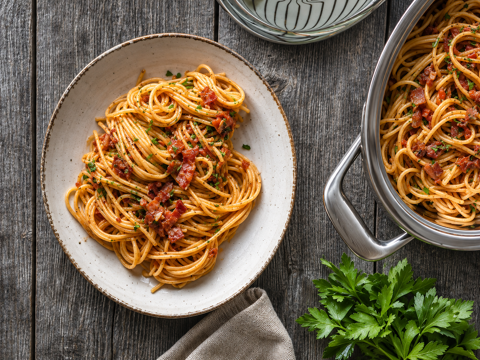
For another pasta built around pancetta, our Bucatini all’Amatriciana combines cured pork with tomato and aged Pecorino for a completely different style of sauce. If you want to explore handmade pasta, our Fresh Egg Tagliatelle is a useful starting point for fresh dough, rolling, and cutting. Our Handmade Cavatelli with Beef Ragù pairs a textured pasta shape with a much slower, meatier sauce. And if you enjoy nuts in Italian pasta sauces, our Fresh Basil Pesto takes a brighter route with basil, nuts, cheese, garlic, and extra virgin olive oil.
Learn Italian Pasta Techniques in Florence
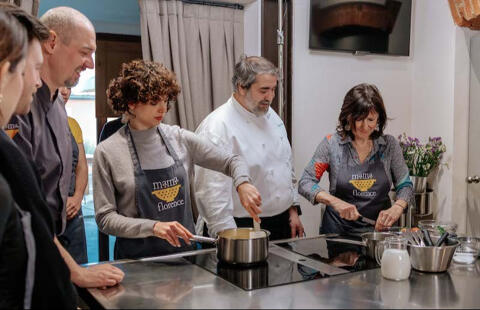
This paccheri recipe demonstrates one of the most useful habits in Italian pasta cooking: finish the pasta in the sauce. Cooking the pasta slightly under, reserving some cooking water, and giving the pasta its final minutes in the skillet are simple steps that make an enormous difference to the finished texture. At Mama Florence Cooking School, our current Cooking Classes in Florence include a dedicated Pasta Making Cooking Class alongside gnocchi and fresh pasta, Cacio e Pepe, Corzetti, pesto and pasta, and other hands-on Italian cooking experiences. For guests who want to go further, our Private Cooking Classes in Florence can also be tailored around specific Italian dishes and techniques.
Frequently Asked Questions
Q: What is paccheri pasta? A: Paccheri are large, hollow tube-shaped Italian pasta that work especially well with substantial or chunky sauces.
Q: How much paccheri do I need for four people? A: Our recipe uses 14 oz paccheri for 4 servings.
Q: How much pancetta is used? A: The recipe uses approximately 10½ oz pancetta.
Q: How much cream is used? A: Our recipe uses approximately 2 cups + 2 tablespoons heavy cream.
Q: How much pistachio is used? A: The supplied recipe uses approximately 10½ oz pistachios.
Q: What cheese is used in this paccheri recipe? A: We use aged Piave DOP Vecchio.
Q: How long should I cook the paccheri? A: Cook it for 1 minute less than the package instructions, then finish it in the sauce for another couple of minutes.
Q: Why should I save pasta water? A: A little pasta cooking water can loosen the cream sauce if it becomes too thick while the paccheri are finishing in the skillet.
Q: Should the pistachios be finely ground? A: No. Our recipe calls for them to be coarsely chopped so they retain some texture.
Q: Is the Piave added only at the end? A: No. A few shavings are added to the cream sauce, and additional cheese is shaved over the finished pasta.
Q: Do I need to make the paccheri from scratch? A: No. This recipe uses packaged paccheri and follows the cooking time given on the package.
Disclaimer
Please note that our chefs may adapt recipes according to seasonal ingredient availability and participants’ dietary or allergy requirements. As a result, the ingredients, preparation, or presentation shown in this recipe may vary from what you prepared during your Mama Florence class. In some cases, elements of a dish may also appear as separate recipes. Please reach out to our team if any confusion arises. Thank you - the Mama Florence Family
Reviews
4.911 reviews
Cooked it following along on a phone in a very small kitchen and never had to scroll back and forth. That matters more than people admit.
Marco T.
Rome, Italy · May 2026
Good for guests because it is forgiving about timing. Nothing collapses if people are late.
Paul D.
Minneapolis, USA · May 2026
I hosted for the first time in years and chose this because it could be finished ahead. Correct decision.
David K.
Chicago, USA · April 2026
Did it by hand the second time as suggested and yes, it is genuinely different. More work, better texture.
Emma L.
Bristol, UK · March 2026
Third time I have made this and I no longer look at the page. That is the highest compliment I can pay a recipe.
Luca B.
Turin, Italy · January 2026
Could not get the exact type the recipe names, so I used what I had and adjusted the liquid slightly. Fine.
Eline K.
Rotterdam, Netherlands · January 2026
The presentation suggestion at the end is worth following. It made the table look considered without any extra work.
Jessica A.
Toronto, Canada · August 2025
The fresh version of one of the ingredients is impossible to find here in February, so I used the preserved one. Still excellent, it just needed a little more attention.
Pierre A.
Lyon, France · July 2025
Very forgiving. It went too thick on me, a spoonful of liquid at the end and it came right back.
Chiara R.
Milan, Italy · July 2025
Not everything worked at the first go, but the explanation made it obvious what I had done wrong.
Ryan M.
Vancouver, Canada · June 2025
Salt at the end, not the beginning, exactly as written. That single note fixed a problem I have had for years.
Course: First Course / Pasta - Cuisine: Italian; Serves: 4. Prep: approx. 30 min. Rest/Marinate: 30 min. Cook: approx. 15–20 min. Total: approx. 1 hr 15 min.
Course: First Course / Pasta - Cuisine: Roman, Italian; Serves: 6. Prep: approx. 30 min. Rest: 15 min. Sauce: at least 30 min. Total: approx. 1 hr 15 min, plus...