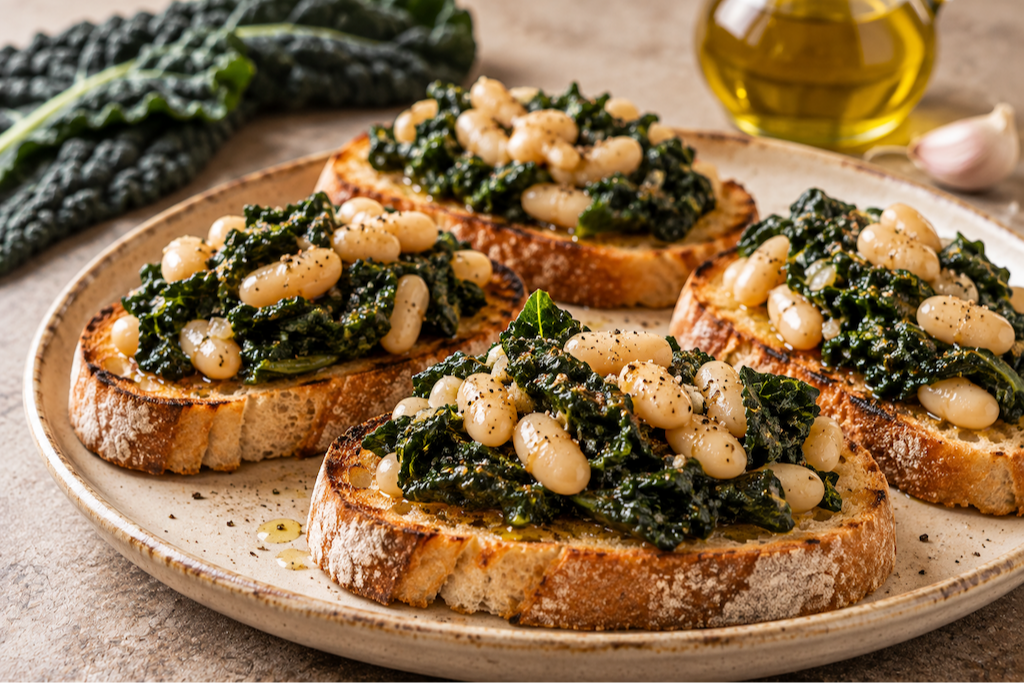
Cavolo nero is the dark leafy green often called Tuscan kale or black cabbage in English. It has long, deeply textured leaves and a stronger, more earthy flavor than many other leafy greens. For this recipe, the central ribs are removed before cooking so the more tender parts of the leaves can soften properly in boiling water. Once cooked and squeezed dry, the cavolo nero is piled over garlic-rubbed Tuscan bread with cannellini beans and olive oil.
This is Tuscan cooking at its most direct. A slice of toasted bread, rubbed with garlic, topped with warm cavolo nero and creamy cannellini beans, then finished with extra-virgin olive oil and black pepper. At Mama Florence Cooking School, recipes like this are a reminder that bruschetta does not need to be complicated. Good bread, good olive oil, and a handful of well-chosen ingredients are enough. Here, the cavolo nero brings a deep, slightly bitter green flavor, while the beans soften everything and make the bruschetta feel substantial enough to become more than just a starter.
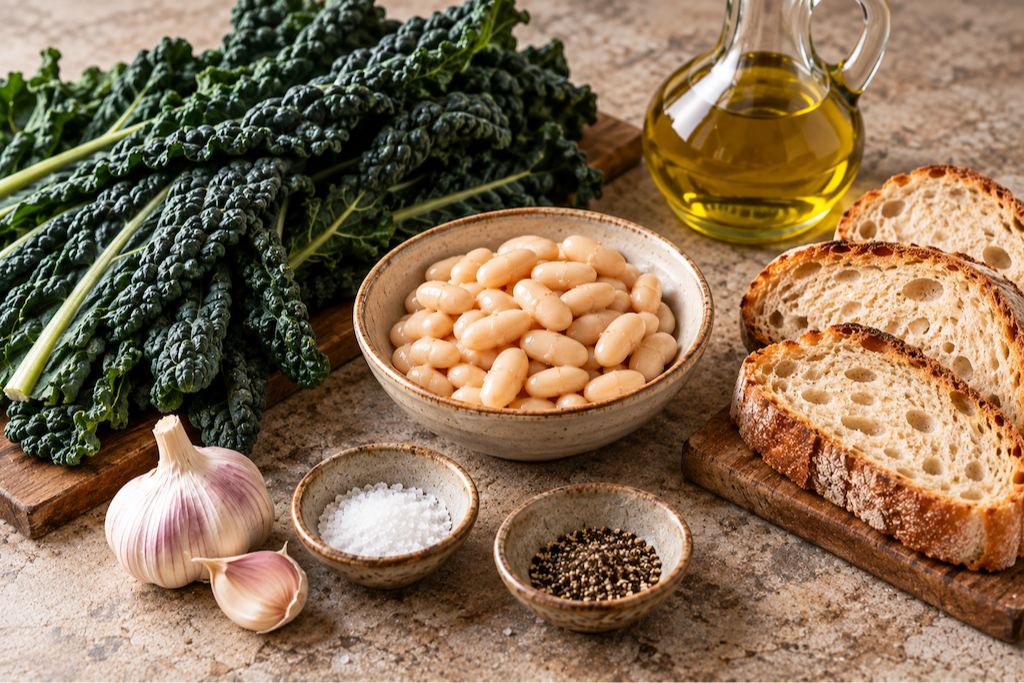
• 4 slices Tuscan bread • 700 gr cavolo nero / black cabbage • 100 gr cooked cannellini beans • 1 garlic clove • salt, to taste • black pepper, to taste • extra-virgin olive oil, as needed
Mama’s Secret: Do not skip removing the central ribs from the cavolo nero. The ribs are much tougher than the leafy part, so stripping them away gives you a softer topping and a much better texture once the greens go onto the bread.
1. Prepare the Cavolo Nero
2. Cook the Cavolo Nero
3. Toast the Bread
4. Season the Bread
5. Assemble the Bruschetta
Cavolo nero brings depth, bitterness, and a slightly earthy character. Cannellini beans do almost the opposite: they are mild, creamy, and soft. Together, they balance each other beautifully. The garlic-rubbed bread gives the dish structure, while the olive oil connects everything and rounds out the sharper edge of the greens.
Tuscan bread gives the bruschetta a sturdy base. Once toasted, it can support the warm greens and beans without collapsing underneath them. Its relatively simple flavor also leaves plenty of room for the garlic, cavolo nero, cannellini beans, and olive oil to come through. This is one of those cases where the bread is not just a platform - it is part of the dish.
Cavolo nero is a type of kale, but it has its own texture and flavor. Compared with curly kale, the leaves are longer, darker, and more deeply textured, with a more distinctly earthy taste. In Tuscany, it is especially associated with rustic winter cooking, where it appears in soups, stews, and simple bread-based dishes like this one.
The bread should still have some crunch underneath. The cavolo nero should be tender but not watery, while the cannellini beans bring creaminess and softness. Then comes the garlic and olive oil - simple, savory, and just enough to make the whole thing feel complete.
If you like the combination of cannellini beans, tomato, garlic, and sage, our Fagioli all’Uccelletto takes those same beans in a warmer, saucier direction. For another Tuscan recipe built around bread and vegetables, try our Panzanella. And for another vegetable-led dish, our Cecina turns chickpea flour, rosemary, and olive oil into a simple Tuscan flatbread.
This kind of bruschetta is a good example of how Tuscan cooking works with texture and restraint: toasted bread, warm greens, creamy beans, garlic, and good olive oil.
You can explore more dishes like this in our Traditional Tuscan Cooking Class at Mama Florence Cooking School.
Q: What is cavolo nero? A: Cavolo nero is a dark leafy green also known as Tuscan kale or black cabbage.
Q: How much cavolo nero do I need? A: The source recipe starts with 700 g cavolo nero, which yields about 250 g tender leaves after the tough central ribs are removed.
Q: What beans are used in this bruschetta? A: The recipe uses 100 g cooked cannellini beans.
Q: How long should cavolo nero cook? A: Boil it in salted water for approximately 10 minutes.
Q: How long should I toast the bread? A: Toast the Tuscan bread at 200°C for 5 minutes.
Q: Is this recipe vegetarian? A: Yes. It contains bread, cavolo nero, cannellini beans, garlic, olive oil, salt, and pepper.
Q: Is this recipe vegan? A: Yes, based on the listed ingredients.
Q: What can I serve with cavolo nero bruschetta? A: It works well as an appetizer or light meal, and pairs naturally with other Tuscan dishes like Fagioli all’Uccelletto or Panzanella
Please note that our chefs may adapt recipes according to seasonal ingredient availability and participants’ dietary or allergy requirements. As a result, the ingredients, preparation, or presentation shown in this recipe may vary from what you prepared during your Mama Florence class. In some cases, elements of a dish may also appear as separate recipes — for example, the fresh pasta you prepared may be paired here with a different sauce, while the sauce from your class may appear in another recipe. Please reach out to our team if any confusion arises. Thank you — the Mama Florence Family.
More recipes and stories from our kitchen

Course: Salad / Light Meal - Cuisine: Italian; Serves: 4. Prep: approx. 20 min, Radish Soak: 15 min. Total: approx. 35 min.
Course: Pasta / Main Course - Cuisine: Tuscan, Italian; Serves: 4. Prep: approx. 25–30 min, Rest: 30 min, Cook: approx. 5 min. Total: approx. 1 hr–1 hr 5 min.

Course: Pasta / Main Course - Cuisine: Italian; Serves: 4. Prep: approx. 25 min, Rest: 30 min + 10 min after rolling, Cook: 2–3 min. Total: approx. 1 hr 10 min.
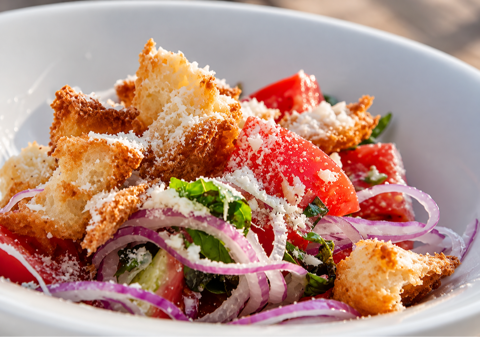
Course: Appetizer / Light Meal - Cuisine: Tuscan, Italian; Serves: 4. Prep: approx. 15 min, Bake: 15 min, Rest: 5 min. Total: approx. 35 min.
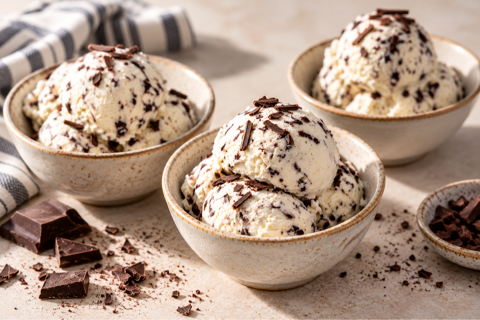
Course: Dessert - Cuisine: Italian; Serves: 6. Prep: approx. 10 min, Cook: approx. 5–10 min, Cool: approx. 45 min, Churn: 40 min. Total: approx. 1 hr 40 min–1 h...
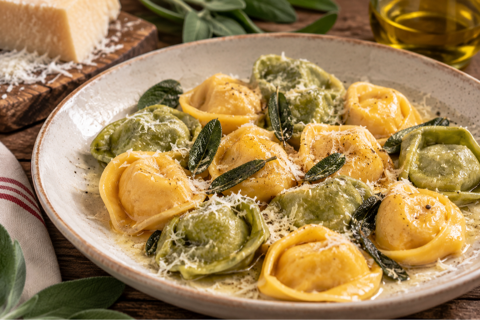
Course: Pasta Cuisine: Tuscan, Italian Serves: 4; Prep: 15, Cook: 10 min, Total: 25-30 min
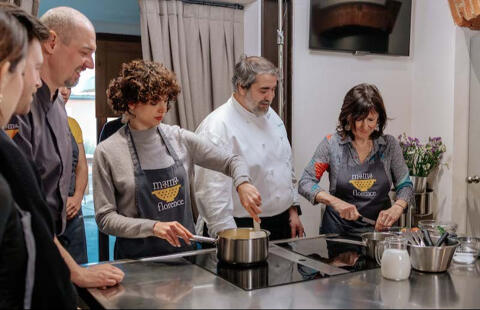
Come join us for a fantastic hands-on cooking class focused on authentic, regional Tuscan specialties
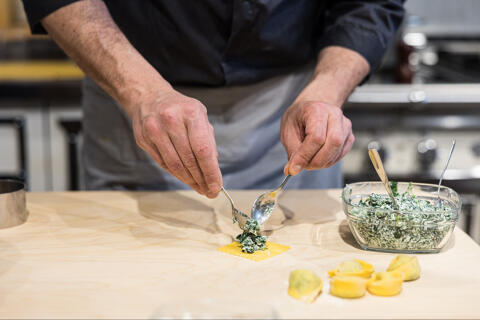
Come join us for a fantastic hands-on cooking class focused on authentic, regional Tuscan specialties
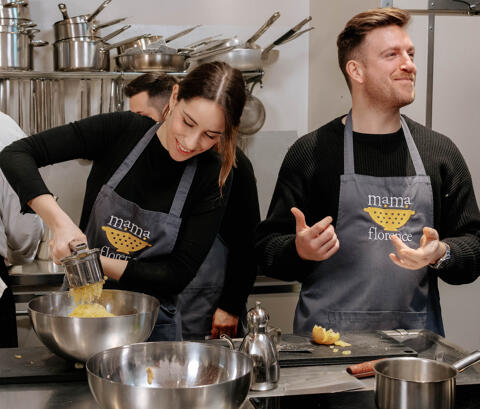
With so many of Italy’s dishes already gluten-free your chef will tell you about the benefits of having at least some of...
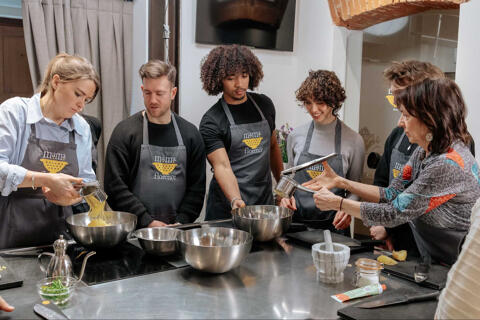
Learn Tuscan traditions and cuisine on a tour, then attend a hands-on cooking class at MaMa Florence Cooking School to l...
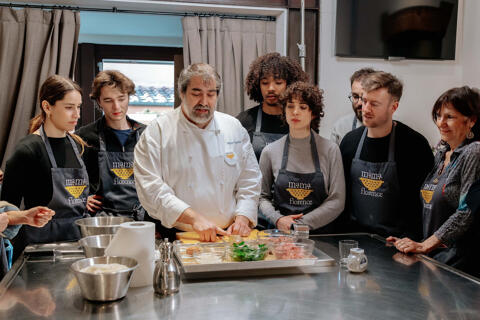
Unmissable pasta journey to discover the traditional flavors of Tuscany and Florence
Italian gelato and traditional biscotti, hands-on, under expert guidance. Fresh, seasonal ingredients.