Italian Stuffed Cabbage Rolls with Pork and Grana Padano
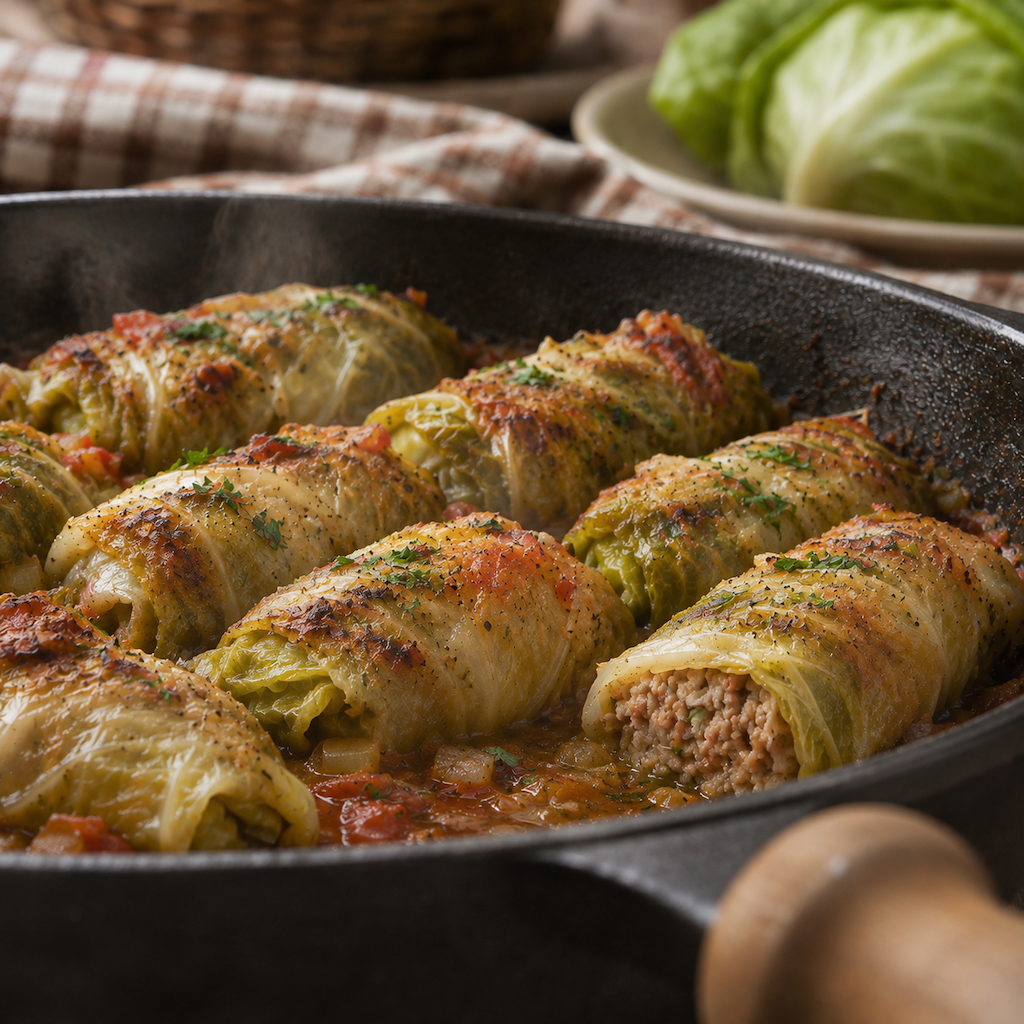
Stuffed cabbage is one of those dishes that shows how much Italian cooking can do with humble seasonal ingredients. Savoy cabbage leaves are softened just enough to become flexible, then wrapped around a savory pork filling enriched with egg, breadcrumbs, raisins, and grated cheese. At Mama Florence Cooking School, our filling starts with pork cooked gently with shallot, rosemary, bay leaf, sage, butter, extra virgin olive oil, and white wine. Once cooked, the meat is finely chopped and mixed with the remaining filling ingredients. The cabbage leaves are rolled around it, then browned in a skillet until golden. The result is hearty enough to serve as a main course but still rooted in the resourceful style of traditional home cooking.
What Are Involtini di Verza?
Involtini di verza are Italian cabbage rolls made by wrapping softened Savoy cabbage leaves around a savory filling. Versions vary from region to region. In Lombardy, particularly around Brianza, related cabbage rolls are known as capunèt and may be made with leftover roast meat or sausage combined with bread and cheese. In Piedmont, versions may include ground pork or veal. In Emilia-Romagna, some preparations incorporate mortadella and Parmigiano. Our recipe follows a balanced Northern Italian-style version using pork shoulder or collar, raisins, breadcrumbs, Grana Padano, egg, herbs, and white wine.
How to Make Italian Stuffed Cabbage Rolls
Begin by blanching the Savoy cabbage leaves in salted boiling water for about 5 minutes. Transfer them immediately to ice water, then pat them dry. For the filling, cook chopped shallot in extra virgin olive oil and butter for 2 minutes. Add the diced pork with rosemary, bay leaves, and sage. Brown lightly, deglaze with dry white wine, then cover and simmer for about 15 minutes. Finely chop the cooked meat. Mix it with beaten egg, soaked and drained raisins, breadcrumbs, and grated Grana Padano. Place a generous spoonful of filling in the center of each cabbage leaf, fold in the sides, and roll into a neat parcel. Finally, brown the stuffed cabbage rolls in a little extra virgin olive oil for 6–7 minutes, turning so the outside becomes golden.
Mama’s Secret: Blanch the cabbage only until flexible. The leaves still need enough strength to hold the filling and survive the final browning without tearing.
Cabbage Rolls Ingredients:
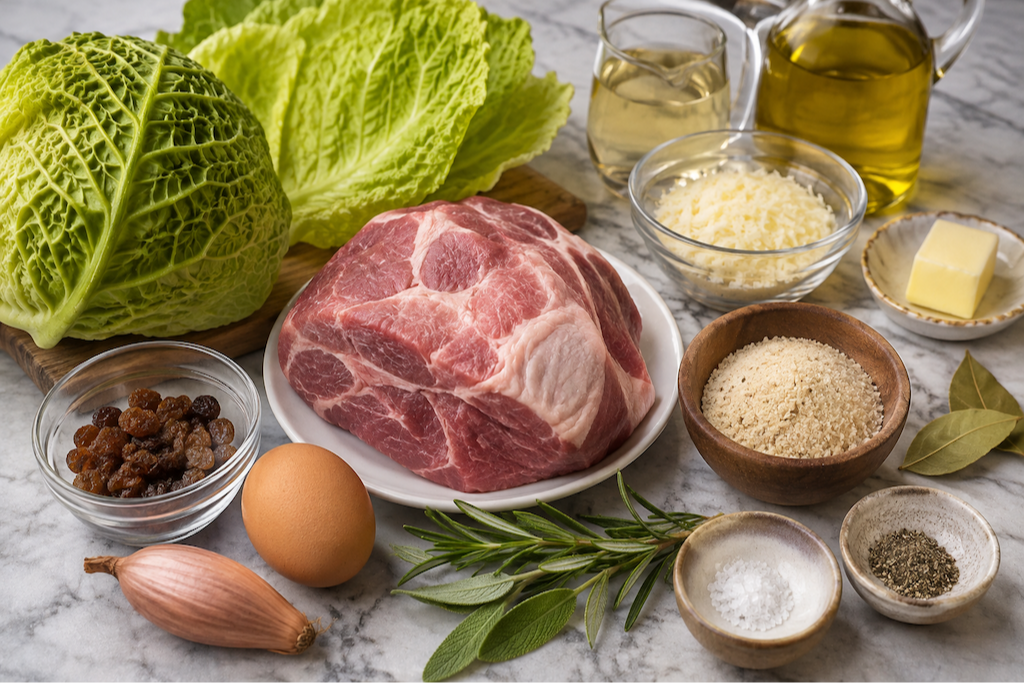
• 8 large Savoy cabbage leaves • 1.1 lb pork shoulder or pork collar, trimmed and diced • 1 shallot, finely chopped • 1 egg • 1 tablespoon raisins • 1 tablespoon breadcrumbs • 1 tablespoon grated Grana Padano, or Parmigiano • ½ cup dry white wine • 1 knob butter • 1 tablespoon extra virgin olive oil • 2 bay leaves • 1 sprig rosemary • 3 sage leaves • Salt, to taste • Freshly ground black pepper, to taste
For Final Browning:
Extra virgin olive oil, as needed
1. Blanch the Cabbage Leaves
Bring a large pot of salted water to the boil.
Add the 8 Savoy cabbage leaves.
Blanch for approximately 5 minutes.
2. Cool the Cabbage
Transfer the leaves immediately to a bowl of ice water.
This stops the cooking and helps preserve their color.
Pat the leaves dry gently with a clean kitchen towel.
3. Prepare the Pork
Trim the 1.1 lb pork shoulder or collar.
Cut it into small pieces.
Finely chop the shallot.
4. Cook the Shallot
Heat the 1 tablespoon extra virgin olive oil and the knob of butter in a large pan.
Add the shallot.
Cook for approximately 2 minutes.
5. Add the Pork and Herbs
Add the diced pork.
Add the rosemary, 2 bay leaves, and 3 sage leaves.
Cook until the meat begins to brown lightly.
6. Deglaze with White Wine
Pour in the ½ cup dry white wine.
Allow it to bubble briefly.
Cover the pan and simmer for approximately 15 minutes.
Season with salt and freshly ground black pepper halfway through cooking.
7. Chop the Cooked Meat
Remove the cooked pork from the pan.
Finely chop it by hand or pulse it briefly in a food processor.
The meat should be finely textured without becoming a smooth paste.
8. Make the Filling
Place the chopped pork in a bowl.
Add:
1 beaten egg
1 tablespoon soaked and drained raisins
1 tablespoon breadcrumbs
1 tablespoon grated Grana Padano or Parmigiano
Mix until you have a soft, cohesive filling.
9. Fill the Cabbage Leaves
Lay one blanched cabbage leaf flat on your work surface.
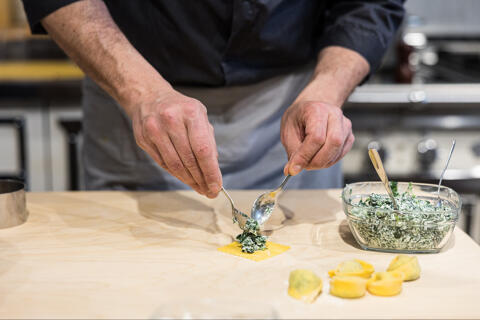
Place a generous spoonful of filling in the center.
10. Roll the Involtini
Fold the sides of the leaf inward over the filling.
Roll the cabbage around the filling to create a compact parcel.
Repeat with the remaining leaves and filling.
11. Brown the Cabbage Rolls
Heat a small amount of extra virgin olive oil in a nonstick skillet.
Add the stuffed cabbage rolls.
Brown gently on all sides for approximately 6–7 minutes, until the cabbage develops golden areas on the outside.
12. Serve
Serve the involtini hot.
Our source suggests pairing them with roasted potatoes or soft polenta.
Stuffed cabbage is closely tied to the practical, seasonal cooking traditions of Northern Italy. Savoy cabbage thrives in colder weather, while fillings built from cooked meat, bread, cheese, and other pantry ingredients reflect a style of cooking designed to make full use of what was available. Regional versions differ considerably, which is why there is no single universal filling for involtini di verza. The pork, raisins, breadcrumbs, Grana Padano, herbs, and wine in our version create one expression of that broader tradition.
Why Savoy Cabbage Works for Involtini
Savoy cabbage has broad, textured leaves that become flexible once briefly blanched. That makes them well suited to wrapping a filling. The leaves need to soften enough to fold without cracking but should not be boiled until completely limp. After rolling, the final skillet browning adds another layer of texture and flavor to the cabbage.
Why the Pork Is Cooked Before Filling
Unlike some stuffed-cabbage recipes that begin with raw ground meat, our method cooks the diced pork first. This allows the shallot, herbs, butter, olive oil, and white wine to flavor the meat before it is chopped and combined with the egg, raisins, breadcrumbs, and cheese. It also gives the filling a distinct texture rather than one resembling a raw meatball mixture.
Why Raisins Belong in the Filling
The raisins provide a small sweet counterpoint to the savory pork, aged cheese, and herbs. Only 1 tablespoon is used, so they are not intended to make the filling taste sweet. Instead, they provide occasional concentrated bursts of sweetness that contrast with the pork and cabbage.
Why Breadcrumbs and Egg Matter
The cooked pork is finely chopped before the filling is assembled. The beaten egg and breadcrumbs help turn those separate pieces into a cohesive mixture that stays together inside the cabbage. The amount is deliberately restrained: just enough to bind rather than turn the filling dense or bread-heavy.
Grana Padano or Parmigiano?
Our source allows either Grana Padano or Parmigiano. Both add saltiness and umami to the meat mixture. Only a tablespoon is used, so the cheese supports the pork rather than becoming the dominant flavor.
What to Serve with Italian Stuffed Cabbage Rolls
The original recipe recommends roasted potatoes or soft polenta. Both work because they provide a mild base for the pork, herbs, and wine. Our Italian Mashed Potatoes are another natural option if you prefer a creamier potato side. You could also serve these rolls as part of a larger Italian meal alongside a simple vegetable preparation such as Fagioli all’Uccelletto.
Wine Pairing
Our supplied recipe recommends several different wine styles:
Young Chianti brings bright acidity that can cut through the pork and butter.
Barbera d’Asti offers another red-wine direction with enough freshness for the rich filling.
A structured Verdicchio provides a white-wine option alongside the cabbage, herbs, and pork.
The Perfect Bite
The cabbage should be tender enough to cut easily but still hold together around the filling. Inside, the pork should be savory and aromatic with rosemary, sage, bay leaf, shallot, and white wine. The raisins provide small points of sweetness, while the cheese and breadcrumbs give the filling body. The final skillet browning should add a little color and texture to the cabbage without drying out the roll.
More Italian Comfort Food to Explore
For another slow, deeply savory meat dish, our Peposo con Purè di Patate pairs peppery Tuscan beef stew with herb-infused mashed potatoes. Our Traditional Tuscan Orange Guinea Fowl combines poultry with pancetta, fresh herbs, wine, and orange for another substantial Italian main course. For a classic vegetable side, our Fagioli all’Uccelletto pairs cannellini beans with tomato, garlic, sage, and extra virgin olive oil. And our Italian Mashed Potatoes make an especially easy accompaniment to the cabbage rolls.
Learn Traditional Italian Cooking in Florence
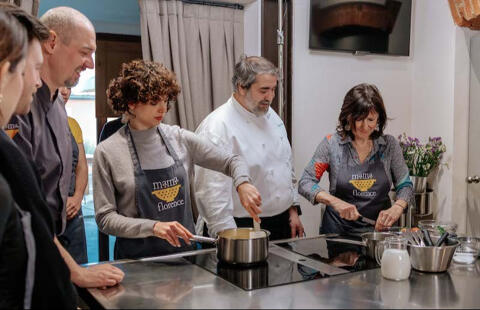
Dishes like involtini di verza are a reminder that Italian cooking extends far beyond fresh pasta and tomato sauce. Learning how to blanch vegetables correctly, build a meat filling, work with fresh herbs, deglaze with wine, and balance textures are all foundational Italian cooking techniques. At Mama Florence Cooking School, our Tuscan Traditional Cooking Course explores regional cooking through a complete hands-on menu. You can also explore our full range of Cooking Classes in Florence, which currently includes Tuscan traditional cooking alongside pasta, vegetarian, market, gelato, and other Italian cooking experiences.
Frequently Asked Questions
Q: What are involtini di verza? A: They are Italian stuffed cabbage rolls made by wrapping softened Savoy cabbage leaves around a savory filling.
Q: What meat is used in this recipe? A: Our recipe uses 1.1 lb pork shoulder or pork collar.
Q: How many cabbage rolls does the recipe make? A: The recipe uses 8 large cabbage leaves and serves 4.
Q: How long should I blanch the cabbage? A: Approximately 5 minutes, followed immediately by an ice-water bath.
Q: Do I cook the pork before filling the cabbage? A: Yes. The pork is browned and simmered with shallot, herbs, and white wine before being finely chopped.
Q: Why are raisins used? A: They provide a small sweet contrast to the savory pork, cabbage, herbs, and cheese.
Q: What cheese can I use? A: The recipe calls for Grana Padano or Parmigiano.
Q: How long do I cook the assembled cabbage rolls? A: Brown them gently in a skillet for approximately 6–7 minutes.
Q: Can I make the filling with raw ground pork instead? A: That is not the method used in our recipe. Our pork is cooked first, then finely chopped and mixed with the other filling ingredients.
Q: What should I serve with stuffed cabbage rolls? A: The source recommends roasted potatoes or soft polenta. Italian mashed potatoes are another natural pairing.
Q: What wines pair well with involtini di verza? A: The source recommends young Chianti, Barbera d’Asti, or a structured Verdicchio.
Disclaimer
Please note that our chefs may adapt recipes according to seasonal ingredient availability and participants’ dietary or allergy requirements. As a result, the ingredients, preparation, or presentation shown in this recipe may vary from what you prepared during your Mama Florence class. In some cases, elements of a dish may also appear as separate recipes. Please reach out to our team if any confusion arises. Thank you - the Mama Florence Family
Reviews
4.913 reviews
My partner cooked it while I was working late and it came out well with no experience at all. That says something about the instructions.
Robert H.
Seattle, USA · July 2026
Nothing here assumes you already know what you are doing, which is why I could follow it.
Tom B.
Leeds, UK · July 2026
Tried it with what was in the cupboard on a Wednesday. Not authentic, but it did the job.
Eline K.
Rotterdam, Netherlands · July 2026
My equipment is smaller than the recipe assumes, so I had to do it in two goes. Obvious in hindsight.
Ian P.
Glasgow, UK · July 2026
Took me about twenty minutes longer than stated, which is normal for me, but nothing was unclear.
Laura B.
Denver, USA · July 2026
We cannot find the same ingredients at home, so it is an approximation. A very happy one.
Giacomo N.
Florence, Italy · June 2026
First proper recipe I have attempted from scratch. I read it three times before I bought anything, then laid it all out on the counter like a television programme. Slow, nervous, and it worked.
Ryan M.
Vancouver, Canada · May 2026
The substitution note in the recipe itself is the reason I could make it at all.
Ingrid S.
Stockholm, Sweden · April 2026
This has quietly become our house recipe.
Federica S.
Bologna, Italy · April 2026
Made this on a grey afternoon at home and for ten minutes the kitchen smelled like a holiday.
James W.
Manchester, UK · March 2026
Started cooking properly six weeks ago and this is the first thing I have made that I would serve to somebody else.
Greg S.
Kansas City, USA · March 2026
I panicked halfway through and reread the step. It was written more clearly than I had read it.
Michael R.
Austin, USA · February 2026
Cheap enough to make for a big group without thinking too hard about the shopping.