Gnudi: Tuscany’s “Naked” Ravioli
There is something wonderfully direct about gnudi. Take the soft ricotta-and-spinach filling you might expect to find inside fresh ravioli, remove the pasta around it, and cook the filling itself. That is the essential idea behind one of Tuscany’s most distinctive first courses.
The name gnudi comes from the Tuscan word for “naked,” a reference to the fact that these tender dumplings are served without a pasta wrapper. In Florence and across Tuscany, they belong to the same family of rustic dishes built from humble ingredients and careful technique: ricotta, greens, egg, cheese, flour, and a little nutmeg.
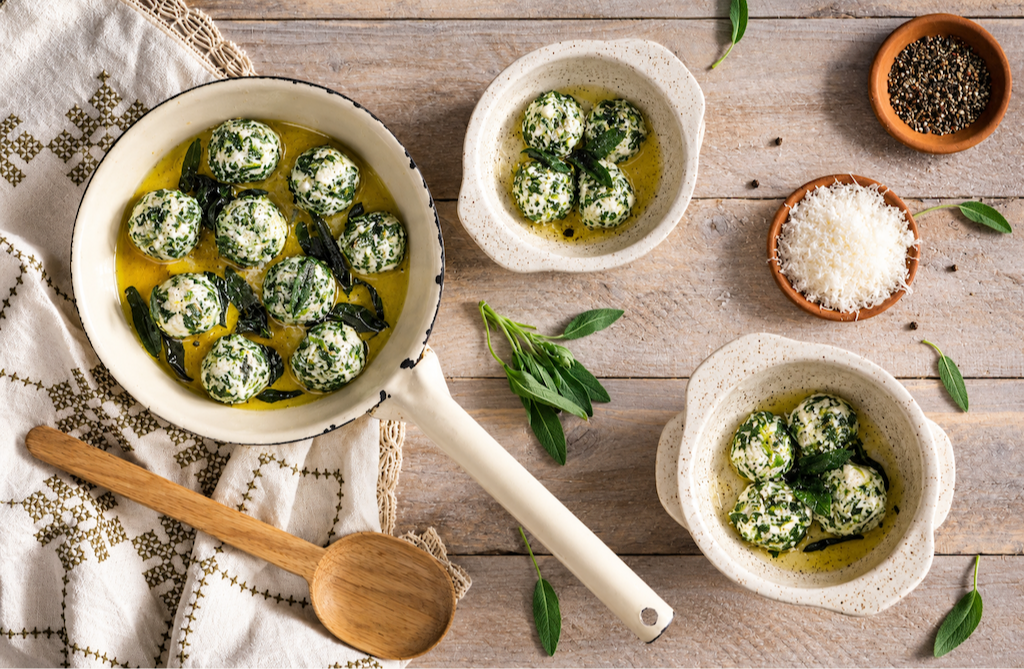
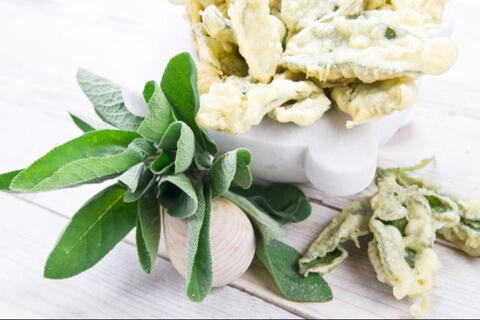
Traditional versions are often served simply with butter and sage or tomato sauce. This Mama Florence version takes a more elegant direction, setting the gnudi over a smooth Pecorino di Grotta fondue, where the tang of sheep’s milk cheese echoes the sheep’s milk ricotta in the dumplings themselves. Traditional Tuscan sources likewise describe gnudi as the filling of ravioli served “naked,” often finished with butter and sage.
What Are Gnudi?
Gnudi are Tuscan ricotta dumplings traditionally made from ricotta, cooked spinach, egg, grated cheese, seasoning, and a small amount of flour to help them hold their shape.
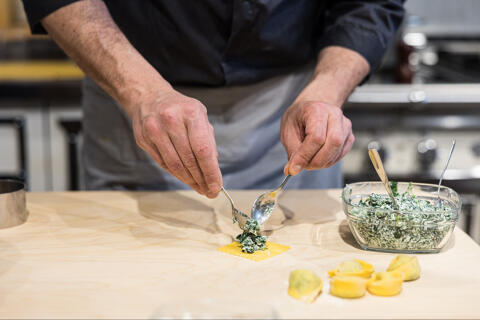
They are sometimes described as “naked ravioli” because their ingredients closely resemble a classic spinach-and-ricotta ravioli filling, but without the sheet of pasta wrapped around it. That comparison is useful, but it also explains why texture matters so much: without pasta to contain the filling, the gnudi themselves need to be soft enough to stay delicate yet structured enough to survive the cooking water.
The single most important part of the preparation is therefore moisture control. Both the ricotta and spinach need to be drained thoroughly before they are mixed. Tuscan recipe sources consistently emphasize removing excess liquid so the dumplings do not collapse or become heavy with unnecessary flour.
How to Make Spinach and Ricotta Gnudi with Butter and Sage Sauce
Begin by draining the sheep’s milk ricotta for at least 15 minutes. If it is particularly wet, give it more time; a fine-mesh sieve or cheesecloth-lined colander works well. Blanch the spinach until just wilted, then drain and squeeze it very thoroughly. Chop it finely before combining it with the ricotta, grated Parmigiano, egg yolks, nutmeg, salt, and pepper. Shape the mixture into small dumplings of approximately 25–30 g each. Dust them lightly with flour, allow them to rest for a couple of minutes, then give them a second gentle coating. That fine flour layer helps protect the soft interior once the gnudi enter the water.
Gnudi Ingredients:
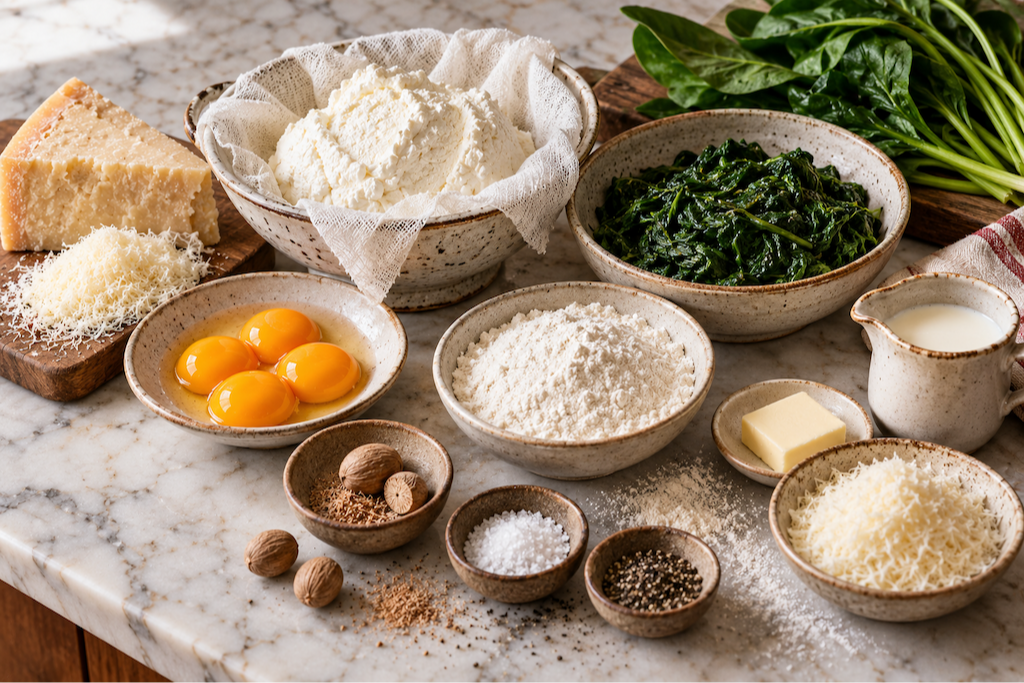
• 600 gr sheep’s milk ricotta • 160 gr cooked spinach, thoroughly drained • 4 egg yolks • 80 gr grated Parmigiano Reggiano • Nutmeg, as needed • Salt, as needed • Black pepper, as needed • 1 cup all-purpose flour, or rice flour, for coating
Pecorino di Grotta Fondue Ingredients:
• 75 gr grated Pecorino di Grotta • 100 ml fresh whole milk, or heavy cream for a richer texture • 10 gr butter • 10 gr all-purpose flour • Freshly ground black pepper, to taste
Butter and Sage Sauce Ingredients:
• 30 gr unsalted butter • Fresh sage • 1 organic lemon • Freshly ground black pepper, as needed • Grated Parmigiano Reggiano, as needed
1. Drain the Ricotta
- Place the sheep’s milk ricotta in a fine-mesh strainer or a colander lined with cheesecloth.
- Allow it to drain for at least 15 minutes to remove excess liquid.
2. Prepare the Spinach
- Blanch the spinach in boiling water until just wilted.
- Drain well, then squeeze out as much water as possible. Chop the spinach finely and transfer it to a mixing bowl.
3. Make the Gnudi Mixture
- Add the drained ricotta, grated Parmigiano Reggiano, 4 egg yolks, nutmeg, salt, and black pepper to the spinach.
- Mix until everything is evenly combined and the mixture is cohesive.
4. Shape the Gnudi
- Lightly flour your hands.
- Shape the mixture into small, uniform balls weighing approximately 25–30 g each, roughly the size of a walnut.
- Arrange them on a flour-dusted plate or tray.
- Roll or sprinkle each gnudo with a light coating of flour. Let them rest for a couple of minutes, then coat them gently with flour once more.
5. Cook the Gnudi
- Bring a large pot of well-salted water to a gentle boil.
- Add the gnudi carefully, working in batches if necessary so the pan is not overcrowded.
- Cook for approximately 3 minutes, or until the gnudi float to the surface.
- Lift them carefully from the water with a slotted spoon.
6. Make the Pecorino di Grotta Fondue
- Melt the butter in a small saucepan over low heat.
- Add the flour and stir until it forms a smooth paste.
- Gradually whisk in the milk, keeping the heat low, and continue cooking until the mixture thickens slightly.
- Turn off the heat. Add the grated Pecorino di Grotta and stir vigorously until the cheese has melted and the fondue is smooth and creamy.
- Finish with freshly ground black pepper and keep warm while you finish the gnudi.
7. Make the Butter and Sage Sauce
- Melt the butter gently in a frying pan.
- Add the fresh sage and let it infuse the butter over low heat until fragrant.
- Add the cooked gnudi and turn them carefully in the butter until lightly coated.
- Finish with freshly ground black pepper, grated Parmigiano Reggiano, and a little finely grated lemon zest.
How to Serve Gnudi with Butter, Sage and Pecorino Fondue
- Spoon the warm Pecorino di Grotta fondue onto the base of each plate.
- Arrange the butter-and-sage-coated gnudi over the fondue.
- Finish with Parmigiano Reggiano, freshly ground black pepper, and a light touch of lemon zest.
- Serve immediately while the gnudi are hot and tender and the fondue is still smooth and creamy.
What Is Pecorino di Grotta?
Pecorino di Grotta is a style of aged sheep’s milk cheese associated with maturation in cool cellar or cave-like environments. In this dish, its deeper, more assertive flavor gives the fondue enough character to stand beside the mild ricotta and spinach without overwhelming them. Because both the gnudi and the sauce are built around sheep’s milk cheeses, the pairing feels coherent rather than decorative: the ricotta gives softness and freshness, while the aged Pecorino brings salinity and depth. For this recipe, we would keep the description deliberately specific to the cheese’s role in the dish rather than inventing provenance, aging time, or protected status that is not supplied in the source.
Why Draining the Ricotta and Spinach Matters
Gnudi should feel tender rather than floury. Excess moisture is what makes that difficult. Wet ricotta and spinach force you to add more flour to stabilize the mixture, and every extra addition moves the finished texture further away from that soft, delicate center. Proper draining lets the cheese and greens remain the dominant ingredients while the flour does only the structural work it needs to do. That same attention to moisture and dough structure is central to many of the fresh pasta recipes we teach at Mama Florence, from Tuscan Potato Tortelli to filled pasta made during our Pasta Making Cooking Classes in Florence.
The Perfect Bite
The gnudi should be soft enough to yield almost immediately under the fork, with the sweetness of sheep’s milk ricotta and the earthiness of spinach followed by Parmigiano and nutmeg. The melted butter gives them a delicate coating rather than a heavy sauce, while black pepper and lemon zest keep the richness in check. Underneath, the Pecorino di Grotta fondue brings salinity and depth. The best bite catches all of it together: tender gnudi, a little butter, a trace of lemon, and just enough warm Pecorino fondue underneath.
More Tuscan Recipes to Explore
If you like the combination of spinach and ricotta, our Gluten-Free Ravioli with Ricotta and Spinach takes the same classic pairing in a filled-pasta direction. For another distinctly Tuscan first course, try our Potato Tortelli, where a soft potato filling is enclosed in fresh pasta and finished with the sauce of your choice. You can also explore Fresh Egg Tagliatelle for a foundational fresh pasta dough, or move into other regional preparations through Mama Florence’s wider collection of Italian recipes.
Learn to Make Tuscan Pasta in Florence
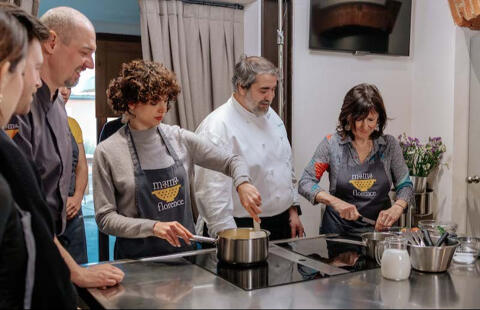
At Mama Florence Cooking School, recipes like gnudi are a reminder that Tuscan cooking does not depend on complicated ingredient lists. It depends on knowing what each ingredient needs.
That is exactly the kind of technique explored in our Pasta Making Cooking Class in Florence, where guests work through the fundamentals of fresh pasta, shaping, fillings, and sauces with our chefs. If you want to explore beyond pasta, you can also browse our wider range of cooking classes in Florence, including Tuscan cooking, gluten-free classes, vegetarian classes, and other regional specialties.
Gnudi with Pecorino Fondue FAQ
Q: What does “gnudi” mean? A: “Gnudi” means “naked” in Tuscan dialect. The name refers to the dumplings being similar to a ravioli filling served without the pasta wrapper.
Q: Are gnudi the same as gnocchi? A: No. Gnudi are primarily made from ricotta and greens, while classic potato gnocchi are based on potatoes and flour. They are both dumplings, but their ingredients and textures are different.
Q: Why do my gnudi fall apart? A: Excess moisture is usually the main problem. Drain the ricotta thoroughly and squeeze as much water as possible from the cooked spinach before mixing the gnudi.
Q: How do I know when gnudi are cooked? A: In this recipe, the gnudi cook for about 3 minutes and are ready when they float to the surface.
Q: Can I use rice flour instead of all-purpose flour? A: Yes. The supplied recipe allows either all-purpose flour or rice flour for coating the gnudi.
Q: What is the best sauce for gnudi? A: Traditional Tuscan gnudi are commonly served with butter and sage or a simple tomato sauce. This version is served over a Pecorino di Grotta fondue.
Q: Can I make gnudi ahead of time? A: The supplied recipe does not provide make-ahead or storage instructions, so I would not add a specific holding time to the client page without testing or chef confirmation.
Disclaimer
Please note that our chefs may adapt recipes according to seasonal ingredient availability and participants’ dietary or allergy requirements. As a result, the ingredients, preparation, or presentation shown in this recipe may vary from what you prepared during your Mama Florence class. In some cases, elements of a dish may also appear as separate recipes — for example, the fresh pasta you prepared may be paired here with a different sauce, while the sauce from your class may appear in another recipe. Please reach out to our team if any confusion arises. Thank you — the Mama Florence Family.