Panzanella is a traditional Tuscan bread salad made with stale bread and fresh summer vegetables.
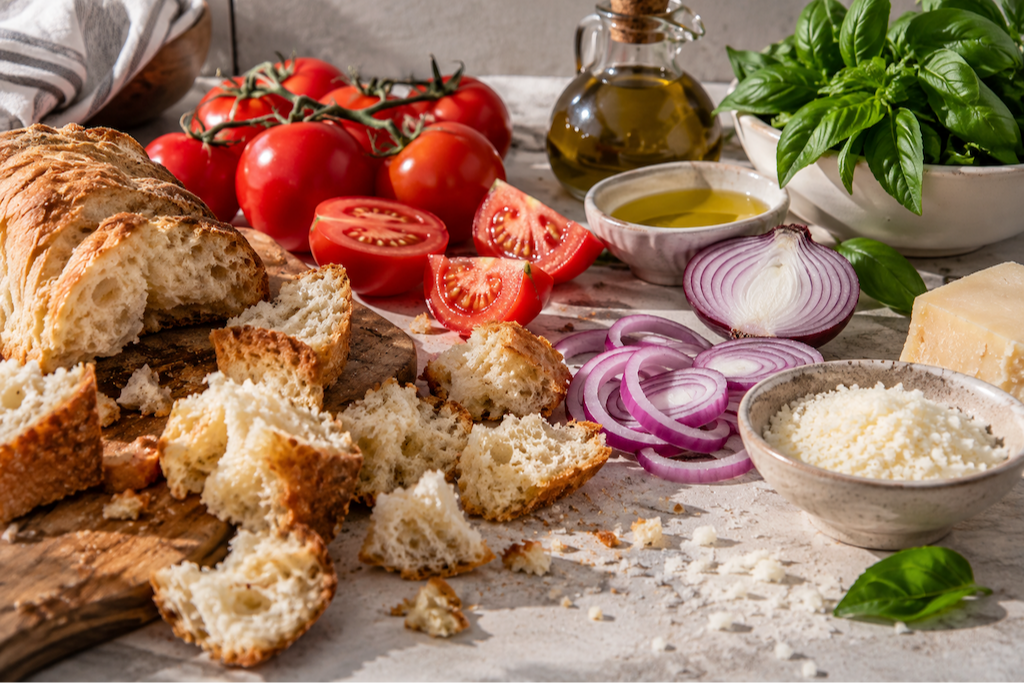
Tomatoes are at the heart of the version most people know today, joined here by cucumber, red onion, basil, extra-virgin olive oil, red vinegar, and salt.
Older bread works particularly well because it can absorb the dressing and vegetable juices without immediately disappearing into the salad.
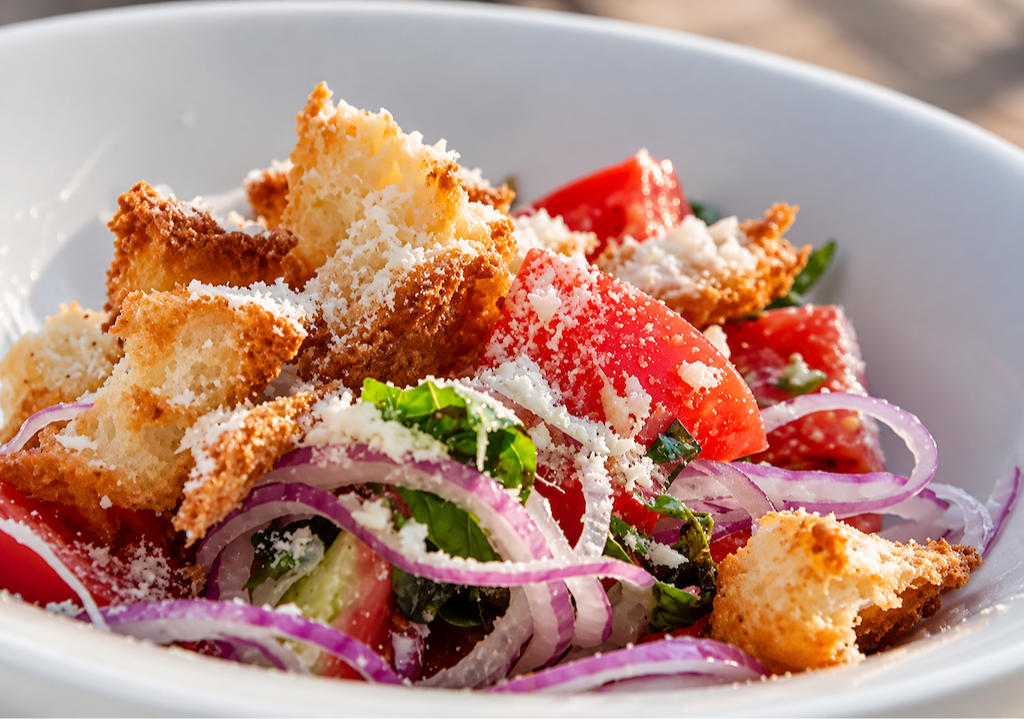
This recipe is a crunchier interpretation of panzanella: instead of soaking the bread before assembling the dish, the stale bread is cut into cubes and toasted in the oven. The vegetables are then added on top so their juices begin softening the bread only at the end.
A Classic Tuscan Salad
Some of Tuscany’s best dishes begin with an ingredient that another kitchen might throw away.
Panzanella turns stale bread into a summer salad filled with ripe tomatoes, cucumber, red onion, basil, olive oil, and vinegar. The vegetables release their juices as they sit, and the bread catches all of it.
At Mama Florence Cooking School, our version adds one small twist: we toast the stale bread first. That little bit of oven time gives the cubes a crisp edge before they meet the tomatoes and dressing, so the finished salad lands somewhere between juicy and crunchy.
It is simple food, but very Tuscan in spirit - good ingredients, nothing wasted, and no need to complicate what already tastes like summer.
How to Make Panzanella
Ingredients
• 150 gr country-style stale bread • 1 cucumber • 3 large tomatoes • 1 red onion, preferably Tropea if available, peeled • 8-10 fresh basil leaves • 2 tbsp extra-virgin olive oil • 2 tbsp red vinegar • Salt, as needed
Mama’s Secret: Don’t let the vegetable juices soak into the bread too early. Adding the vegetables and dressing toward the end lets the bread absorb plenty of flavor while still holding onto some of its toasted texture.
1. Toast the Bread
Cut the stale bread into 1 cm cubes and spread them on a baking tray.
Bake at 180°C for 15 minutes, then set aside.
2. Prepare the Vegetables
Slice the red onion into very thin strips.
Peel the cucumber, remove the seeds, and cut it into 1 cm cubes.
Cut the tomatoes into 1 cm cubes.
Slice the fresh basil.
3. Assemble the Panzanella
Place the toasted bread at the bottom of a large mixing bowl, then add the tomatoes, cucumber, and red onion.
Add the basil, extra-virgin olive oil, red vinegar, and salt.
Press down gently with a spoon so the vegetable juices and dressing begin to reach the bread.
4. Let the Bread Absorb the Juices
Leave the salad to rest for 5 minutes.
This short rest allows the bread to pick up the tomato juices, olive oil, and vinegar without losing all of its texture.
Mix everything thoroughly before serving.
5. Serve
Serve the panzanella cold with a final drizzle of extra-virgin olive oil.
Why Use Stale Bread for Panzanella?
Panzanella belongs to a long Tuscan tradition of finding new uses for bread once it is no longer fresh. Stale bread is firmer and drier than a fresh loaf, which means it can absorb tomato juice, vinegar, and olive oil while still contributing texture to the salad.
In this recipe, toasting it first takes that idea one step further. The oven dries and crisps the surface of the bread before the vegetables are added, giving the finished panzanella a little more bite. It is less about rescuing an ingredient and more about recognizing that older bread behaves differently — and sometimes better — in the right dish.
What Tomatoes Are Best for Panzanella?
Use tomatoes that are ripe, fragrant, and juicy. Their juices are part of the dressing, so a firm, under-ripe tomato will give you a very different salad from one that has reached its summer peak.
Why Tropea Onion?
Tropea onions are prized for their relatively sweet, delicate character, which works beautifully when the onion is being eaten raw. Whatever red onion you use, slice it thinly. The onion should add freshness and a little bite without overwhelming the tomatoes, basil, and olive oil.
The Perfect Bite
A good forkful of panzanella should give you several textures at once.
The tomato is soft and juicy, the cucumber stays fresh and crisp, the onion gives a little sharpness, and the bread has absorbed enough dressing to become flavorful without turning completely soft. Then comes the basil and olive oil - the two flavors that pull the whole thing unmistakably back toward Tuscany.
Panzanella and the Tuscan Tradition of Bread
Panzanella makes even more sense when you look at the role bread plays across Tuscan cooking.
Bread here has never only belonged beside the meal. Once it becomes stale, it can become an ingredient in its own right - absorbing broth, tomato, olive oil, or whatever the season offers. That same instinct sits behind many of Tuscany’s most enduring dishes: use what is already in the kitchen, treat it well, and let a handful of ingredients do something bigger together.
If you like the way panzanella turns a few humble ingredients into something distinctly Tuscan, try our Cecina, a chickpea flatbread with rosemary, olive oil, and baked cherry tomatoes. For something warmer and a little more indulgent, our Coccoli are Florentine fried dough traditionally served with Prosciutto Crudo and creamy Stracchino.
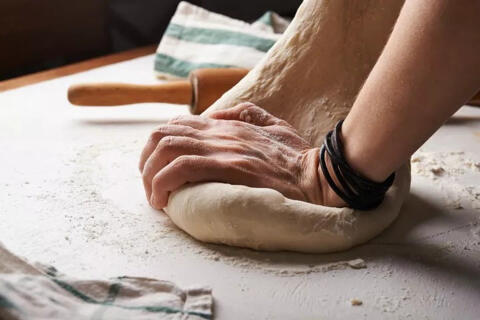
And if you want to stay with bread and dough, make our Fresh Italian Pizza Dough, another recipe where flour, water, time, and technique do most of the work.
Learn Tuscan Cooking with Mama Florence
Panzanella is the kind of recipe that tells you a lot about Tuscan cooking: seasonal vegetables, good olive oil, stale bread given a second life, and very little wasted.
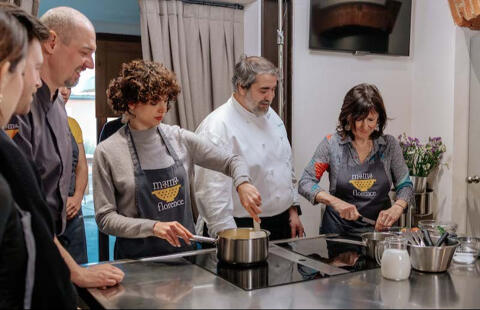
You can explore more of that tradition in our Traditional Tuscan Cooking Class at Mama Florence Cooking School, where dishes change with the season and the ingredients available in the kitchen.
Panzanella FAQ
Q: What is panzanella? A: Panzanella is a traditional Tuscan bread salad made with stale bread, tomatoes, and other fresh vegetables dressed with olive oil and vinegar.
Q: What is in this panzanella recipe? A: This Mama Florence version uses 150 g stale country-style bread, cucumber, three large tomatoes, red onion, basil, extra-virgin olive oil, red vinegar, and salt.
Q: Why does panzanella use stale bread? A: Stale bread is dry enough to absorb the tomato juices, vinegar, and olive oil while still retaining some texture.
Q: Do you soak the bread for panzanella? A: Not in this version. The Mama Florence recipe toasts the bread for 15 minutes, then allows it to absorb the vegetable juices and dressing for a short 5-minute rest after assembly.
Q: Can I make panzanella ahead of time? A: The source recipe notes that panzanella can be kept in the refrigerator, but for this crunchy version, the best texture comes from allowing the bread to meet the vegetable juices toward the end of preparation rather than soaking for a long period.
Q: Is panzanella vegetarian? A: Yes. This recipe is made entirely with bread, vegetables, basil, olive oil, vinegar, and salt.
Q: Is panzanella served hot or cold? A: This Mama Florence recipe is served cold, finished with a drizzle of extra-virgin olive oil.
Disclaimer
Please note that our chefs may adapt recipes according to seasonal ingredient availability and participants’ dietary or allergy requirements. As a result, the ingredients, preparation, or presentation shown in this recipe may vary from what you prepared during your Mama Florence class. In some cases, elements of a dish may also appear as separate recipes. Please reach out to our team if any confusion arises. Thank you - the Mama Florence Family
Reviews
4.911 reviews
The instructions are written by somebody who has actually stood in a kitchen. The order of operations makes sense and nothing is left to be guessed.
Nicole F.
Charlotte, USA · July 2026
Cooking this was the closest thing to going back.
Robert H.
Seattle, USA · May 2026
The visual cues are more useful than the timings, because every kitchen is different. Glad both are given.
Silvia D.
Padua, Italy · May 2026
We cooked it together as a family, which was the actual point, and it happened to taste good too.
Daniel O.
Brooklyn, USA · May 2026
Everybody went back for more and I did not have to stand at the stove while they did.
Chiara R.
Milan, Italy · May 2026
Took me twice the stated time because I am slow, but the result was right.
Pierre A.
Lyon, France · February 2026
Cooked it for eight and most of the work happened the day before, which is exactly what you want when you are hosting.
Emma L.
Bristol, UK · December 2025
Cooked it for my sister, who is a far better cook than me, and she asked where I got it.
Paul D.
Minneapolis, USA · July 2025
Followed it exactly and it worked. Not much else to say.
Markus H.
Cologne, Germany · December 2024
Made this for my in-laws, who are Italian, with a certain amount of anxiety. It passed.
Jenna P.
Portland, USA · November 2024
The presentation suggestion at the end is worth following. It made the table look considered without any extra work.