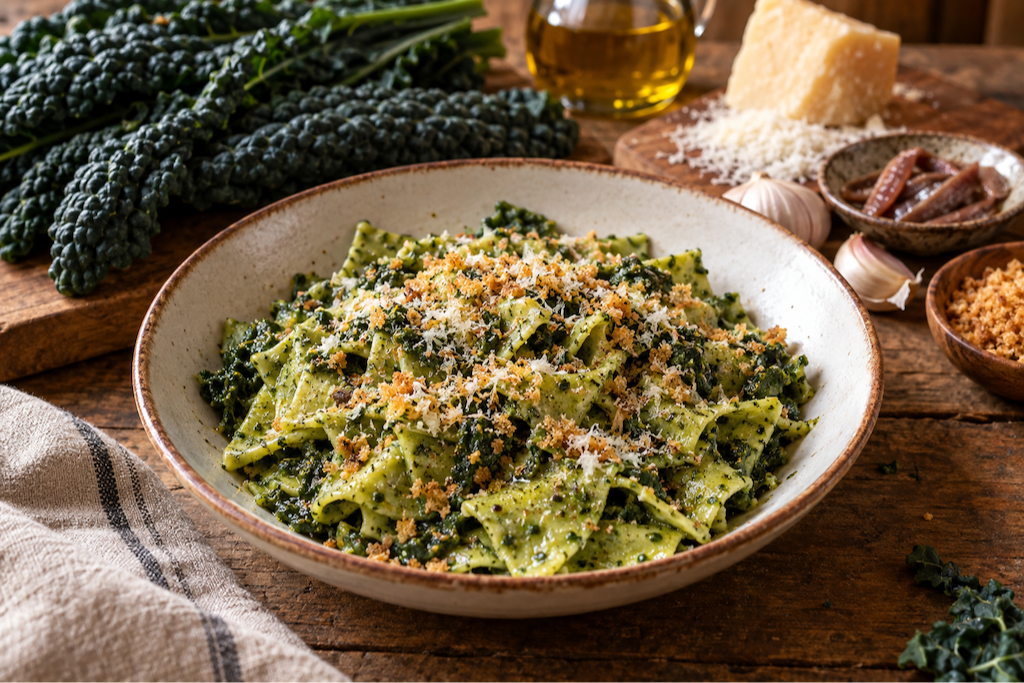
Maltagliati literally means “badly cut” in Italian. Unlike tagliatelle or pappardelle, maltagliati are not supposed to look perfectly uniform. Fresh pasta sheets are cut into rough squares, diamonds, or irregular pieces, giving the shape its characteristic handmade appearance. That irregularity also has a practical origin. Scraps left over from making filled pasta such as ravioli or tortelli can be cut into maltagliati instead of being wasted. This recipe keeps that tradition alive. You can roll out a full sheet specifically for maltagliati, or simply use the leftover dough from another pasta project. There is something very Tuscan about that idea: good pasta dough never needs to be wasted simply because the edges are imperfect.
Tuscan Kale, Cavolo Nero and Winter Cooking
Tuscan kale is also known as cavolo nero or black cabbage, one of the defining vegetables of Tuscan winter cooking. Its long, dark leaves have a deeper, more robust flavor than many softer greens, which makes it particularly well suited to soups, beans, bruschetta, and pasta sauces. In this recipe, boiling softens the leaves before they are used in two different ways. A smaller quantity is blended into the pasta dough, while the larger quantity is squeezed thoroughly and blended into the pesto with anchovy, garlic, and olive oil. That double use gives the dish continuity rather than simply placing a green sauce on top of green pasta. If you want to explore another traditional use of the same ingredient, our Black Cabbage and Cannellini Bean Bruschetta pairs cavolo nero with beans, garlic, olive oil, and toasted Tuscan bread.
How to Make Fresh Maltagliati with Tuscan Kale
Tuscan Kale Maltagliati Ingredients
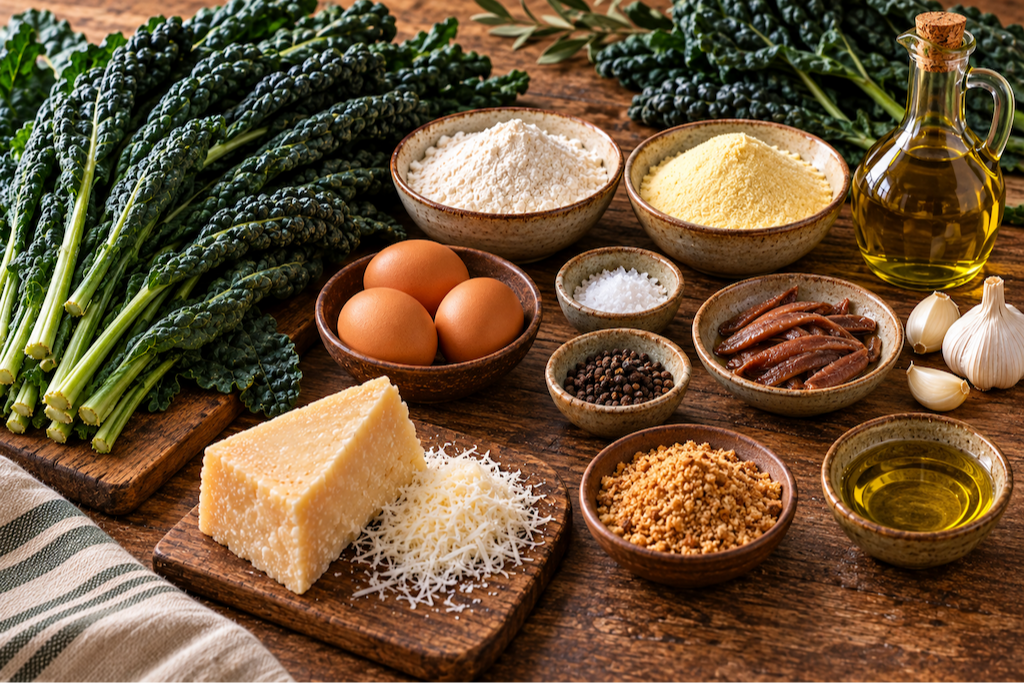
• 150 gr all-purpose flour • 200 gr semola flour • 3 eggs • 150 gr Tuscan kale • 1 tablespoon extra virgin olive oil • Salt, as needed • Black pepper, as needed
Tuscan Kale Pesto Ingredients
• 2 bunches Tuscan kale • 100 gr extra virgin olive oil, plus more as needed • 2 garlic cloves • 5 anchovy fillets • Breadcrumbs, as needed • Salt, as needed • Freshly ground black pepper, as needed
To Finish
Freshly grated Parmigiano, as needed
Extra virgin olive oil, for drizzling
Finely ground breadcrumbs, preferably toasted
Mama’s Secret: Maltagliati do not need to be cut perfectly. Focus on rolling the pasta evenly; the irregular shape is part of the dish, not a mistake.
1. Prepare the Tuscan Kale for the Pasta Dough
Remove the Tuscan kale leaves from the tough stems.
Bring a small pan of water to the boil and add the leaves.
Cook for approximately 7–8 minutes, or slightly less if the kale is particularly tender.
Drain and allow the kale to cool completely.
2. Make the Kale Pasta Dough
Blend the cooled kale until smooth and creamy.
Combine it with the eggs, 1 tablespoon extra virgin olive oil, a pinch of salt, and a little black pepper.
Mix the all-purpose flour and semola together and form them into a mound on the work surface.
Create a well in the center and pour in the kale-and-egg mixture.
Using a fork, gradually draw the flour into the center until a dough begins to form.
Knead with the palm of your hand on a lightly floured surface until the dough becomes smooth, soft, elastic, and compact.
Shape into a ball and cover with plastic wrap.
Rest at room temperature for at least 30 minutes.
3. Prepare the Kale for the Pesto
Remove the leaves from the tough stems of the remaining two bunches of Tuscan kale.
Keep the stems with other vegetable trimmings if you want to use them later for homemade vegetable broth.
Bring a small pot of salted water to the boil.
Add the kale leaves and cook for approximately 7–8 minutes, or closer to 5 minutes if they are particularly tender.
Drain thoroughly.
Working in small batches, wrap the leaves in a clean kitchen towel or sturdy paper towel and squeeze out as much excess water as possible.
4. Prepare the Garlic and Anchovy Oil
Pour 100 g extra virgin olive oil into a small saucepan and warm over medium heat.
Lightly smash the 2 garlic cloves, remove their skins, and discard any inner green shoots if present.
If using salt-cured anchovies, rinse and pat them dry. Anchovies preserved in oil can be used without rinsing.
Add the garlic and anchovies to the warm oil.
Cook gently over medium-low heat until the anchovies dissolve and the garlic becomes lightly golden.
Remove immediately from the heat before the garlic darkens too much.
5. Make the Tuscan Kale Pesto
Place the squeezed kale leaves in a blender.
Add the warm garlic, anchovy, and olive oil mixture.
Blend until the sauce is dense and fairly creamy.
Add a little more extra virgin olive oil if necessary to reach the desired consistency.
Taste and adjust with salt and freshly ground black pepper.
6. Roll the Fresh Pasta
Remove the rested pasta dough from the plastic wrap.
Shape it into a rectangle approximately the width of your pasta machine.
Begin rolling it through the machine, dusting with semola whenever necessary to prevent sticking.
Continue passing the dough through progressively thinner settings until the desired thickness is reached.
7. Cut the Maltagliati
Dust the work surface with semola and lay the pasta sheet on top.
Using a knife or pasta cutter, cut the sheet into irregular square or diamond-like shapes.
There is no need to make them identical.
Dust a tray with semola and arrange the finished maltagliati on top.
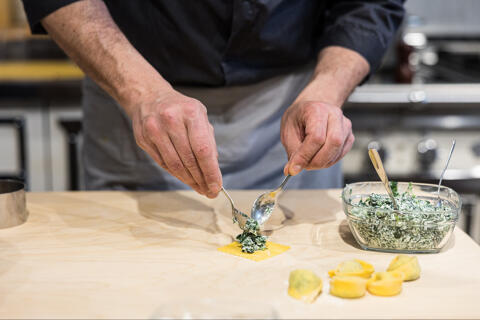
If you are making ravioli or tortelli at the same time, leftover pasta scraps can simply be cut into irregular shapes and used as maltagliati.
8. Cook the Maltagliati
Bring a large pot of salted water to the boil.
Add the fresh maltagliati and cook for at least 2 minutes.
Drain well.
Fresh pasta cooks quickly, so avoid leaving the maltagliati in the water longer than necessary.
9. Finish the Dish
Return the cooked maltagliati to the pot and add the Tuscan kale pesto.
Remove the pot from the heat.
Gently toss the pasta for a few moments so the pesto coats the maltagliati evenly without continuing to cook aggressively.
Finish with freshly grated Parmigiano, a drizzle of extra virgin olive oil, and finely ground breadcrumbs.
Toast the breadcrumbs first if you want a deeper, more nutty flavor.
Serve immediately.
Why Anchovy Works in Tuscan Kale Pesto
The anchovy is important here not because the sauce should taste strongly of fish, but because it gives the kale another layer of savoriness. As the anchovies cook gently in the olive oil, they dissolve almost completely. Their saltiness and umami move into the oil alongside the garlic, creating a much deeper base for the sauce. That works particularly well with cavolo nero because its earthy, slightly bitter character has enough strength to stand beside anchovy and garlic. The result is a pesto in the broad Italian sense of something blended into a sauce, but it is quite different from the familiar basil version. For comparison, our Fresh Basil Pesto uses basil, almonds, pine nuts, Pecorino Romano, Parmigiano, garlic, and olive oil for a much brighter style of pesto.
Why Breadcrumbs Belong on Maltagliati
Breadcrumbs are not just decoration here. They add a dry, crisp contrast to the soft fresh pasta and dense kale pesto. Toasting them first intensifies their flavor and makes that contrast even more noticeable. A small amount scattered over the finished pasta stops the dish from becoming texturally uniform. There is also a practical logic to their use. Like maltagliati themselves, breadcrumbs belong to a tradition in which good ingredients are used fully rather than wasted.
Why Moisture Matters in Kale Pasta Dough
Vegetable pasta dough can be more difficult to judge than ordinary egg pasta because the kale brings additional moisture. That is why the cooked leaves need to be drained properly before blending, and why the final dough should be judged by feel. The dough should be smooth and elastic without becoming sticky. If it feels too wet, a small amount of additional flour can help bring it back into balance. The same principle applies to the pesto: squeezing the boiled kale thoroughly gives you a denser, more concentrated sauce rather than something watery.
The Perfect Bite
The pasta should be tender while still holding enough structure to carry the pesto. First comes the earthy flavor of the Tuscan kale worked directly into the dough. Then the sauce brings a stronger version of the same vegetable, deepened by anchovy and garlic. Parmigiano adds salinity, the final olive oil brings freshness and gloss, and toasted breadcrumbs cut through the softness with a little crunch. The best bite catches a folded piece of maltagliati with enough pesto to coat it, a little Parmigiano, and just a few crisp breadcrumbs on top.
More Tuscan Kale and Fresh Pasta Recipes
For another way to cook cavolo nero, our Black Cabbage and Cannellini Bean Bruschetta pairs Tuscan kale with cannellini beans, garlic, olive oil, and toasted bread. If you want to continue with fresh pasta, our Fresh Egg Tagliatelle shows the foundational egg-pasta technique without vegetables in the dough. You can also explore Fresh Pici Pasta, Tuscany’s thick hand-rolled pasta, for another shape where the handmade character matters more than absolute uniformity. And if you are making Tortelli di Patate, the scraps left after cutting filled pasta are exactly the sort of dough you can turn into maltagliati instead of throwing them away.
Learn to Make Fresh Pasta in Florence
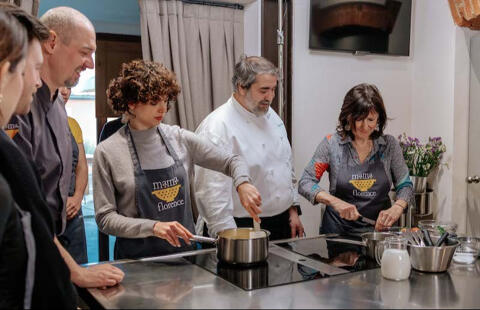
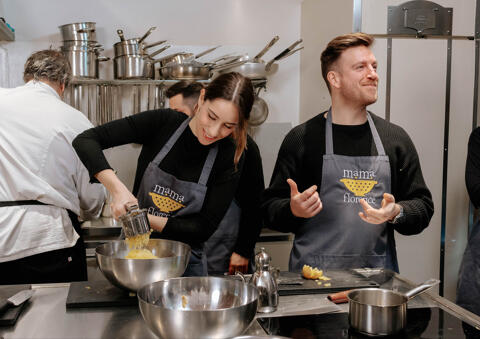
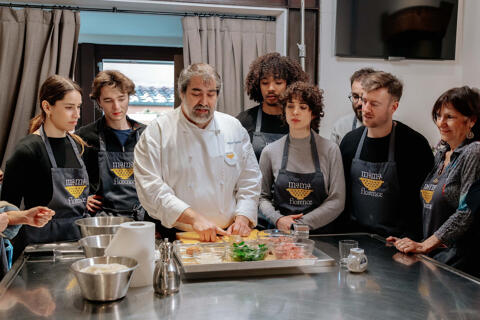
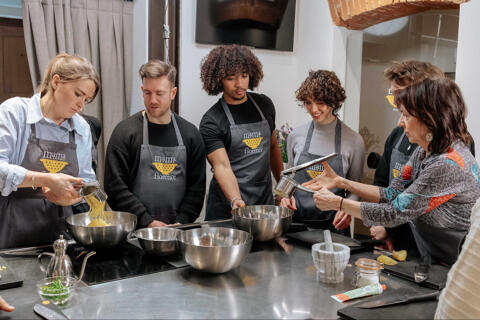
Fresh pasta is at the heart of several experiences at Mama Florence Cooking School.
Our Pasta Making Cooking Classes in Florence explore fresh dough, regional pasta shapes, fillings, and sauces with our chefs. For a more focused hands-on introduction, our Traditional Italian Pasta Cooking Class develops the same fundamentals you use here: mixing dough, judging texture, rolling pasta, shaping it correctly, and pairing it with a sauce that suits the finished shape. This maltagliati recipe brings several of those skills together at once: working vegetables into pasta dough, controlling moisture, rolling with a pasta machine, cutting without wasting scraps, and building a sauce around the same seasonal ingredient.
Frequently Asked Questions
Q: What does maltagliati mean? A: Maltagliati means “badly cut” in Italian. The name refers to the deliberately irregular pieces made from fresh pasta sheets or leftover scraps.
Q: What is Tuscan kale? A: Tuscan kale is the dark-leaved vegetable also known as cavolo nero or black cabbage.
Q: Does this maltagliati dough contain kale? A: Yes. The dough includes 150 g Tuscan kale that is boiled, cooled, blended, and mixed with the eggs, olive oil, salt, and pepper.
Q: How long should the pasta dough rest? A: Rest the dough at room temperature for at least 30 minutes before rolling.
Q: How long does fresh maltagliati cook? A: The recipe cooks the fresh pasta in salted boiling water for at least 2 minutes.
Q: Why are anchovies used in the pesto? A: The anchovies dissolve into the olive oil and add savory depth rather than an overtly fishy flavor.
Q: Can I use anchovies packed in oil? A: Yes. Oil-cured anchovies can be used directly. Salt-cured anchovies should be rinsed and dried first.
Q: Can maltagliati be made from leftover pasta dough? A: Yes. The recipe specifically recommends cutting scraps left from ravioli or tortelli into irregular maltagliati shapes.
Q: Should I toast the breadcrumbs? A: You do not have to, but the recipe recommends toasting them for extra flavor.
Q: Can I save the Tuscan kale stems? A: Yes. They can be saved with other vegetable trimmings and used when making vegetable broth.
Disclaimer
Please note that our chefs may adapt recipes according to seasonal ingredient availability and participants’ dietary or allergy requirements. As a result, the ingredients, preparation, or presentation shown in this recipe may vary from what you prepared during your Mama Florence class. In some cases, elements of a dish may also appear as separate recipes. Please reach out to our team if any confusion arises. Thank you - the Mama Florence Family
Reviews
4.913 reviews
Out of season it is a different dish. I made it in winter with what I could find and it was fine, but not the same. I tried it again in July with proper market vegetables and finally understood what it is supposed to be. Wait if you can.
Lena F.
Stuttgart, Germany · May 2026
It is not the same without the view, but it is remarkably close.
Kate D.
Melbourne, Australia · March 2026
A vegetarian main that does not feel like a side dish pretending to be one. That is rarer than it should be.
Greg S.
Kansas City, USA · February 2026
Cooked it for eight and most of the work happened the day before, which is exactly what you want when you are hosting.
Ryan M.
Vancouver, Canada · January 2026
I wrote down what the waiter told me about how it was made, and it turns out he was right about all of it.
Allison W.
Providence, USA · January 2026
My partner said it tasted like the trip, which was the whole intention.
Oliver N.
Brighton, UK · December 2025
Beautiful on the table and cheap to make, which is a combination I do not often manage.
Bram D.
Amsterdam, Netherlands · November 2025
Worked well as part of a larger spread, and it needs nothing complicated alongside it.
Eline K.
Rotterdam, Netherlands · November 2025
The cheese quantity looked like a lot on the page and was exactly right on the plate.
Ingrid S.
Stockholm, Sweden · October 2025
Made it for the friends we travelled with and it turned into a whole evening of remembering. Somebody found the photographs, somebody else found the map. We have provisionally agreed to go back. This recipe is going to cost me a flight.
Claire B.
Ottawa, Canada · June 2025
My partner cooked it while I was working late and it came out well with no experience at all. That says something about the instructions.
Nina H.
Zurich, Switzerland · April 2025
Light, quick, and it did not feel like a compromise dinner.
Julia K.
Hamburg, Germany · March 2025
Salting them first and letting them drain is the step that stops the whole thing being watery. Do not skip it as I did the first time.