What is Zuccotto
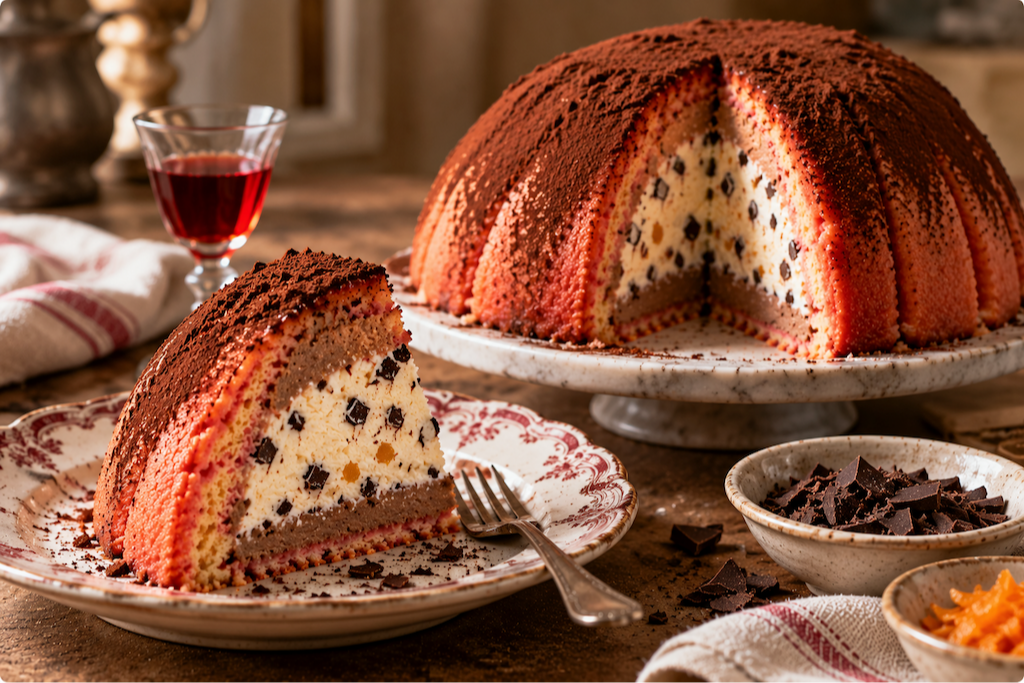
Zuccotto is a traditional Florentine molded dessert made by lining a dome-shaped bowl with sponge cake, moistening it with liqueur, and filling the center with rich cream before chilling until firm enough to hold its shape. In this version, the filling is based on well-drained ricotta and whipped cream. Two-thirds remains pale and is folded with dark chocolate and optional candied orange peel, while the remaining third is flavored with unsweetened cocoa. The shell is made with sliced Pan di Spagna, lightly soaked with Alchermes diluted with water. Once assembled, the dessert rests in the refrigerator for several hours before being turned out of its mold and finished with cocoa powder. The result sits somewhere between cake, chilled cream dessert, and semifreddo in spirit: soft, rich, and structured enough to slice cleanly at the table.
How to Make Traditional Zuccotto
The success of Zuccotto comes down to three things: a neatly lined mold, a light filling, and enough chilling time. The sponge cake should be cut into even slices approximately 1 cm thick, then moistened lightly rather than saturated. The goal is to perfume and color the cake with Alchermes while keeping enough structure to support the filling. The ricotta needs to be well drained before it is whisked with powdered sugar. Whipped cream is then folded through gently so the mixture stays light. From there, the filling is divided into two distinct creams before the dessert is layered, sealed with more sponge, and left to chill until firm enough to unmold.
Sponge Cake Shell Ingredients
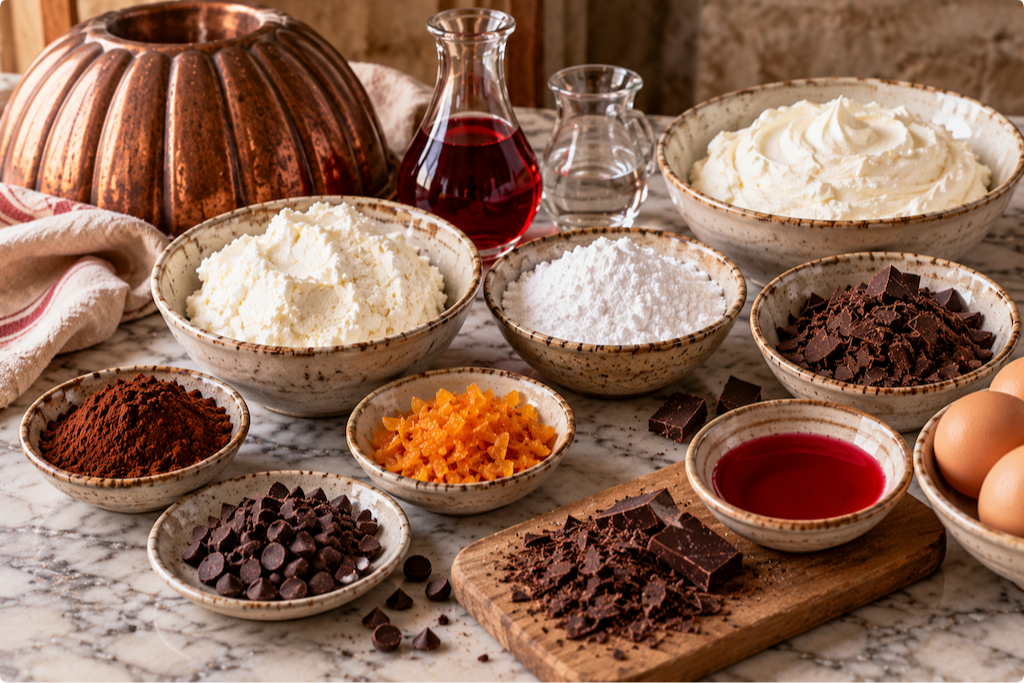
• 250–300 gr Pan di Spagna, cut into slices approximately 1cm thick • 60 ml Alchermes liqueur • 30 ml water
Alternative Liqueurs
- Marsala
- Zibibbo
- Rum
- Mix the chosen substitute with the 30 ml water before using.
Ricotta Cream Filling Ingredients:
• 350 gr well-drained ricotta • 250 ml heavy cream • 100 gr powdered sugar • 60 gr dark chocolate chips or finely chopped dark chocolate • 15 gr unsweetened cocoa powder • 40 gr candied orange peel, finely chopped, optional
Mama’s Secret: Resist the temptation to soak the sponge too heavily. A light brush of liqueur gives the shell flavor and color while helping it keep the clean dome shape that makes Zuccotto so striking.
For Finishing:
- Unsweetened cocoa powder, as needed for dusting
Equipment:
- 1 dome-shaped bowl or Zuccotto mold, approximately 18–20 cm / 7–8 inches in diameter
- Plastic wrap
1. Prepare the Mold
- Line the inside of the dome-shaped bowl completely with plastic wrap.
- Leave enough plastic wrap extending over the sides to fold across the top of the finished dessert later.
- In a small bowl, combine the 60 ml Alchermes with the 30 ml water.
2. Build the Sponge Cake Shell
- Cut the sponge cake into slices approximately 1 cm / ½ inch thick.
- Lightly brush or briefly dip each piece in the diluted Alchermes.
- Arrange the slices tightly against the inside of the lined bowl, fitting them together so there are no large gaps.
- Continue until the whole interior is covered.
- Reserve enough sponge cake to close the base once the dessert has been filled.
3. Prepare the Ricotta Cream
- Place the well-drained ricotta and powdered sugar in a large bowl.
- Whisk together until smooth and creamy.
- In a separate bowl, whip the heavy cream until it reaches stiff peaks.
- Using a spatula, gently fold the whipped cream into the sweetened ricotta with movements from the bottom upward, taking care not to knock out too much air.
4. Divide the Filling
- Transfer approximately one-third of the ricotta cream to a second bowl.
- Sift the unsweetened cocoa powder into this smaller portion and mix gently until evenly chocolate-colored.
- Into the remaining two-thirds of the white ricotta cream, fold the dark chocolate chips or chopped chocolate.
- Add the finely chopped candied orange peel as well, if using.
5. Fill the Zuccotto
- Spread the cocoa ricotta cream into the bottom and around the lower sides of the sponge-lined mold.
- Add the white ricotta-and-chocolate filling to the center.
- Smooth the surface so the filling sits level within the mold.
- Cover the top completely with the reserved soaked sponge cake, fitting the pieces together to seal the dessert.
6. Chill the Zuccotto
- Fold the overhanging plastic wrap tightly across the sponge cake base.
- Transfer the Zuccotto to the refrigerator.
- Chill for at least 4–8 hours.
- For the cleanest structure and fullest flavor, the supplied recipe recommends leaving it overnight.
7. Unmold and Finish
- Unfold the plastic wrap covering the base.
- Place a serving plate upside down over the bowl.
- Holding the plate and bowl securely together, invert the Zuccotto carefully.
- Lift away the mold and gently peel off the plastic wrap.
- Dust the entire dome generously with unsweetened cocoa powder immediately before slicing.
- Serve chilled.
Why Alchermes Is So Distinctive in Zuccotto
Alchermes does several jobs at once. Its vivid red color gives the pale sponge cake the dramatic pink and crimson tones traditionally associated with Zuccotto, while its aromatic sweetness brings another layer to the ricotta, cocoa, and dark chocolate. Because the sponge forms the entire outer shell, the liqueur becomes part of both the flavor and the appearance of the dessert. The supplied recipe also allows Marsala, Zibibbo, or rum when Alchermes is unavailable. Those substitutions will create a different flavor and color, but they preserve the idea of a lightly liqueur-soaked sponge surrounding the cream.
Why the Ricotta Needs to Be Well Drained
Zuccotto relies on chilling rather than baking to hold the finished filling together. Excess water in the ricotta therefore matters. A wet cheese can loosen the cream, make the filling heavier, and reduce the clean contrast between the sponge shell and the soft interior. Draining the ricotta well before mixing keeps the cream rich without making it watery. Folding in properly whipped cream then gives the filling lightness while still allowing it to set during the long chill. It is a small preparation step with an outsized effect on the final slice.
Chocolate, Cocoa and Candied Orange
The two-tone filling is one of the most beautiful parts of Zuccotto. Dark chocolate folded into the pale ricotta cream gives texture and small bursts of bitterness against the sweet dairy base, while cocoa transforms the smaller portion into something deeper and more intense. The optional candied orange peel adds another classic Italian dessert flavor: citrus against chocolate. Used together, the fillings create a contrast that only becomes visible once the dome is sliced open - which is part of what makes Zuccotto such an effective centerpiece dessert.
The Perfect Bite
A good slice of Zuccotto should hold its shape while still feeling soft under the fork. The first layer is sponge cake, gently perfumed with Alchermes. Then comes the cool ricotta cream: airy from the whipped cream, lightly sweetened, and broken up by pieces of dark chocolate. The cocoa filling adds a deeper note, while candied orange, if included, gives a small flash of citrus through the richness. It should feel luxurious without becoming heavy - cool, creamy, chocolatey, and unmistakably festive.
More Florentine Desserts to Explore
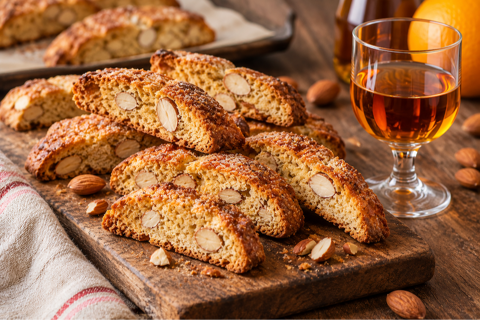
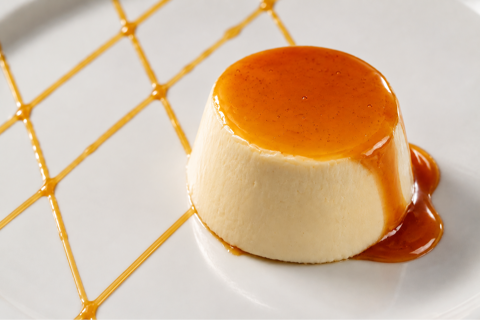
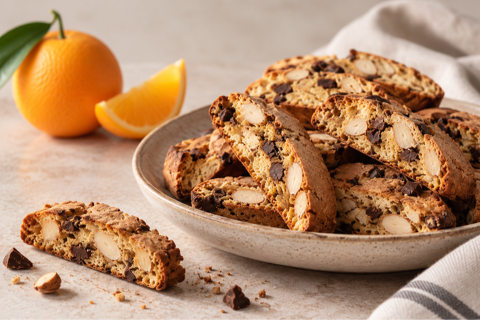
The Buontalenti connection makes our Crema Gelato a natural next stop. Its custard-style base of egg yolks, milk, cream, sugar, and vanilla carries another of Florence’s enduring stories about the architect and the early development of frozen desserts. For another elegant chilled Italian dessert, our Panna Cotta with Vin Santo pairs a simple cream base with a Tuscan Vin Santo reduction and toasted almonds. And if you want to stay with the flavors of Tuscan dessert wine, Prato-style cantucci remain one of the region’s most classic pairings with Vin Santo. Mama Florence’s live cantucci recipe uses whole almonds and the traditional twice-baked method.
From Zuccotto to Florence’s Gelato Story
Zuccotto also belongs naturally beside Florence’s much larger frozen-dessert tradition. The same Bernardo Buontalenti associated with Zuccotto is repeatedly connected with the story of early Florentine gelato, while Caterina de’ Medici appears in another web of culinary legends linking Florence with frozen desserts and the French court. Mama Florence’s story of Caterina de’ Medici and gelato explores that wider Medici context while acknowledging that the precise origins of gelato are contested. These stories are compelling precisely because food history is rarely perfectly tidy. Recipes survive, names change, legends gather around them, and eventually the dessert itself becomes part of the city’s identity.
Learn Italian Desserts in Florence
At Mama Florence Cooking School, desserts are another way into the history and technique of Italian cooking.
Our Afternoon Gelato & Biscotti Cooking Class explores two of Italy’s most recognizable sweet traditions: freshly churned gelato and twice-baked cantucci made alongside our chefs. The current class includes gelato, fruit sorbetto, and biscotti di Prato in a hands-on 1½-hour experience. While Zuccotto is a different preparation entirely, the same lessons apply: ingredient quality, temperature, texture, and patience matter just as much as the recipe itself.
Zuccotto FAQ
Q: What is Zuccotto? A: Zuccotto is a traditional Florentine dome-shaped dessert made with liqueur-soaked sponge cake and a rich cream filling. This version uses ricotta, whipped cream, dark chocolate, cocoa, and optional candied orange.
Q: Where does Zuccotto come from? A: Zuccotto is traditionally associated with Renaissance Florence and the Medici court. Its invention is commonly attributed to Bernardo Buontalenti, although the story belongs partly to culinary tradition rather than perfectly documented history.
Q: Why is Zuccotto dome-shaped? A: Its shape is central to both name theories. One links the dessert to the rounded zucchetto worn by clergy, while another connects it to rounded infantry helmets known as zuccotti.
Q: What is Alchermes? A: In this recipe, Alchermes is the liqueur used to moisten and color the sponge cake shell. The supplied recipe also allows Marsala, Zibibbo, or rum as alternatives.
Q: How long does Zuccotto need to chill? A: This version needs at least 4–8 hours in the refrigerator. Overnight chilling is ideal.
Q: Can I make Zuccotto the day before? A: Yes. In fact, the supplied recipe recommends an overnight chill for the best set and flavor development.
Q: Do I need to make the sponge cake from scratch? A: No. This recipe calls for 250–300 g Pan di Spagna and begins with the cake already prepared.
Q: Does Zuccotto contain chocolate? A: Yes. The white ricotta filling contains 60 g dark chocolate, while one-third of the cream is flavored with 15 g unsweetened cocoa powder.
Q: Is candied orange essential? A: No. The supplied recipe lists 40 g candied orange peel as optional.
Q: Does Zuccotto need to be frozen? A: Not in the version supplied for this page. This recipe sets in the refrigerator for 4–8 hours. The linked La Cucina Italiana version currently uses a freezer method, but that is a different formulation from the client recipe provided here.
Disclaimer
Please note that our chefs may adapt recipes according to seasonal ingredient availability and participants’ dietary or allergy requirements. As a result, the ingredients, preparation, or presentation shown in this recipe may vary from what you prepared during your Mama Florence class. In some cases, elements of a dish may also appear as separate recipes — for example, the fresh pasta you prepared may be paired here with a different sauce, while the sauce from your class may appear in another recipe. Please reach out to our team if any confusion arises. Thank you — the Mama Florence Family.