Pici is a traditional hand-rolled pasta from Tuscany.
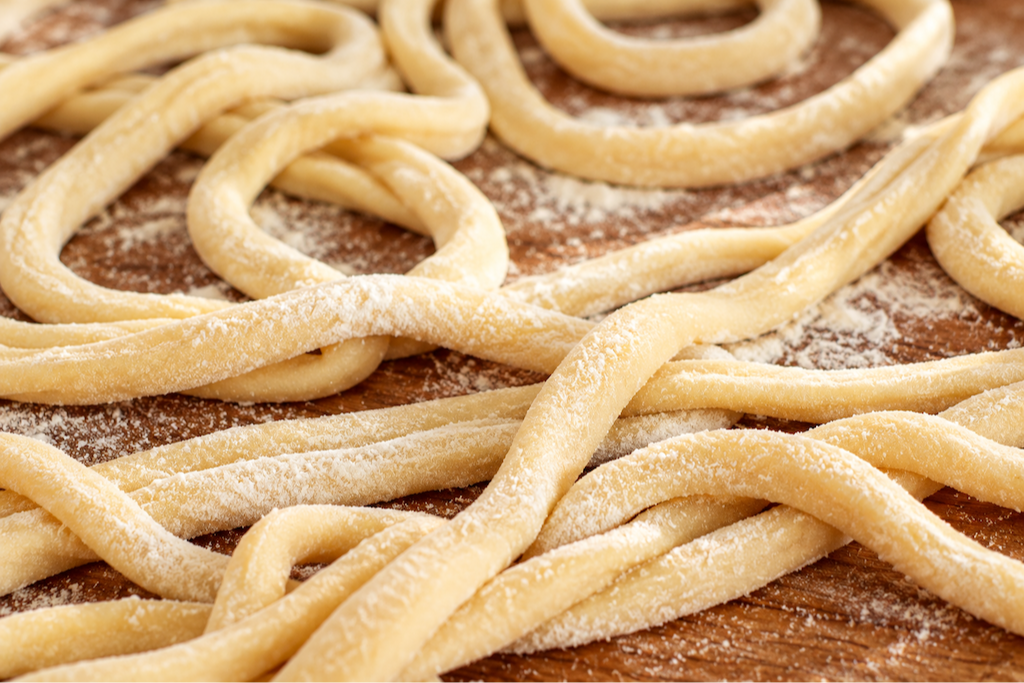
The strands are thicker than spaghetti and deliberately rustic rather than perfectly uniform. That unevenness is part of the appeal: pici is shaped by hand, not extruded through a machine. This Mama Florence version is also egg-free, using only flour, semola, and water.
If you want to explore the regional story behind the pasta, our Pici all’Aglione guide looks at pici’s Tuscan roots and its connection with Aglione della Valdichiana.
A Classic Tuscan Pasta
Pici is one of those pasta shapes that proves how little you actually need to make something memorable.
At Mama Florence Cooking School, the dough is made with all-purpose flour, semola, and water, then rolled by hand into long, slightly irregular strands. There are no eggs and no complicated shaping tools involved. The character of pici comes from the hands: each piece is rolled, lengthened, and shaped individually, which gives the finished pasta its thick, rustic texture. Once cooked, that texture makes pici especially good at holding onto bold sauces — from Pecorino and black pepper to slow-cooked garlic and tomato.
How to Make Fresh Pici Pasta
Pici Dough Ingredients
• 200 gr all-purpose flour • 200 gr semola flour • 200 gr water
Mama’s Secret: The dough should feel firm and compact, not soft. If it feels too loose as you work, add a little more semola. A firmer dough is easier to roll into long strands without tearing or sticking.
1. Make the Pici Dough
Combine the all-purpose flour and semola in a medium bowl.
Mix well, then gradually add the water until a compact dough begins to form.
Work the ingredients together thoroughly.
The dough should be relatively firm. If it feels too soft, add a little more semola.
2. Rest the Dough
Wrap the dough and let it rest at room temperature for at least 30 minutes.
Once rested, unwrap it and work with one small piece at a time.
3. Shape the Pici
Flatten a small piece of dough with your hands.
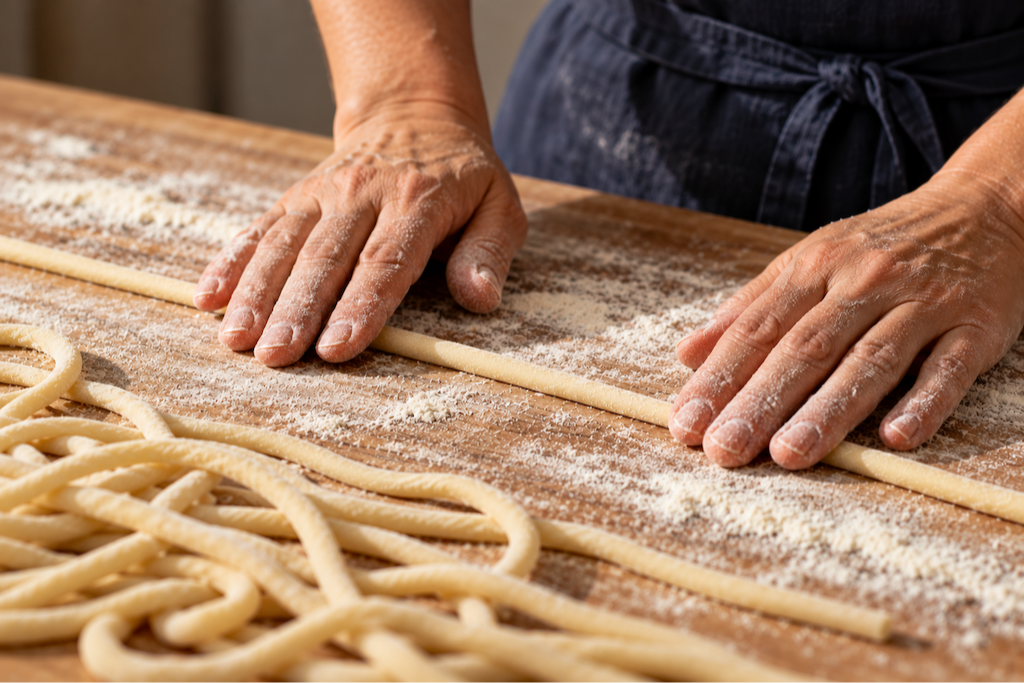
On a wooden board or clean work surface, roll the dough into a long strand using your hands.
Continue rolling and gently stretching until you reach the desired length.
Take care not to pull too aggressively, as the dough can tear.
Place the finished pici on a tray dusted well with semola.
Repeat with the remaining dough, then let the shaped pici rest while you prepare the water and sauce.
4. Cook the Fresh Pici
Bring a large pot of salted water to the boil.
Add the fresh pici and cook for approximately 5 minutes.
Drain carefully, then combine with your chosen sauce.
Let the pasta sit briefly with the sauce so the strands can absorb some of the flavor.
Finish with grated Pecorino or Parmigiano if desired and serve hot.
Can You Make Pici Without a Pasta Machine?
Yes - and in this case, that is exactly the point.
Pici is shaped entirely by hand. You do not need a pasta machine or cutter because the strands are created by rolling small pieces of dough across the work surface. That hand-rolled method gives pici the thick, slightly irregular shape that makes it distinct from machine-cut pasta.
What Sauce Goes Best with Pici?
Pici can carry a surprisingly wide range of sauces because the strands are thick, chewy, and substantial.
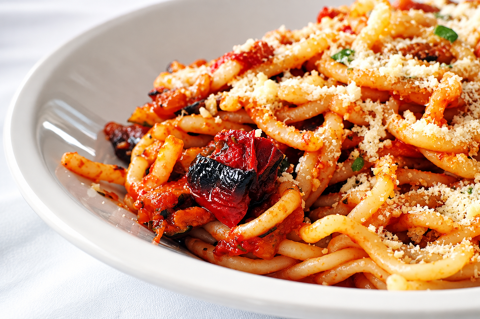
For two very different options, try our Pici Pasta Sauces, where we make both Cacio e Pepe and a slow-cooked garlic and tomato sauce. If you want the classic southern Tuscan pairing, explore our Pici all’Aglione guide, which looks at pici with Aglione della Valdichiana and tomato. The thick strands work especially well with sauces that can cling to their slightly uneven surface.
Why Pici Is Different from Fresh Egg Pasta
Pici and fresh egg pasta begin from very different doughs. Our Fresh Egg Tagliatelle uses eggs with all-purpose flour and semola, producing a softer, richer pasta that is rolled thin and cut into ribbons.
Pici uses water instead of eggs and is rolled by hand into thick strands. One is silky and delicate; the other is rustic and chewy. That difference in dough changes everything from how the pasta is shaped to the sauces it carries best.
The Perfect Bite
Fresh pici should have substance. The strands are meant to feel thicker and more rustic than spaghetti, with enough chew to stand up to a strong sauce. A good forkful gives you pasta first, sauce second - but the two should meet somewhere in the middle, with the sauce caught along the uneven surface of each hand-rolled strand.
More Handmade Pasta to Make
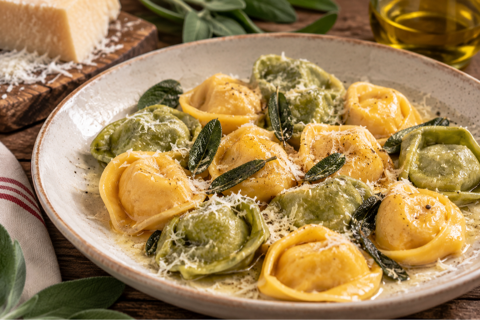
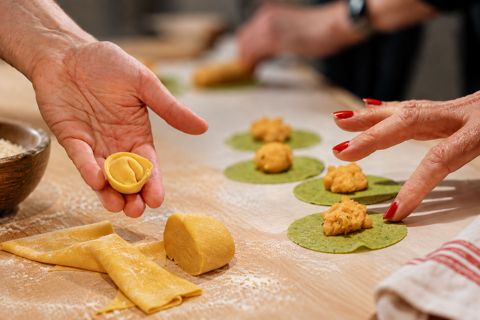
If you want to compare two very different fresh pasta traditions, make our Fresh Egg Tagliatelle, which turns egg dough into thin ribbons. For filled pasta, try our Tortelli di Patate, where the dough wraps around a savory potato filling. And once your pici are rolled and ready, head straight to our Pici Pasta Sauces for two ways to finish the dish.
Learn to Make Pici with Mama Florence
Pici looks simple, but the real technique is in your hands: knowing how firm the dough should feel, how much pressure to use, and how to lengthen the strands without tearing them.
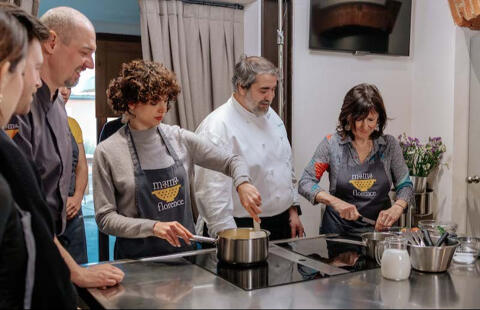
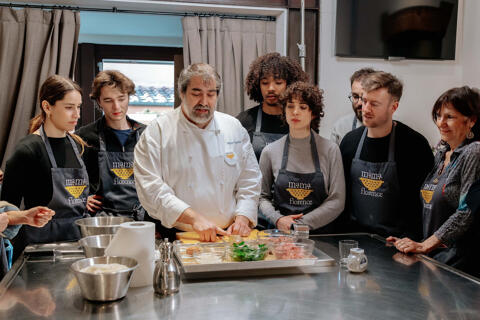
You can practice the process in our Pasta Making Cooking Class at Mama Florence Cooking School, working through fresh pasta dough, shaping, and cooking alongside one of our chefs.
Fresh Pici Pasta FAQ
Q: What is pici made from? A: This Mama Florence recipe uses 200 g all-purpose flour, 200 g semola flour, and 200 g water.
Q: Does pici contain eggs? A: No. This recipe is egg-free and uses only flour, semola, and water.
Q: How long should pici dough rest? A: Let the dough rest at room temperature for at least 30 minutes before shaping.
Q: How do you shape pici? A: Work with a small piece of dough at a time and roll it by hand into a long strand, gently lengthening it as you go.
Q: How long does fresh pici take to cook? A: The original recipe cooks the pici for approximately 5 minutes in salted boiling water.
Q: Can I make pici with only all-purpose flour? A: Yes. The chef’s note says you can use 400 g all-purpose flour instead of the 50/50 flour and semola mix, but the dough will be softer and more difficult to shape by hand.
Please note that our chefs may adapt recipes according to seasonal ingredient availability and participants’ dietary or allergy requirements. As a result, the ingredients, preparation, or presentation shown in this recipe may vary from what you prepared during your Mama Florence class. In some cases, elements of a dish may also appear as separate recipes. Please reach out to our team if any confusion arises. Thank you - the Mama Florence Family
Reviews
4.813 reviews
We make this every year around the time we usually travel. It has become a small ritual.
Hannah S.
York, UK · May 2026
Kneading time is real. I cheated the first time at six minutes and the dough fought me the whole way. Ten full minutes and it was a different thing entirely.
Rachel C.
Cardiff, UK · October 2025
Well written, and refreshingly free of stories before the actual method.
Federica S.
Bologna, Italy · October 2025
Impressive without being fiddly. I hate plating things at the last minute in front of guests.
Emma L.
Bristol, UK · September 2025
Cut back on one of the ingredients for health reasons and it was still perfectly balanced.
Chiara R.
Milan, Italy · August 2025
Did it by hand the second time as suggested and yes, it is genuinely different. More work, better texture.
Greg S.
Kansas City, USA · July 2025
The tip about dusting with semolina instead of flour saved the whole thing from sticking together on the tray.
Simon P.
Calgary, Canada · March 2025
Looks simple, but the order of the steps matters more than I expected. Doing it out of sequence the first time gave me a very different result.
Amelia J.
Adelaide, Australia · March 2025
As a student with a tiny kitchen and two pans I still managed this.
Jessica A.
Toronto, Canada · December 2024
Bought one piece of equipment I did not own and it was worth it. Everything else I already had.
Markus H.
Cologne, Germany · December 2024
I have chased this flavour through a lot of disappointing restaurant versions at home. It turns out the answer was to stop ordering it and make it myself. Not perfect on the first go, but already closer than anything I have paid for.
Marco T.
Rome, Italy · October 2024
Never worked with dough like this before. It felt wrong under my hands for about five minutes and then suddenly it felt right, exactly as the step said it would.
Allison W.
Providence, USA · August 2024
The consistency guidance is helpful, because a photo cannot show you when to stop. Mine took a good deal longer than stated to get there.
Course: Pasta / Main Course - Cuisine: Italian; Serves: 4. Prep: approx. 25 min, Rest: 30 min + 10 min after rolling, Cook: 2–3 min. Total: approx. 1 hr 10 min.
Potato-filled tortelli from Mugello, finished with butter and sage, tell a story of mountain cooking, regional tradition, and Tuscany’s enduring love of handmad...
Hand-rolled pici, sweet Aglione from the Valdichiana, and a simple tomato sauce come together in one of southern Tuscany’s most distinctive pasta traditions.