A Brief History of Cooking Schools and Classes
Introduction
At Mama Florence Cooking School, we believe cooking is not just about recipes—it’s about connection, culture, and the joy of learning by doing. But have you ever wondered how cooking classes came to be? The story of culinary education is as rich and layered as a slow-cooked ragù. Here’s a quick journey through its delicious history.
From Fire Pits to Family Kitchens
Before the term “cooking class” existed, culinary skills were passed down informally. In ancient times, learning to cook was a matter of survival. Techniques were taught at home, often by mothers and grandmothers, with every dish carrying generations of experience.
The Rise of Professional Kitchens
In medieval Europe, noble households and monasteries maintained elaborate kitchens. Young cooks would start as kitchen boys and rise through the ranks through years of apprenticeship—an early form of structured culinary training. Still, these lessons were reserved for insiders; there were no “classes” as we know them today.
The First Culinary Schools
The 19th century brought a shift. In 1895, the famous Le Cordon Bleu was founded in Paris, marking the beginning of formal culinary education. Originally intended to teach upper-class women the art of French cuisine, it quickly grew into a prestigious institution for professional chefs. Other culinary schools followed throughout Europe and the United States.
The Italian Evolution: From Mamma’s Kitchen to Masterclass
In Italy, cooking was long considered a deeply private, family affair—especially in rural regions where recipes were guarded like family treasures. Culinary schools were mainly professional and geared toward chefs or hotel workers. But by the late 20th century, something began to shift. Italy’s culinary identity—so regional, so proud, so rich—became a point of national pride. Locals began to teach not just what they cooked, but why. Home cooks, chefs, and agriturismi started opening their kitchens to others. Italy embraced the idea that teaching someone how to make tagliatelle was an act of cultural preservation.
Cooking Classes for Travelers: A Global Appetite
By the early 2000s, travelers wanted more than just sightseeing—they wanted experiences. Food became the gateway. Culinary tourism boomed, and Italy—already beloved for its cuisine—became one of the world’s top destinations for hands-on cooking classes. Making pasta, kneading pizza dough, or learning to pair olive oil and wine became moments of discovery and joy. For many, the cooking class became the most memorable souvenir.
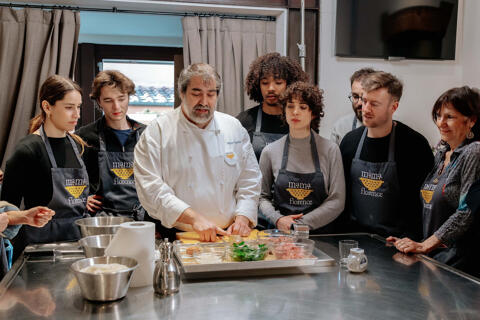
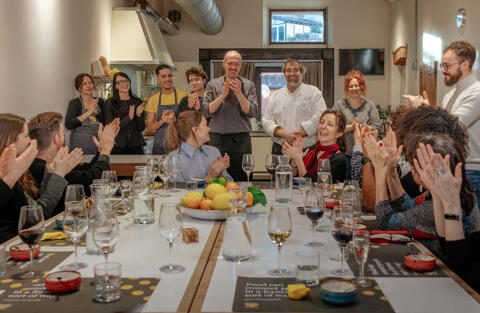
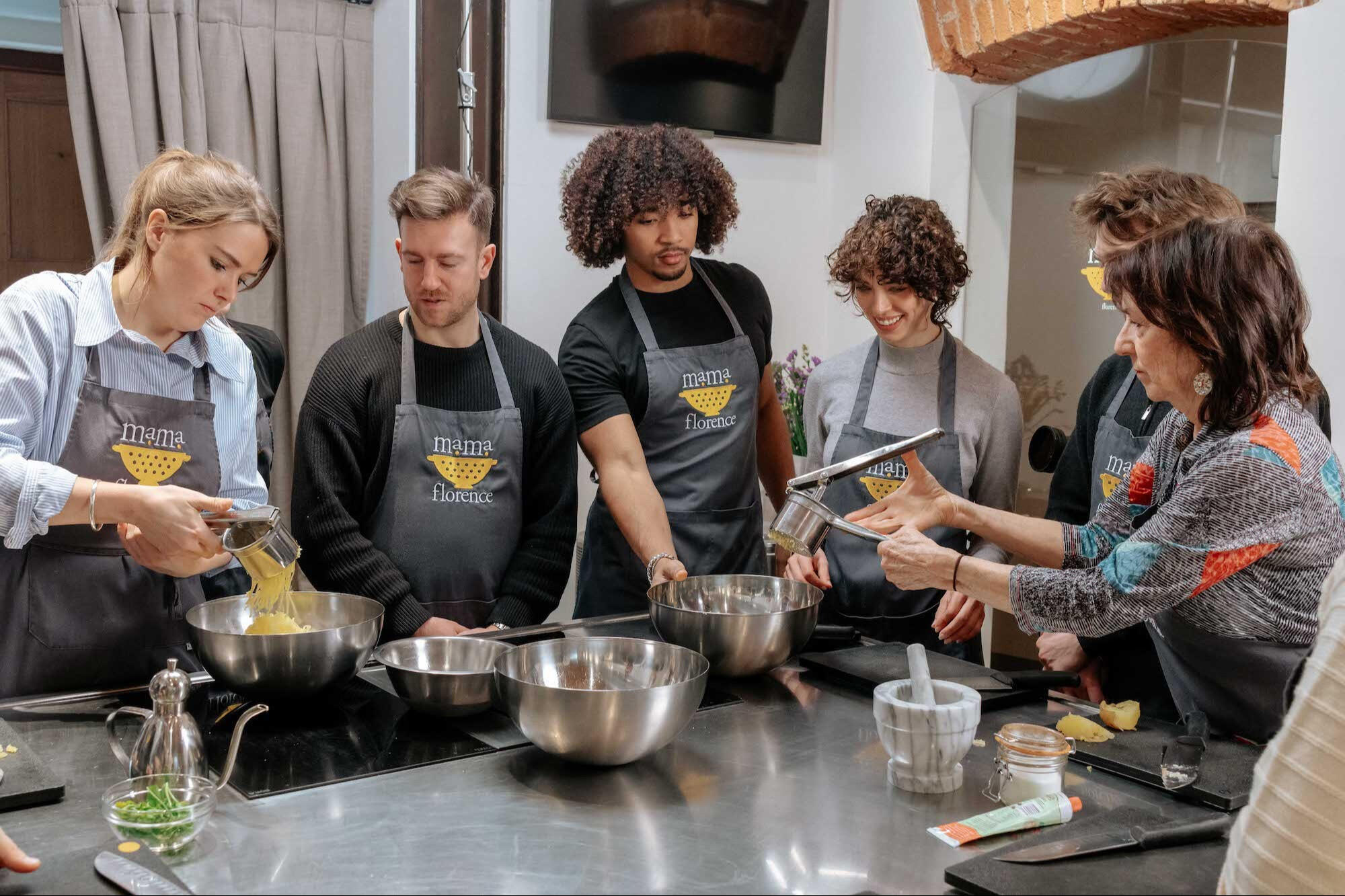
At Mama Florence, we see this every day. Guests from around the world step into our kitchen and suddenly feel at home. They don’t just learn recipes—they connect with people, stories, and flavors that stay with them long after the trip is over.
Where We Are Today
At Mama Florence, we stand at the crossroads of this history. We celebrate the deep traditions of Italian cooking while making them approachable for everyone—from seasoned chefs to first-time ravioli folders. Our classes aren’t just about teaching recipes—they’re about sharing culture, laughter, and unforgettable experiences.