Pasta Cooking Class in Florence: How to Choose the Best Experience?
What to know before booking? 11 essential Tips
A pasta cooking class in Florence is one of the most popular experiences for travelers visiting Tuscany. Learning to make fresh pasta in Italy—using simple ingredients, traditional techniques, and local knowledge—can be one of the most rewarding ways to deeply connect with Italian culture.
However, Florence is also a city heavily affected by overtourism, and not all pasta cooking classes offer the same level of quality, authenticity, or care. This guide explains how to choose the right pasta cooking class in Florence, where to take it, when to book, and what kind of experience to expect—highlighting 11 essential things to consider before picking your pasta cooking class, or in fact, any cooking class in Florence.
How to Choose a Great Pasta Cooking Class in Florence?
When evaluating a pasta cooking class, many travelers focus primarily on price and reviews. While price alone is not always a guarantee of quality, very low prices are almost always a sign of a low-quality, tourist-oriented experience. Reviews can be a useful reference point; however, they only make sense if you truly belong to the same type of audience as the reviewers—which is not always easy to determine with cooking classes.
Many other factors matter just as much—if not more—and they are often less obvious at first glance. Let’s look at what truly defines a high-quality pasta cooking class in Florence.
What Makes a Pasta Cooking Class in Florence High-Quality?
1. Price (and Why Cheap Is a Red Flag for a Pasta Cooking Class)
If a class appears unusually cheap, generally anything under €100 per person—it is most likely designed for speed and volume: multiple shifts per day, large groups, limited personal attention, and staff trained to execute standardized recipes.
In these cases, the experience, despite possibly even having great reviews, resembles a fast-food version of a cooking class, that is the opposite of Italian food culture, rather than a thoughtful culinary journey rooted in Florence’s food traditions.
Running a serious pasta cooking class in Florence involves real costs: trained professionals, a dedicated kitchen space, high rental costs, quality ingredients, proper equipment, and several uninterrupted hours with a small group. These elements simply cannot be delivered at bargain prices.
2. Group Size Evaluated in Context
Everyone looks for a “small group” setting—but numbers alone mean very little.
A group of 7 or 25 guests only makes sense when considered in relation to:
-
the available space
-
the kitchen layout
-
the number of professional staff present
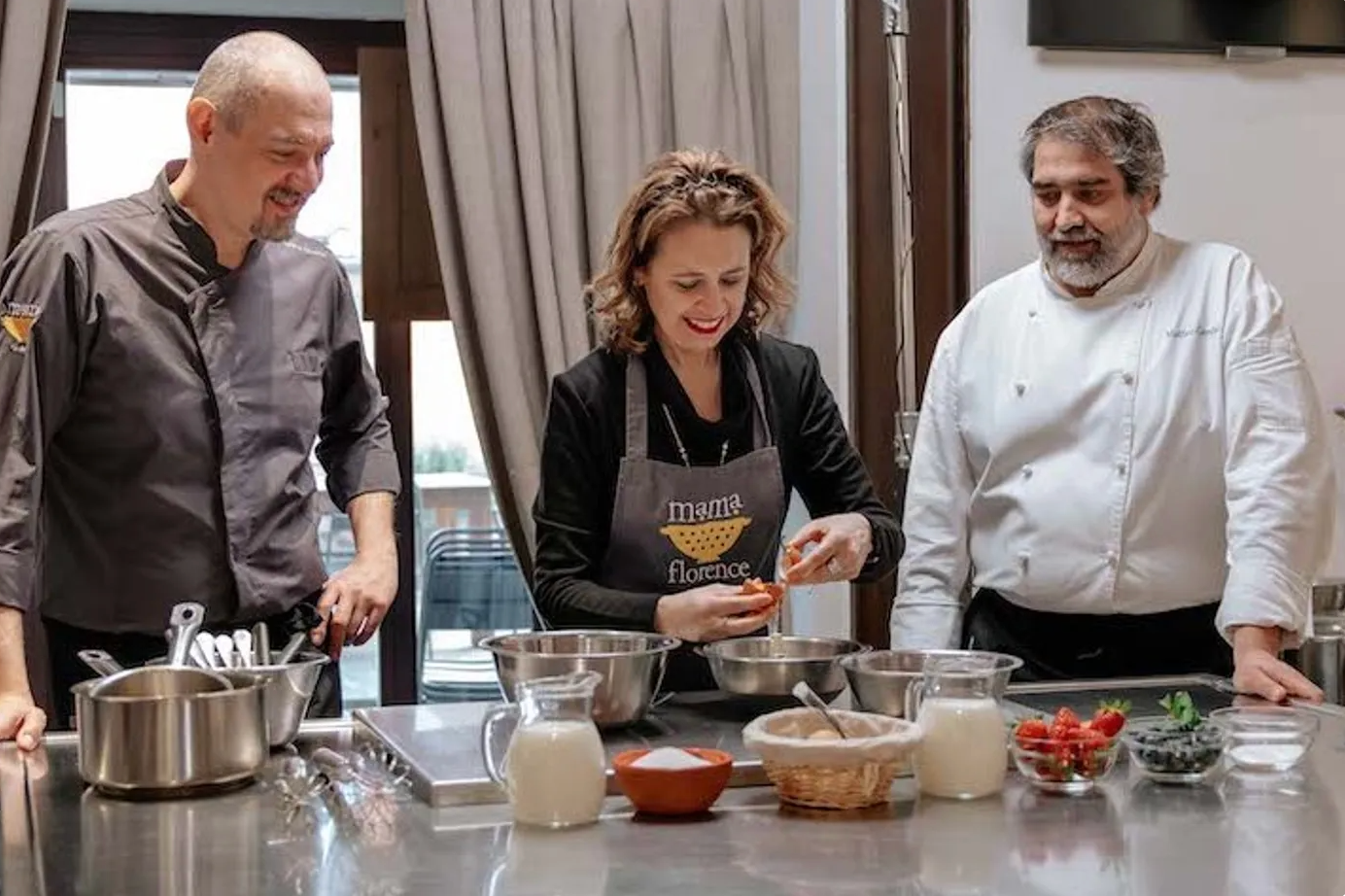
A small group in a tiny kitchen can feel chaotic, while a larger group in a well-designed, properly equipped space can feel calm and professional. What matters is balance, not the number itself. Mama Florence's pasta cooking join in class reaches a maximum of 20 guests, though usually less. We have 4 to 5 staff working on a gorup this size in a 75 sqm kitchen and a separate space for an apetif before a seated meal.
3. Low Staff-to-Guest Ratio
To work properly, a pasta cooking class should have one professional staff member for every five guests.
Anything higher makes it difficult to:
-
offer real guidance
-
correct technique
-
answer questions properly
-
ensure everyone is truly involved
When staff ratios rise, classes quickly turn into demonstrations rather than hands-on learning experiences.
4. High-Quality Ingredients
Pasta may seem simple—just flour and water or eggs—but ingredient quality is everything.
The origin of the flour, the type of wheat, and the way it is milled all affect texture, flavor, and digestibility. The same applies to every ingredient used: eggs, vegetables, cheese, olive oil, and wine should be high quality, local whenever possible, and ideally organic.
Without this attention, even the best technique falls flat.
5. Fully Hands-On Cooking
A real pasta cooking class goes far beyond shaping dough and should involve other dishes beyond pasta, as Italians prepare meals.
Guests should:
-
actively participate in sauce preparation
-
understand ingredient choices
-
receive a full explanation of techniques and traditions
If pasta is the only thing you make, be cautious. A serious class teaches context, not just movements.
6. A Serious Curriculum and Track Record
Cooking classes have multiplied rapidly in Florence due to overtourism.
Some schools—such as Mama Florence, Cordon Bleu, Giglio, Tuscan Taste and Desinare for example —have been operating seriously for many years, surviving economic crises and the pandemic because they offer something substantial, not just entertainment for tourists.
Others opened as a trend, often adapting restaurant spaces or launching without a structured business or educational approach. Longevity, consistency, and reputation matter.
Read also Why Choose Mama Florence Cooking Class?
7. Not Just Pasta but a Complete Italian Meal,
Italian cooking is about balance and structure. Yes, Italians are fussy when it comes to food, but why?
A proper pasta cooking class should include the preparation of a full meal, typically:
-
an appetizer
-
fresh handmade pasta in different formats (filled and flat)
-
a dessert
This allows guests to understand how pasta fits into real Italian dining culture—not as an isolated dish, but as part of a meal. If all you're being presented with is pasta, you may be dealing with a strictly touristy experience.
8. A Calm, Well-Equipped Kitchen
Space matters—more than most travelers realize.
The kitchen should be:
-
comfortable and visually appealing
-
climate-controlled (heated or air-conditioned)
-
fully equipped for hands-on cooking
A resting or seating area is also important. Cooking for several hours should feel enjoyable and relaxed, not stressful or cramped.
9. A Proper Seated, Served Meal at the End
On December 10, 2025, UNESCO officially recognized Italian cuisine as an Intangible Cultural Heritage of Humanity. Central to this recognition are the social and cultural rituals of Italian food: shared tables, family traditions, and the transmission of knowledge from generation to generation.
Italian food is about sharing, not rushing.
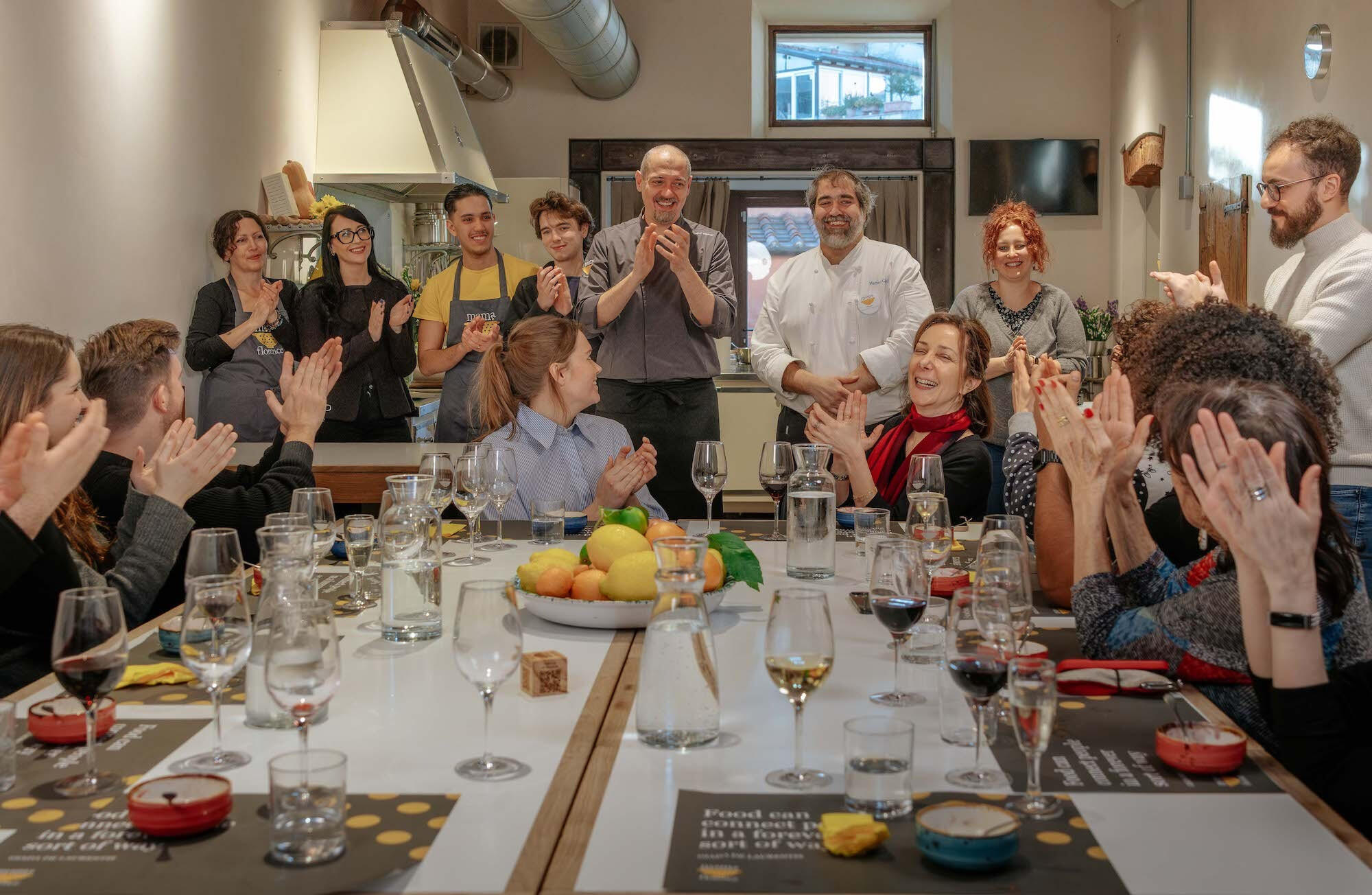
Without a multi-course, seated, served meal, guests are simply cooking and tasting—not experiencing Italian culture. Quick tastings with plastic glasses miss the entire point of Italian dining.
10. Quality Wine Served Intentionally
Wine should be paired thoughtfully with food, never offered as “unlimited.”
Italians have considered wine part of their culture since Roman times—they savor it, they don’t drink it to excess. Classes advertising free-flowing wine often:
-
serve poor-quality bottles
-
use alcohol to compensate for weak content
-
later attempt to upsell unnecessary products
Quality wine, served intentionally, is a sign of respect for both food and guests.
11. Reviews of Pasta Classes in Florence
Reviews are helpful, but they should always be read with context. When a cooking class shows an extremely high volume of reviews, it is often less a sign of exceptional quality and more an indication of mass tourism and high turnover. Experiences that host large groups multiple times a day naturally accumulate reviews quickly and often push for them hard, even if the experience itself is standardized or superficial. In some cases, unusually high numbers may also raise questions about how and when reviews are generated. For travelers seeking depth, personal interaction, and authenticity, a good number of detailed, thoughtful and recent reviews built over time is often a more meaningful indicator of quality than sheer volume alone.
So what Pasta Cooking Class in Florence should be avoided?
Based on the above here is a summary of red flags and reasons not to choose a pasta cooking class in Florence.
Red Flags when choosing Pasta Cooking classes in Florence:
-
Price under a 100 euros is a Red Flag
-
Group Size with a staff to guest ratio higher than 1 to 5 is a red flag
-
No information about Quality of Ingredients is a red flag
-
Not Hands-On Cooking (unless declared ad show cooking)
-
Lack of a serious Curriculum, story and Track Record, beyond reviews
-
Preparation of pasta only
-
Lack of a spacious well-Equipped Kitchen
-
The class does not end with a Proper Seated, Served Meal
-
Wine served is low quality or average with no choice.
-
Generally speaking most if not all classes in the core central area of Florence (Duomo, San Lorenzo, Santa Croce) serve exclusively tourists and are a result of overtourism.
What makes a Pasta Cooking Class in Florence Truly great?
A truly great pasta cooking class in Florence is defined by care, space, time, ingredients, and people—not by speed or low prices.
Among the many Italian cooking options available, Mama Florence is proud to offer a variety of pasta cooking classes in florence. Our most popular classes are the small gorup pasta cooking class in Florence and a private pasta cooking class in Florence that bring together all of these elements, creating an experience rooted in real Italian food culture rather than mass tourism.
A high-quality cooking school will also be transparent and responsive before you book. If you email or message with questions—about the menu, dietary needs, group size, staff ratio, location, what’s included, or how the class is structured—you should receive a prompt, thorough, and helpful reply. Serious schools are proud of how they operate and have nothing to hide: they’ll explain the experience clearly, set expectations honestly, and help you choose the right class for your interests. If responses are vague, slow, or avoid specific details, it’s often a sign the operation is built for volume rather than quality.

Checklist: Is This a High-Quality Pasta Cooking Class in Florence?
If you are a discerning traveler seeking an authentic experience and genuine insight into Italian culture—rather than a version reshaped by overtourism—then what you are looking for goes beyond the ordinary tourist offering. These are the key elements to look out for for your authentic quality experience Pasta Cooking Class in Florence
✅ Fair, realistic pricing, 100 euros per person and above.
✅ Group size balanced with space
✅ 1 professional staff per 5 guests
✅ High-quality, local, possibly organic ingredients
✅ Fully hands-on (pasta, sauces and preparation of other dishes)
✅ Structured curriculum & experience of company and chefs
✅ Full Italian meal (starter, pasta, dessert)
✅ Spacious, comfortable kitchen
✅ Seated, served dining experience as a core part of Italian culture
✅ Quality wine, thoughtfully paired in fair but not unlimited amount.
🔴 If what you are looking for is a typical fun and quick tourist attraction—designed to give only a general idea of pasta making, without a real interest in depth or authenticity—then mass-market experiences may suit you just fine. These are the key elements to look out for for if you are looking for a touristy expereince in Florence.
❌ Cheap or Very cheap pricing (29 to about 99 euros)
❌ Spaces for class not well described (square meters, temperature contorl, euqipment)
❌ One instructor for large groups of 7 or more.
❌ Generic, low-cost ingredients, wiht no clear indication about sourcing.
❌ Limited participation and communication with client
❌ Improvised or trend-based format
❌ Pasta only or quick tasting
❌ Poorly equipped kitchens
❌ Tastings or prepared food rather than actual meal, plastic glasses
❌ “Unlimited wine” gimmicks
✅ Choosing checklist: Is This a High-Quality Pasta Cooking Class in Florence?
Before booking, ask yourself and/or the cooking school:
-
☐ Is the price realistic for a small-group, professional experience?
-
☐ Is the group size appropriate for the kitchen space?
-
☐ Is there roughly one professional staff member for every 5 guests?
-
☐ Are ingredients high quality, local, and carefully sourced?
-
☐ Will I actively cook both pasta and sauces?
-
☐ Does the class follow a structured curriculum with real experience behind it?
-
☐ Does it include a full Italian meal, not just pasta?
-
☐ Is the kitchen comfortable, well-equipped, and climate-controlled?
-
☐ Will we enjoy a proper seated, served meal together?
-
☐ Is wine served thoughtfully, not marketed as “unlimited”?
-
☐ Was the cooking school responsive to my questions?
👉 If you can check most or all of these boxes, you’re likely booking a truly authentic experience.
At Mama Florence, every pasta cooking class is designed to meet all of these criteria—because Italian cooking deserves time, care, and respect.
FAQs – Choosing a Pasta Cooking Class in Florence
Is every pasta cooking class in Florence hands-on?
No. Some are mostly demo-style. A high-quality class is fully hands-on: dough, shaping, sauce-making, and clear explanations.
Why are some pasta cooking classes in Florence so cheap?
Low prices usually mean volume: big groups, three or more shifts per day, low staff to guest ration, standardized recipes, and cheaper ingredients.
How important is group size in a pasta cooking class?
Group size only matters with space and staff ratio. A small class can feel chaotic in a tight room; a larger one can work if space and staff are adequate.
Does a good pasta cooking class include a full meal?
Yes. The best classes include a proper multiple course seated Italian meal—often an appetizer, pasta, mainn course and dessert—served seated, not as a quick tasting.
Is “unlimited wine” a good sign in a cooking class?
No. Quality classes serve quality wine intentionally with the meal, not as a free-flow gimmick.
How can I tell if a cooking school is truly professional before booking?
They answer questions promptly and clearly about staff ratio, space, ingredients, and what’s included. Vague answers are a red flag.