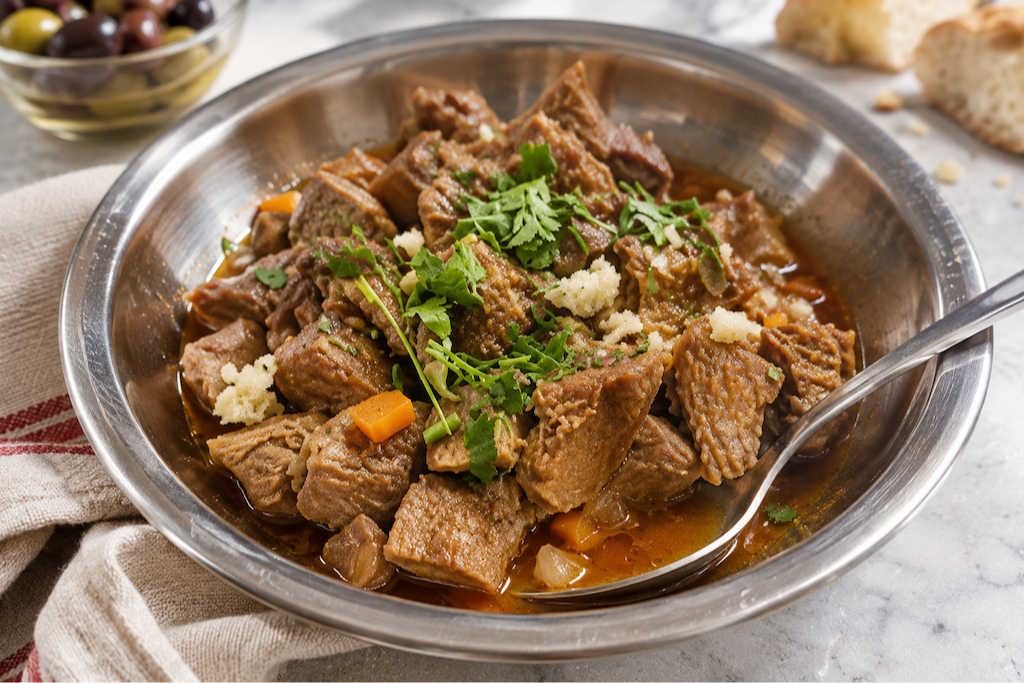
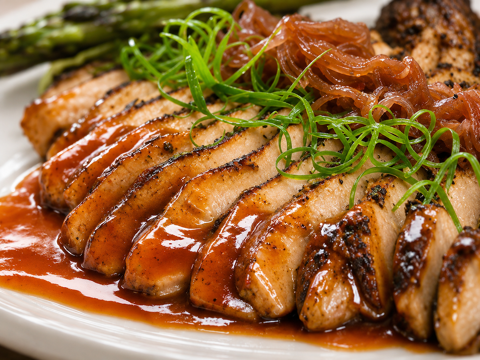
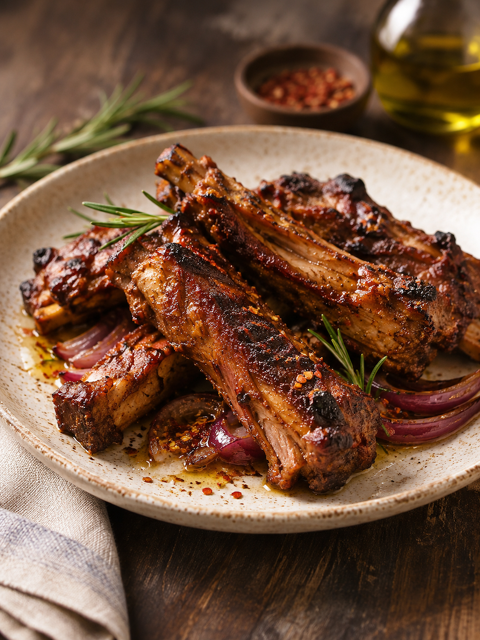
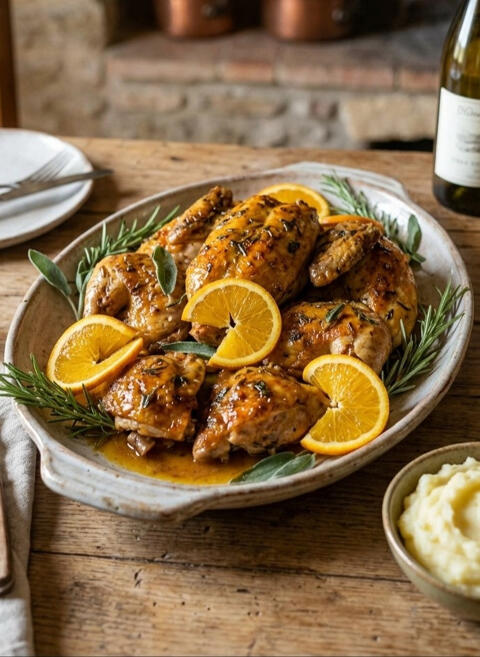
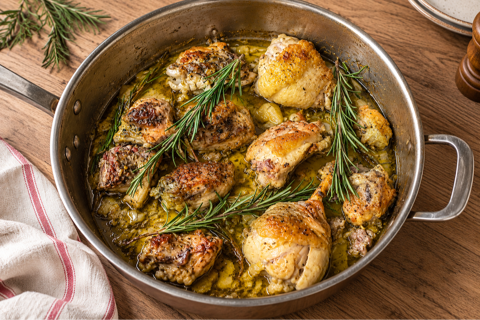
Maiale Ubriaco — literally “drunken pork” — is a deeply savory pork dish built around one of Tuscany’s defining ingredients: red wine. At Mama Florence Cooking School, our version combines browned pork with garlic, rosemary, sage, red wine, and fresh grapes. The meat is first seared over high heat to develop a deep crust, then braised gently in the wine until tender. The cooking liquid is thickened lightly at the end with cornstarch before the pork and grapes are returned to the pan. The result is a rich, wine-driven main course with savory herbs, tender pork, and small bursts of sweetness from the grapes. For another Tuscan pork dish with a completely different preparation, our Tuscan Pork Ribs use white wine, rosemary, and whole garlic before finishing in a hot oven.
How to Make Maiale Ubriaco
Start by trimming the pork and cutting it into generous cubes. Finely chop the rosemary, sage, and garlic. Brown the pork in extra virgin olive oil over high heat, working in batches if needed so the pan does not become crowded. Once all the meat is browned, return it to the pan and add the herb-and-garlic mixture. Season with salt and black pepper. Gradually add the red wine and simmer for approximately 10 minutes so it begins to reduce. Lower the heat, cover, and braise gently for approximately 40 minutes, stirring occasionally. If the pan becomes too dry, add a little more wine or water. Remove the tender pork, then thicken the cooking liquid with a cornstarch slurry. Return the pork to the sauce, add the red grapes, and cook just until the grapes begin to soften and burst.
Mama’s Secret: Brown the pork in batches if necessary. Crowding the pan traps steam, which prevents the meat from developing the deep surface browning that gives the braising liquid much of its flavor.
Wine-Braised Pork Ingredients:
• 2.2 lb pork loin • 2 cups + 2 tablespoons red wine • 1 bunch red grapes, preferably seedless or deseeded • Fresh sage leaves, as needed • Fresh rosemary, as needed • 3 garlic cloves • Extra virgin olive oil, as needed • Salt, as needed • Freshly ground black pepper, as needed
Finish the Sauce:
• Cornstarch, as needed • Cold water, as needed for the cornstarch slurry • Additional red wine or water, as needed during braising
1. Prepare the Pork
Trim the thick outer layer of fat from the 2.2 lb pork.
Cut the meat into slices approximately 1½ inches thick, then cut those slices into generous cubes.
2. Prepare the Herbs and Garlic
Finely chop the fresh rosemary and sage.
Peel and finely mince the 3 garlic cloves.
Mix the garlic and herbs together.
3. Prepare the Grapes
Rinse and dry the bunch of red grapes.
If necessary, remove any seeds.
Set the grapes aside for the final stage of cooking.
4. Heat the Olive Oil
Coat the bottom of a large sauté pan with extra virgin olive oil.
Heat over high heat.
5. Brown the Pork
Add the pork cubes in a single layer.
Brown thoroughly on all sides.
Do not overcrowd the pan.
If necessary, brown the pork in several batches and transfer the finished pieces to a separate dish while you continue.
6. Add the Herbs and Garlic
Return all of the browned pork to the pan.
Reduce the heat slightly to medium-high.
Add the chopped rosemary, sage, and garlic.
Season generously with salt and freshly ground black pepper.
Stir so the aromatics coat the pork.
7. Add the Red Wine
Gradually pour in the 2 cups + 2 tablespoons red wine, stirring as you go.
Bring the liquid to a simmer.
8. Reduce the Wine
Allow the wine to simmer uncovered for approximately 10 minutes.
The liquid should begin reducing and concentrating.
9. Braise the Pork
Reduce the heat to medium-low.
Cover the pan.
Braise gently for approximately 40 minutes.
Stir occasionally.
Check the liquid level as the pork cooks.
If the sauce begins to reduce too far or the pan starts to dry, add a small splash of additional red wine or water.
10. Check the Pork
Taste or test the pork to make sure it is tender and fully cooked.
Transfer the pork to a warm dish.
Leave the braising liquid in the pan.
11. Make the Cornstarch Slurry
Place a spoonful of cornstarch in a small bowl.
Add cold water.
Mix until completely smooth and free of lumps.
12. Thicken the Wine Sauce
Slowly add the cornstarch slurry to the braising liquid while stirring.
Add only as much as necessary to reach the desired consistency.
13. Return the Pork and Add the Grapes
Return the pork cubes to the pan.
Add the reserved red grapes.
Toss gently to coat everything in the wine sauce.
14. Finish the Dish
Cook just until the grapes begin to soften and burst slightly.
Do not cook them down completely.
15. Serve
Divide the pork among individual plates.
Spoon the wine sauce and grapes over the top.
Serve hot.
Why the Pork Is Browned Before Braising
Browning creates flavor before the slow cooking begins. The high heat develops a savory crust on the outside of the pork, while the browned material left in the pan becomes part of the wine sauce. That gives the finished dish much more depth than simply simmering raw pork in wine. The same principle appears in our Tuscan Pork Ribs, where the ribs are seared before wine is added and the dish moves into the oven.
Why Red Wine Matters in Maiale Ubriaco
Red wine is not simply a finishing splash in this recipe. It forms the base of the braising liquid. The first 10-minute reduction begins concentrating the wine before the pork cooks gently in it for another approximately 40 minutes. The finished sauce should taste integrated and savory rather than like raw wine. The original recipe suggests a Tuscan red such as Chianti or Sangiovese, which fits naturally with the dish’s regional character.
Why Grapes Work with Pork
The red grapes echo the wine while bringing fresh sweetness and juiciness. They are deliberately added at the end rather than braised for the full cooking time. That allows them to soften and begin to burst without disappearing completely into the sauce. Their sweetness also gives contrast to the savory pork, garlic, rosemary, and sage.
Why Rosemary and Sage Work Together
Rosemary and sage are both strong aromatic herbs, but they bring different qualities. Rosemary has a resinous, woodsy character that works especially well with browned meat. Sage is softer and earthier. Together with garlic, they give the pork the herbal profile associated with many Tuscan meat preparations.
Why Use a Cornstarch Slurry?
The braising liquid needs enough body to cling to the pork rather than pool thinly underneath it. Cornstarch provides a quick way to thicken the reduced wine sauce after the meat is cooked. It should always be mixed with cold water first. Adding dry cornstarch directly to the hot pan would make it much more likely to form lumps. Add the slurry gradually because the source does not specify an exact quantity.
What to Serve with Maiale Ubriaco
The original recipe recommends thick slices of warm walnut bread and sautéed spinach with olive oil and garlic. That combination works particularly well because the bread can absorb the wine sauce while the spinach gives the plate a simpler, slightly bitter vegetable element. For a creamier side, our Italian Mashed Potatoes (Purè di Patate) would also be an excellent base for the wine sauce. Another Tuscan-style option is Fagioli all’Uccelletto, where cannellini beans, tomato, garlic, and sage offer a rustic vegetable accompaniment.
The Perfect Bite
The pork should be tender enough to cut easily while still holding its shape. The sauce should be glossy and concentrated with red wine, rosemary, sage, garlic, and the browned flavors from the pan. The grapes should remain recognizable, providing occasional bursts of sweetness. The best bite catches a piece of pork with wine sauce and a softened grape together.
More Tuscan Meat Recipes to Explore
For another pork preparation, our Tuscan Pork Ribs combine rosemary, garlic, white wine, and oven roasting for a much crisper result. Our Traditional Tuscan Orange Guinea Fowl uses white wine, pancetta, rosemary, sage, and orange for another aromatic meat main course. For a slower red-wine dish, our Peposo con Purè di Patate explores the Tuscan tradition of long-cooked beef with red wine and black pepper. And if you need a side that will catch every bit of the sauce, our Italian Mashed Potatoes are a natural pairing.
Learn Tuscan Cooking in Florence
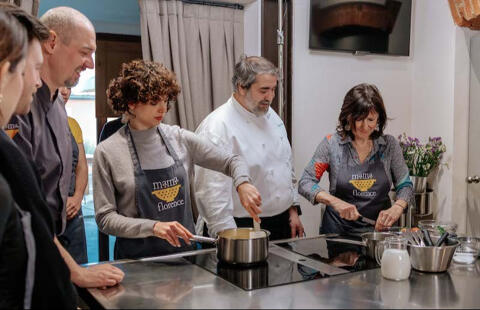
Braising teaches several techniques at once: browning meat correctly, working with wine, controlling moisture, cooking gently over time, and judging when a sauce has reached the right consistency. At Mama Florence Cooking School, our Tuscan Traditional Cooking Course explores regional recipes and the techniques behind a complete Tuscan meal. You can also explore our full range of Cooking Classes in Florence, or our Private Cooking Classes in Florence for a more tailored hands-on experience.
Frequently Asked Questions
Q: What does Maiale Ubriaco mean? A: It translates literally as “drunken pork,” referring to the substantial amount of wine used to cook the meat.
Q: How many servings does this recipe make? A: Our recipe serves 8.
Q: How much pork is used? A: The ingredient list gives 2.2 lb pork loin.
Q: How much red wine is used? A: The recipe uses approximately 2 cups + 2 tablespoons red wine.
Q: What type of red wine should I use? A: The source suggests a Tuscan-style red such as Chianti or Sangiovese.
Q: How long does the pork braise? A: After the initial 10-minute wine reduction, the pork braises covered for approximately 40 minutes.
Q: What do I do if the sauce becomes too dry? A: Add a small splash of additional red wine or water.
Q: When are the grapes added? A: At the very end, after the braising liquid has been thickened.
Q: Why are the grapes added last? A: Adding them late allows them to soften and begin bursting without completely breaking down into the sauce.
Q: How is the wine sauce thickened? A: With cornstarch mixed first with cold water to create a slurry.
Q: What herbs are used? A: Fresh rosemary and sage, together with garlic.
Q: What should I serve with Maiale Ubriaco? A: The source suggests warm walnut bread and sautéed spinach. Mashed potatoes also work particularly well with the wine sauce.
Disclaimer
Please note that our chefs may adapt recipes according to seasonal ingredient availability and participants’ dietary or allergy requirements. As a result, the ingredients, preparation, or presentation shown in this recipe may vary from what you prepared during your Mama Florence class. In some cases, elements of a dish may also appear as separate recipes. Please reach out to our team if any confusion arises. Thank you - the Mama Florence Family
Reviews
4.99 reviews
Browning properly at the start makes the difference. I have skipped that step before in other recipes and I will not again.
Pierre A.
Lyon, France · July 2026
One step I had always done wrong, explained in a single sentence. Worth the whole page.
Hannah S.
York, UK · July 2026
The instructions are written by somebody who has actually stood in a kitchen. The order of operations makes sense and nothing is left to be guessed.
Michael R.
Austin, USA · July 2026
I have made this four or five times now and it has become the thing I cook when people turn up unannounced. Everything in it lives in my cupboard anyway. It takes as long as it takes, but almost none of that is actual work. Nobody has ever asked what else there was.
Greg S.
Kansas City, USA · June 2026
Nothing fancy. Everything right.
Lena F.
Stuttgart, Germany · May 2026
My flatmate is now under the impression that I can cook.
Emma L.
Bristol, UK · May 2026
Took it to a shared dinner in a big dish and came home with an empty one.
Claire B.
Ottawa, Canada · April 2026
My grandmother watched me make it and corrected me twice, once about the heat and once about something she could not really put into words. She still had two portions. I have written her corrections in the margin for next time.
Federica S.
Bologna, Italy · April 2026
Made it twice in a week to get it right. The first time I misread one step and it showed. The second time I set a timer for the part I always forget. It was worth being stubborn about.