What Are Spinach and Ricotta Tortelli?
Tortelli are filled pasta made by enclosing a savory filling inside thin sheets of fresh dough. This version uses the classic pairing of ricotta and spinach, seasoned simply with Parmigiano, nutmeg, salt, and pepper. The filling should be firm enough to hold its shape and dry enough that it does not leak moisture into the pasta. The shaping method used here is distinctive. Each round of dough is filled, folded into a half-moon or “taco” shape, sealed carefully to remove trapped air, then the two corners are brought together and pinched to form the tortello. That technique places this recipe in the same broad family of fresh filled pasta as our Tortelli di Patate, though the filling and character of the finished dish are completely different.
A Classic Italian Pasta
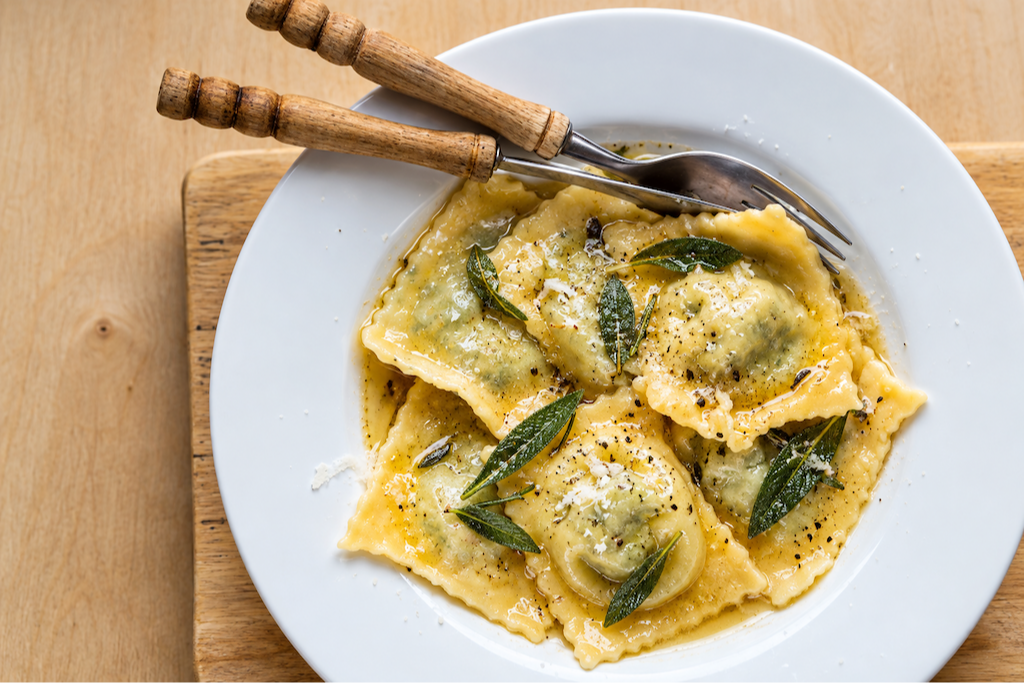
Spinach and ricotta is one of those combinations that needs very little help. The filling is soft, savory, and familiar; the fresh pasta gives it structure; and butter, sage, and Parmigiano bring everything together without burying it. At Mama Florence Cooking School, these tortelli are made from a fresh egg dough using equal parts all-purpose flour and semola. The filling combines boiled spinach with ricotta - preferably sheep’s milk - Parmigiano, nutmeg, salt, and pepper, then the shaped pasta is cooked briefly and finished directly in a butter and sage sauce. The result is comforting without feeling heavy: thin pasta, a soft green filling, fragrant sage, and just enough Parmigiano to make the sauce creamy.
How to Make Spinach and Ricotta Tortelli with Butter and Sage
Tortelli Dough Ingredients
• 200 gr all-purpose flour • 200 gr semola flour • 4 eggs
Ricotta and Spinach Filling Ingredients
• 250 gr ricotta, preferably sheep’s milk • 200 gr boiled spinach • 30 gr grated Parmigiano • Salt, to taste • Black pepper, to taste • Nutmeg, to taste
Butter and Sage Sauce Ingredients
• 80 gr butter • 12 sage leaves • Grated Parmigiano, as needed • Reserved pasta cooking water, as needed
Mama’s Secret: Judge the dough by feel rather than forcing it to behave according to the exact flour quantity. Fresh pasta responds to the size of the eggs, the flour, and even the room around you.
1. Make the Tortelli Dough
- Place the all-purpose flour and semola in a bowl or directly onto a clean work surface.
- Make a well in the center and crack in the eggs one at a time.
- Beat the eggs gently with a fork, gradually drawing flour from the edges into the center.
- Continue incorporating the flour until the mixture becomes too firm for the fork, then begin kneading with your hands.
- Knead until the dough is smooth and homogeneous.
- If the dough feels too soft or sticky, add a little more flour. If it feels too stiff, add a few drops of warm water.
- Shape the dough into a ball and dust it lightly with flour.
- Cover with plastic wrap and leave it to rest at room temperature for 30 minutes.
2. Roll the Pasta
- Lightly flour the work surface.
- Roll the rested dough from the center outward with a rolling pin until it reaches approximately 1 mm thick.
- You can also use a pasta machine, flouring the dough lightly whenever necessary to prevent sticking.
- The sheet should be thin enough to cook quickly but strong enough to hold the filling without tearing.
3. Prepare the Spinach
- Rinse the fresh spinach leaves well.
- Boil them in salted water until cooked.
- Drain thoroughly, then squeeze out as much excess liquid as possible with your hands.
- Transfer the spinach to a chopping board and mince finely.
4. Make the Ricotta and Spinach Filling
- Place the ricotta and chopped spinach in a medium mixing bowl.
- Add the grated Parmigiano, salt, black pepper, and nutmeg.
- Mix thoroughly until the filling is firm and evenly combined.
- There should be no excess liquid in the bowl.
5. Cut and Fill the Tortelli
- Cut as many round disks as possible from the rolled pasta sheet.
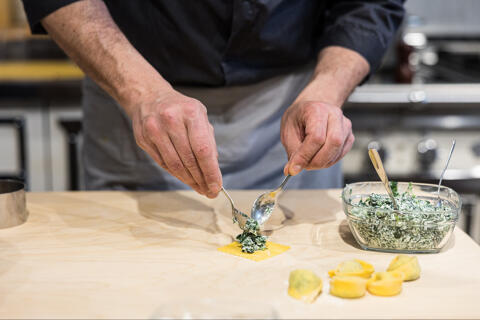
- Place a spoonful of filling in the center of each disk, taking care not to overfill.
- Run a damp finger around the edge of each disk.
- Fold the pasta over the filling into a half-moon or “taco” shape.
- Press gently around the filling to remove as much trapped air as possible, then seal the edges firmly.
6. Shape the Tortelli
- Turn the sealed half-moon so the curved edge resembles a smile.
- Hold the two corners and bring them together.
- Pinch firmly so they stick.
- Arrange the finished tortelli on a lightly floured tray while you shape the rest.
7. Cook the Tortelli
- Bring a large pot of salted water to the boil.
- Add the tortelli and cook for approximately 3–4 minutes.
- Before draining, reserve a little of the pasta cooking water.
- Lift or drain the tortelli carefully so the delicate pasta does not tear.
How to Make Butter and Sage Sauce
- Melt the 80 g butter in a medium sauté pan.
- Add the 12 sage leaves and a small amount of reserved pasta cooking water.
- Allow the sauce to cook for a few minutes until it begins to emulsify and thicken slightly, but do not let it become too dense.
- Add the cooked tortelli to the pan and turn them gently through the butter and sage so they are evenly coated.
- Remove the pan from the heat.
- Add freshly grated Parmigiano and stir gently until the sauce becomes creamy and clings to the pasta.
- Serve immediately.
Why Pasta Water Matters in Butter and Sage Sauce
Butter and sage may look like the simplest possible pasta sauce, but the pasta water is what turns melted butter into something that actually coats the tortelli. A small amount of the starchy cooking water helps the butter emulsify rather than simply pooling at the bottom of the pan. That is why the Parmigiano should go in off the heat. Added at the end, it can melt into the butter-and-water emulsion and create a smooth coating around the pasta rather than becoming oily or clumpy. This same finishing principle appears in our Tortelli di Patate with Butter and Sage, where another Tuscan filled pasta is completed with butter, sage, Parmigiano, and pasta water.
Why Removing Air Matters When Shaping Tortelli
Trapped air may seem insignificant while you are shaping fresh pasta, but it becomes much more important once the tortelli enter boiling water. Air pockets expand as they heat and can put pressure on the seam, increasing the chance that a tortello will open while cooking. That is why the recipe asks you to press gently around the filling before sealing the edges. You are not trying to flatten the filling; you are simply removing the air surrounding it. It is one of those tiny fresh-pasta habits that makes an enormous difference once the pasta reaches the pot.
The Perfect Bite
The pasta should be thin and tender, with a center soft enough to give immediately under the fork. The ricotta keeps the filling creamy, while spinach gives it freshness and a deeper savory character. Parmigiano and nutmeg round everything out without overwhelming the simplicity of the filling. Then comes the sauce: melted butter carrying the fragrance of sage, loosened with pasta water and finished with Parmigiano until it coats the tortelli lightly. Nothing should dominate. The best bite tastes first of fresh pasta and filling, followed by butter, sage, and cheese.
More Fresh Pasta Recipes to Explore
If you want to stay with filled pasta, our Tortelli di Patate uses the same basic idea of thin fresh dough wrapped around a soft filling, but takes it in a distinctly Tuscan direction with potato, Parmigiano, garlic, parsley, tomato paste, and nutmeg.
For another way to use the spinach-and-ricotta pairing, our Spinach and Ricotta Gnudi removes the pasta wrapper completely, turning the filling itself into soft Tuscan dumplings finished with butter, sage, and Pecorino di Grotta fondue. And if you want to focus purely on the dough, Fresh Egg Tagliatelle is a useful foundational recipe for practicing fresh egg pasta before moving into filled shapes.
Learn to Make Fresh Pasta in Florence
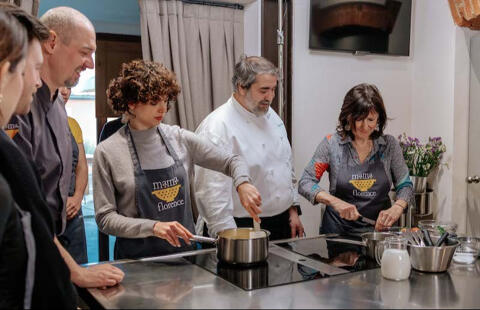
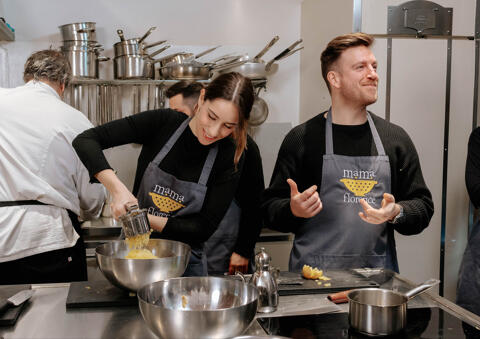
Filled pasta is one of the techniques explored in our Pasta Making Cooking Class in Florence, where students work with professional chefs on handmade pasta, regional shapes, fillings, and sauces.
Mama Florence also offers a broader Traditional Italian Pasta Cooking Class, which includes pasta ripiena techniques and specifically covers classic fillings such as ricotta and spinach. Recipes like this are where fresh pasta stops being abstract technique and becomes something tactile: judging the dough by feel, rolling it thin enough, keeping the filling dry, sealing without trapped air, and finishing the cooked pasta in the sauce rather than simply spooning sauce over it.
Frequently Asked Questions
Q: What is the difference between tortelli and ravioli? A: Both are filled fresh pasta. The names and shapes vary by region and tradition. In this Mama Florence recipe, round pieces of pasta are folded around the ricotta-and-spinach filling and the corners are joined to create the tortello shape.
Q: What flour is used for the tortelli dough? A: The recipe uses 200 g all-purpose flour and 200 g semola flour with 4 eggs.
Q: How thin should I roll the pasta? A: Roll the dough to approximately 1 mm thick.
Q: Can I use cow’s milk ricotta? A: Yes, although the recipe specifically recommends sheep’s milk ricotta when available.
Q: Why does the spinach need to be squeezed dry? A: Excess water can make the filling loose and increase the chance of the tortelli becoming difficult to seal or opening during cooking.
Q: How long should the pasta dough rest? A: Rest it at room temperature for 30 minutes before rolling.
Q: How long do spinach and ricotta tortelli cook? A: Cook them in salted boiling water for approximately 3–4 minutes.
Q: How do I stop tortelli from opening while cooking? A: Avoid overfilling, remove trapped air around the filling, moisten the edge lightly, and press the seam firmly before shaping.
Q: What sauce goes best with spinach and ricotta tortelli? A: This recipe uses a classic butter and sage sauce with Parmigiano and a little pasta cooking water.
Q: Why add pasta water to butter and sage sauce? A: The starchy water helps the butter emulsify and coat the tortelli more evenly.
Disclaimer
Please note that our chefs may adapt recipes according to seasonal ingredient availability and participants’ dietary or allergy requirements. As a result, the ingredients, preparation, or presentation shown in this recipe may vary from what you prepared during your Mama Florence class. In some cases, elements of a dish may also appear as separate recipes. Please reach out to our team if any confusion arises. Thank you - the Mama Florence Family