Purè di Patate: Italian Mashed Potatoes Done Simply
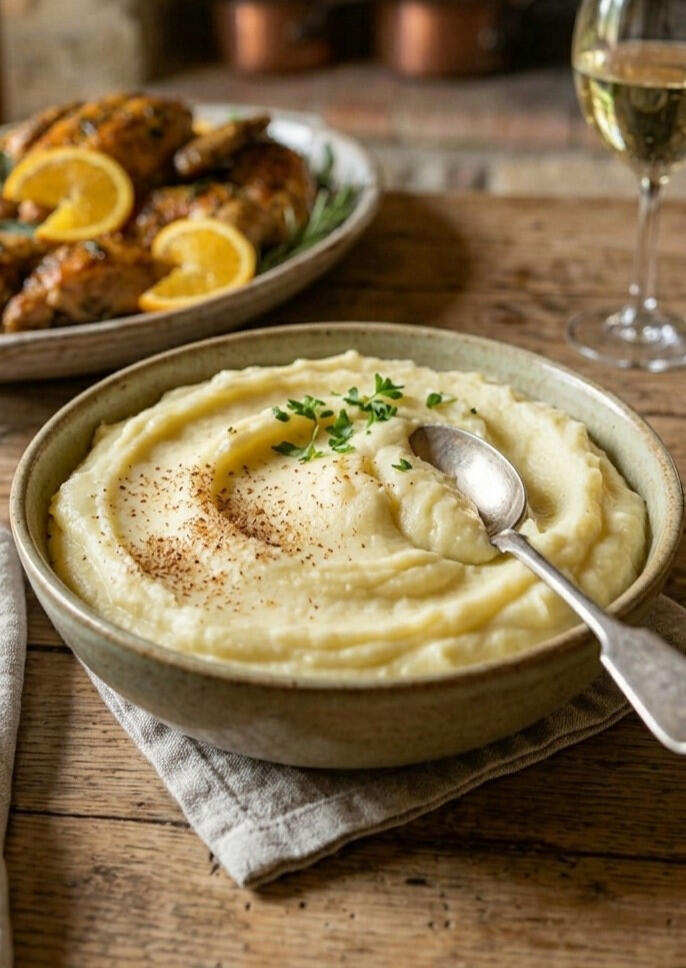
There is nothing complicated about Purè di Patate, and that is exactly why the technique matters. Potatoes are boiled whole with their skins on, peeled while still hot, mashed, enriched first with butter, then loosened gradually with warm milk. A little salt and freshly grated nutmeg are all that is needed at the end. At Mama Florence Cooking School, this is the kind of side dish that belongs naturally beside slow-cooked meats, autumn and winter dishes, and anything with a sauce worth catching. The finished purè should be smooth and light rather than dense, with enough butter to give it richness and enough warm milk to make it soft without becoming loose. It is classic Italian comfort food built from a handful of ingredients and a method that rewards attention.
How to Make Creamy Italian Mashed Potatoes
The sequence matters. Butter goes into the hot potatoes first and is mixed until fully incorporated. The milk is warmed separately and then poured in gradually while the potatoes are stirred continuously. Adding cold milk straight from the refrigerator would cool the potatoes too quickly, while warm milk blends more easily into the mash. The mixture then returns to low heat for 2–3 minutes, just long enough to bring everything together into a soft, creamy consistency.
Mama’s Secret: Add the warm milk gradually rather than all at once. You can always add more, but controlling the liquid slowly makes it easier to stop when the purè reaches the texture you want.
Purè di Patate Ingredients
• 1¾ lb potatoes, preferably yellow-fleshed or red-skinned • ⅓ cup + 1 tablespoon whole milk • 4 tablespoons + 1 teaspoon butter, cut into small cubes • Salt, to taste • Freshly grated nutmeg, to taste
1. Wash and Boil the Potatoes
- Wash the potatoes thoroughly under cold running water, removing any dirt while leaving the skins intact.
- Place them in a large pot and cover generously with cold water.
- Bring the water to the boil over medium-high heat.
- Once boiling, cook the potatoes for approximately 30–40 minutes.
2. Check for Doneness
- Pierce the center of a potato with a fork.
- If the tines slide in easily and meet no resistance, the potatoes are ready.
- If the center still feels firm, continue cooking and test again after a few minutes.
3. Peel and Mash
- Drain the potatoes while they are still hot.
- Peel them carefully with a small paring knife.
- Mash the potatoes directly back into the pot with the heat turned off.
- If you are using a potato ricer, you can place the cooked potatoes inside with their skins still on. Press them through and remove the skins left behind in the ricer.
4. Add the Butter
- Immediately add the 4 tablespoons + 1 teaspoon cubed butter to the hot mashed potatoes.
- Stir vigorously with a wooden spoon or whisk until the butter has completely melted and is evenly incorporated.
5. Warm the Milk
- Pour the ⅓ cup + 1 tablespoon whole milk into a small saucepan.
- Warm gently without allowing it to boil.
6. Add the Milk Gradually
- Pour the warm milk into the potatoes in a thin stream, stirring continuously.
- Continue until the milk is fully incorporated and the purè becomes smooth and silky.
7. Finish over Low Heat
- Return the pot to low heat for approximately 2–3 minutes.
- Stir constantly until the mashed potatoes are soft, fluffy, and creamy.
8. Season and Serve
- Season with salt to taste.
- Finish with freshly grated nutmeg.
- Serve the Purè di Patate immediately while piping hot.
Why Boil the Potatoes with Their Skins On?
Cooking the potatoes whole with their skins intact keeps the method simple and helps protect the flesh while they boil. The potatoes are placed into cold water, then brought gradually to a boil and cooked for approximately 30–40 minutes, depending on their size. They are ready when a fork slides easily into the center without resistance. Once drained, they should be peeled while still hot enough to work with. That allows the butter to melt immediately into the freshly mashed potatoes rather than sitting separately in the mixture. There is also a useful shortcut if you have a potato ricer: the recipe notes that you can press the cooked potato through the ricer without peeling it first, because the skin remains behind inside the tool.
Why Warm Milk Makes a Difference
Warm milk incorporates much more naturally into hot potatoes than cold milk. The goal is to maintain a consistent temperature while adjusting the texture gradually. When milk is added little by little, it loosens the mash without shocking or cooling it too quickly. That is especially useful here because the recipe uses a relatively restrained 100 ml milk for 800 g potatoes. The finished purè should still taste clearly of potato rather than becoming a thin dairy-heavy mash.
Why Butter Goes in Before the Milk
The butter is added while the potatoes are still hot so it can melt completely into the mash. Only after it is incorporated does the warm milk go in. This gives you more control over the final consistency and ensures the butter is evenly distributed before additional liquid is introduced. It is a simple sequence, but one that helps turn boiled potatoes into something much smoother and more cohesive.
Why Nutmeg Belongs in Italian Mashed Potatoes
Nutmeg appears often in Italian preparations built around potatoes, cheese, spinach, and dairy because it adds warmth without making the dish taste obviously spiced. Here, only a small amount is needed. Freshly grate it over the finished purè and taste as you go. The nutmeg should sit quietly behind the butter and potato rather than become the dominant flavor. The same seasoning also appears naturally in filled pasta such as our Tortelli di Patate, where potato, Parmigiano, butter, garlic, parsley, and nutmeg come together inside fresh pasta.
What to Serve with Purè di Patate
Purè di Patate works particularly well beside dishes with a rich sauce or braising liquid. That is why it makes such a natural partner for slow-cooked beef, roast meats, poultry, and autumn or winter mains. The soft potato gives the sauce somewhere to settle without competing with the main dish. It would work beautifully with Peposo con Purè di Patate, where a deeply peppery Tuscan beef stew is served over or alongside mashed potatoes, and it also suits braised or roasted meat dishes where you want something gentler on the plate. For a more Tuscan potato preparation, our Potato Tortelli takes the same basic ingredient in a completely different direction, turning potatoes into a savory filling for fresh pasta.
The Perfect Bite
The potatoes should be smooth enough to yield immediately on the spoon, but still have enough body to sit properly on the plate. Butter gives richness, warm milk softens the texture, and nutmeg adds just enough warmth to make the dish more aromatic without distracting from the potato. The best bite is simple: creamy, hot, lightly buttery, with a clean potato flavor and a subtle trace of nutmeg at the finish.
More Italian Potato Recipes to Explore
If you want to keep cooking with potatoes, our Potato Tortelli uses mashed potato as the base of a traditional Tuscan filled-pasta recipe. Our Potato Gnocchi recipe takes another classic route, using potatoes with flour and egg to make soft Italian dumplings. And for a fully composed Tuscan main course, Peposo con Purè di Patate pairs creamy mashed potatoes with a slow-braised beef stew built around red wine and black pepper.
Learn Traditional Tuscan Cooking in Florence
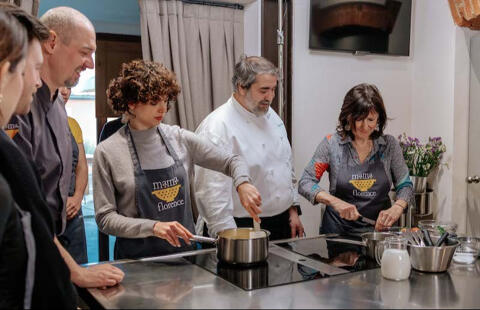
Purè di Patate may be simple, but it reflects the same principle behind much of traditional Italian cooking: technique matters even when the ingredient list is short. At Mama Florence Cooking School, our current classes include a Tuscan Traditional Cooking Course, where guests work through regional dishes and the techniques behind a complete Tuscan menu. You can also explore our wider range of cooking classes in Florence, including fresh pasta, vegetarian cooking, Tuscan traditions, market-to-kitchen experiences, and other regional specialties.
Frequently Asked Questions
Q: What are Italian mashed potatoes called? A: Italian mashed potatoes are called purè di patate.
Q: What potatoes are best for Purè di Patate? A: This recipe recommends yellow-fleshed or red-skinned potatoes.
Q: Should I peel potatoes before boiling them for mash? A: Not in this recipe. The potatoes are boiled whole with their skins on, then peeled while hot.
Q: How long should I boil the potatoes? A: Cook them for approximately 30–40 minutes after the water reaches a boil, depending on their size.
Q: How do I know when the potatoes are ready? A: Pierce the center with a fork. The potatoes are ready when the fork slides in easily without resistance.
Q: Can I use a potato ricer without peeling the potatoes first? A: Yes. The recipe specifically notes that a ricer will press the potato through while leaving the skin behind.
Q: Why should the milk be warm? A: Warm milk blends more easily into the hot potatoes and helps maintain a smooth, creamy consistency.
Q: How much butter is used in Italian mashed potatoes? A: This recipe uses 60 g butter for 800 g potatoes.
Q: Does Purè di Patate contain cream? A: No. This version uses whole milk and butter.
Q: Does Italian mashed potato contain nutmeg? A: This recipe does. Freshly grated nutmeg is added to taste at the end.
Q: What can I serve with Purè di Patate? A: It works particularly well with braised meats, roast poultry, Tuscan beef dishes, and other mains with flavorful sauces.
Disclaimer
Please note that our chefs may adapt recipes according to seasonal ingredient availability and participants’ dietary or allergy requirements. As a result, the ingredients, preparation, or presentation shown in this recipe may vary from what you prepared during your Mama Florence class. In some cases, elements of a dish may also appear as separate recipes. Please reach out to our team if any confusion arises. Thank you - the Mama Florence Family