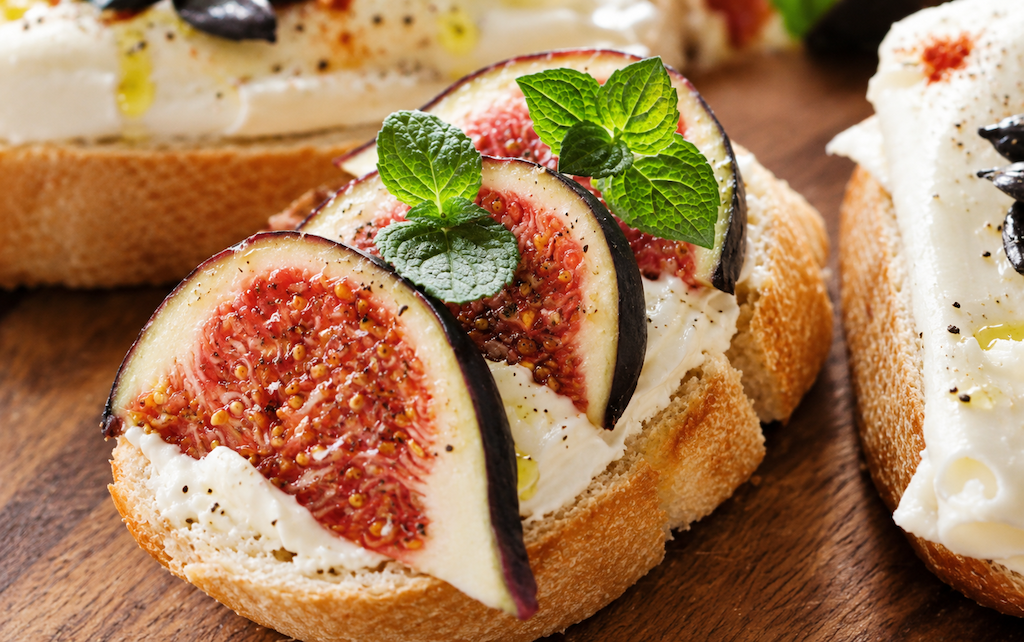
Late summer is when fresh figs need the least interference. When they are ripe, sweet, and juicy, a warm piece of toasted bread and a savory cheese are enough to turn them into a simple Italian appetizer with real contrast. At Mama Florence Cooking School, our fig bruschetta is intentionally flexible. Fresh figs are sliced and lightly seasoned, then paired with warm toasted bread and a cheese that complements their sweetness. Goat cheese brings tang and saltiness. Pecorino gives the bruschetta a firmer, more savory character. Gorgonzola adds intensity, while mozzarella creates a milder, softer version. The important thing is to assemble the bruschetta while the bread is still warm.
How to Make Fresh Fig Bruschetta
Start by washing the figs carefully. Slice each fig lengthwise into 4 pieces. If your figs are large, approximately 2 slices per piece of bread may be enough. Smaller figs may require one whole fig per bruschetta. Slice the bread and toast it until warm and lightly crisp. Have the figs and your chosen cheese ready before the bread comes out, because the bruschetta should be assembled while the toast is still warm. Add the cheese, arrange the sliced figs on top, then season lightly with salt and freshly ground black pepper. For goat cheese or Pecorino, finish with a few drops of balsamic vinegar if desired.
Mama’s Secret: Have every topping ready before you toast the bread. Warm bread against cool cheese and ripe figs is part of what makes this simple bruschetta work.
Fig Bruschetta Ingredients:
• 8 fresh figs • 16 slices Italian bread • Your choice of cheese • Salt, as needed • Freshly ground black pepper, as needed
Cheese Options
Goat cheese
Pecorino
Gorgonzola
Mozzarella
Optional Finishes
Balsamic vinegar, especially with goat cheese or Pecorino
Thinly sliced prosciutto, with Pecorino
Anchovy fillets, with mozzarella
1. Prepare the Figs
Wash the fresh figs thoroughly.
Cut each fig lengthwise into 4 slices.
If the figs are particularly large, two slices may be enough for each piece of bread.
If they are smaller, you may need approximately one fig per bruschetta.
2. Prepare the Bread
Cut the bread into 16 slices.
Toast until warm and lightly crisp.
You can use a toaster or place the bread in a preheated 210°F oven for a couple of minutes.
3. Prepare the Cheese
Have your chosen cheese ready before the bread finishes toasting.
Depending on the cheese, slice, crumble, or spread it so the bruschetta can be assembled immediately.
4. Assemble the Bruschetta
Place the cheese onto the warm toasted bread.
Arrange the fresh fig slices on top.
Season the figs lightly with salt and freshly ground black pepper.
Serve promptly while the bread is still warm.
Which Cheese Goes Best with Fresh Figs?
One of the strengths of this recipe is that there is no single correct cheese. Each option creates a different balance with the sweetness of the figs.
Goat Cheese and Figs
Goat cheese brings tanginess and salinity against the ripe fruit. Its creamy texture also makes it easy to spread over warm bruschetta before adding the figs. If you enjoy this combination, our Goat Cheese and Radicchio Tartlets with Aged Balsamic use the same cheese in a completely different sweet-bitter pairing with radicchio and balsamic. A few drops of balsamic vinegar can also work particularly well with the goat cheese version.
Pecorino and Figs
Pecorino gives the bruschetta a firmer texture and a distinctly savory, salty character. Our recipe suggests taking this version one step further by placing one or two thin slices of prosciutto between the Pecorino and figs. That creates a more substantial antipasto built around sweet fruit, salty cheese, and cured meat.
Gorgonzola and Figs
Gorgonzola is the boldest cheese option. Its strong, creamy flavor stands in direct contrast to the delicate sweetness of ripe figs. This is a good choice when you want the bruschetta to feel richer and more assertive.
Mozzarella and Figs
Mozzarella gives you the mildest version. Its softer flavor allows the fig itself to remain the focus, while the warmth of the toast can gently soften the cheese. For a more savory variation, our source recipe suggests adding an anchovy fillet over the mozzarella.
Should You Peel Fresh Figs?
You do not have to. Our recipe specifically notes that properly washed fig skin can be eaten and has plenty of flavor. If you prefer a softer texture, remove the skin and spread the inside of the fig directly over the cheese. Both presentations work; it is mainly a question of texture.
Why Season Figs with Salt and Pepper?
A small amount of salt can make ripe fruit taste sweeter by sharpening the contrast between its natural sugars and the savory elements around it. Black pepper adds a little warmth and makes the bruschetta feel more savory. You do not need much of either. The goal is to enhance the figs rather than cover their flavor.
Why Balsamic Works with Figs and Cheese
Balsamic vinegar naturally bridges sweet and savory flavors. With ripe figs, it reinforces the fruit’s sweetness while adding acidity. That becomes especially useful with saltier cheeses such as goat cheese and Pecorino. Use only a few drops. The figs should remain the dominant sweet element rather than becoming covered in vinegar.
The Perfect Bite
The bread should still be warm and lightly crisp. Then comes the cheese — creamy, salty, sharp, or mild depending on the version you choose — followed by the juicy sweetness of fresh fig. Salt and black pepper sharpen the fruit, while optional balsamic adds a final sweet-and-sour edge. The best bite catches crisp bread, cheese, and ripe fig together rather than letting any one ingredient dominate.
More Italian Appetizers to Explore
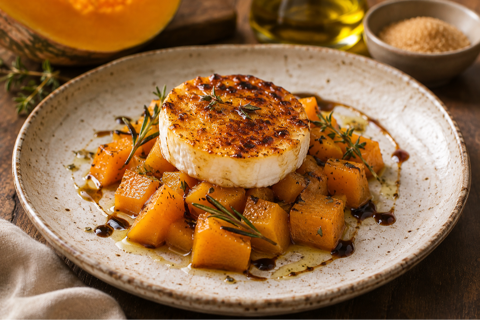
If you like the combination of cheese and contrasting seasonal ingredients, our Goat Cheese and Radicchio Tartlets with Aged Balsamic pair creamy goat cheese with bitter radicchio and balsamic inside crisp pastry. For something warmer and more autumnal, our Caramelized Chèvre with Sautéed Pumpkin and Aged Balsamic moves goat cheese into a seasonal pairing with pumpkin, herbs, and caramelized sugar. Both recipes are part of the current Mama Florence recipe collection. For a more rustic Tuscan antipasto or light dish, our Fagioli all’Uccelletto combines cannellini beans, tomato, garlic, sage, and extra virgin olive oil.
Learn Seasonal Italian Cooking in Florence
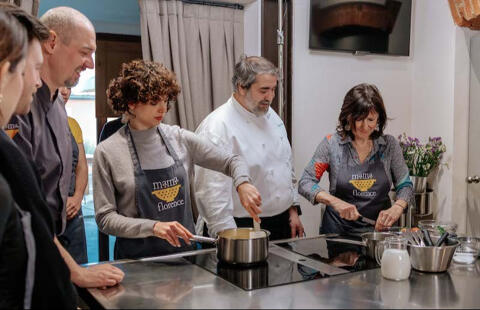
Recipes like fig bruschetta show why seasonal ingredients matter so much in Italian cooking. There is very little technique to hide behind here. The quality and ripeness of the figs, the character of the cheese, and the bread itself determine most of the finished dish. At Mama Florence Cooking School, our Cooking Classes in Florence include vegetarian, Tuscan traditional, pasta, market-focused, and other hands-on Italian cooking experiences. The current schedule includes a dedicated Vegetarian Cooking Class in Florence alongside Tuscan and pasta programs. Mama Florence also prioritizes seasonal and locally sourced ingredients, which is particularly relevant to a recipe built around fresh late-summer figs.
Frequently Asked Questions
Q: What cheese goes best with fresh figs? A: Our recipe suggests goat cheese, Pecorino, Gorgonzola, or mozzarella. Each creates a different balance with the sweetness of the figs.
Q: How many figs do I need? A: The recipe uses 8 fresh figs.
Q: How many pieces of bruschetta does this recipe make? A: The supplied ingredient list gives 16 bread slices, although the exact serving yield is not specified.
Q: Should I peel fresh figs before serving them? A: No. If they are properly washed, the skins can be left on. You can also remove the skins and spread the fig flesh over the cheese if you prefer.
Q: Should figs be seasoned? A: Yes. Our recipe recommends a light seasoning of salt and freshly ground black pepper after slicing.
Q: Can I add balsamic vinegar to fig bruschetta? A: Yes. A few drops work particularly well with saltier cheeses such as goat cheese or Pecorino.
Q: Can I add prosciutto? A: Yes. Our recipe specifically suggests thinly sliced prosciutto between Pecorino and fresh figs.
Q: Can I add anchovies? A: Yes. An anchovy fillet is suggested as an optional addition when using mozzarella.
Q: What temperature should I use to warm the bread in the oven? A: The source recipe uses approximately 210°F for a couple of minutes.
Q: Should fig bruschetta be served warm? A: The bread should still be warm when you assemble and serve it, although the figs and cheese themselves do not need to be heated.
Disclaimer
Please note that our chefs may adapt recipes according to seasonal ingredient availability and participants’ dietary or allergy requirements. As a result, the ingredients, preparation, or presentation shown in this recipe may vary from what you prepared during your Mama Florence class. In some cases, elements of a dish may also appear as separate recipes — for example, the fresh pasta you prepared may be paired here with a different sauce, while the sauce from your class may appear in another recipe. Please reach out to our team if any confusion arises. Thank you — the Mama Florence Family.
Reviews
4.910 reviews
Light, quick, and it did not feel like a compromise dinner.
Kate D.
Melbourne, Australia · April 2026
Made a big tray and ate it cold from the fridge for two days. No complaints.
Michael R.
Austin, USA · April 2026
I added a squeeze of lemon at the end, which is not in the instructions. Personal preference, and it lifted the whole plate.
Sophie H.
Edinburgh, UK · April 2026
Worked well as part of a larger spread, and it needs nothing complicated alongside it.
Daniel O.
Brooklyn, USA · March 2026
The substitution note in the recipe itself is the reason I could make it at all.
Jenna P.
Portland, USA · December 2025
I bought the vegetables at a proper market for once instead of the supermarket and the difference was obvious. The recipe is basically an argument for good produce.
Ryan M.
Vancouver, Canada · November 2025
Straightforward. No hidden difficulty in the middle, where beginners usually get lost.
Sanne V.
Utrecht, Netherlands · November 2025
I did not have to buy anything unusual, which is why I chose it over five other versions I found.
Luca B.
Turin, Italy · November 2025
I did a trial run a week before the dinner, which I recommend for anything you are serving to other people. The rehearsal taught me that my kitchen needs ten minutes less than the recipe says. On the night it was effortless. Nobody knew there had been a rehearsal.
Chiara R.
Milan, Italy · September 2025
I had to look up one of the terms but everything else was plain enough.